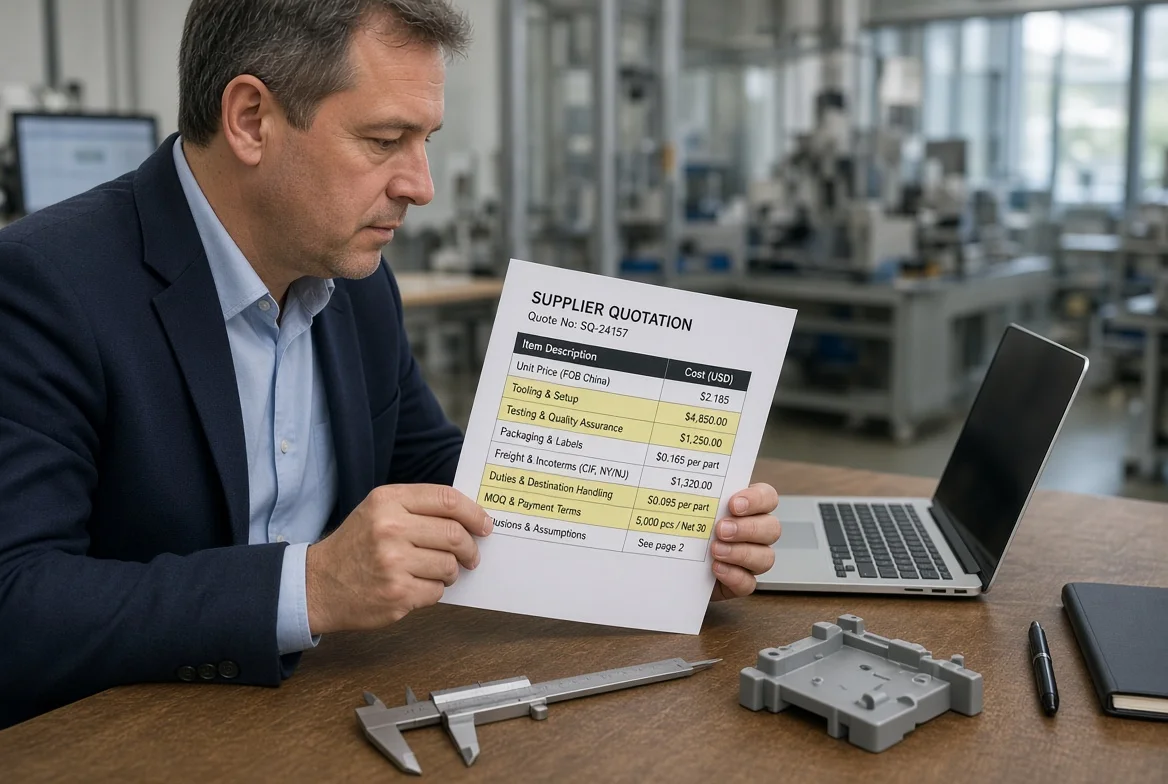
This guide helps procurement teams, sourcing professionals, purchasing managers, importers, and business buyers review manufacturing quotations. It shows how to identify the cost drivers behind a supplier quote, confirm scope and assumptions, separate one-time charges from recurring unit cost, and ask better supplier questions before placing an order.
This guide helps purchasing managers, sourcing professionals, importers, product developers, and business buyers choose the right way to approach suppliers. It compares RFI, RFP, and RFQ by purpose, timing, supplier response, evaluation criteria, and manufacturing use cases, so buyers request information, proposals, or prices only when the scope is ready.
This guide is for buyers sourcing custom products, OEM goods, industrial components, assemblies, or manufacturing services. It shows how to prepare a quote-ready RFQ covering specifications, quantity, quality, packaging, delivery, tooling, and commercial terms so manufacturers quote the same scope and buyers can compare offers without hidden assumptions.
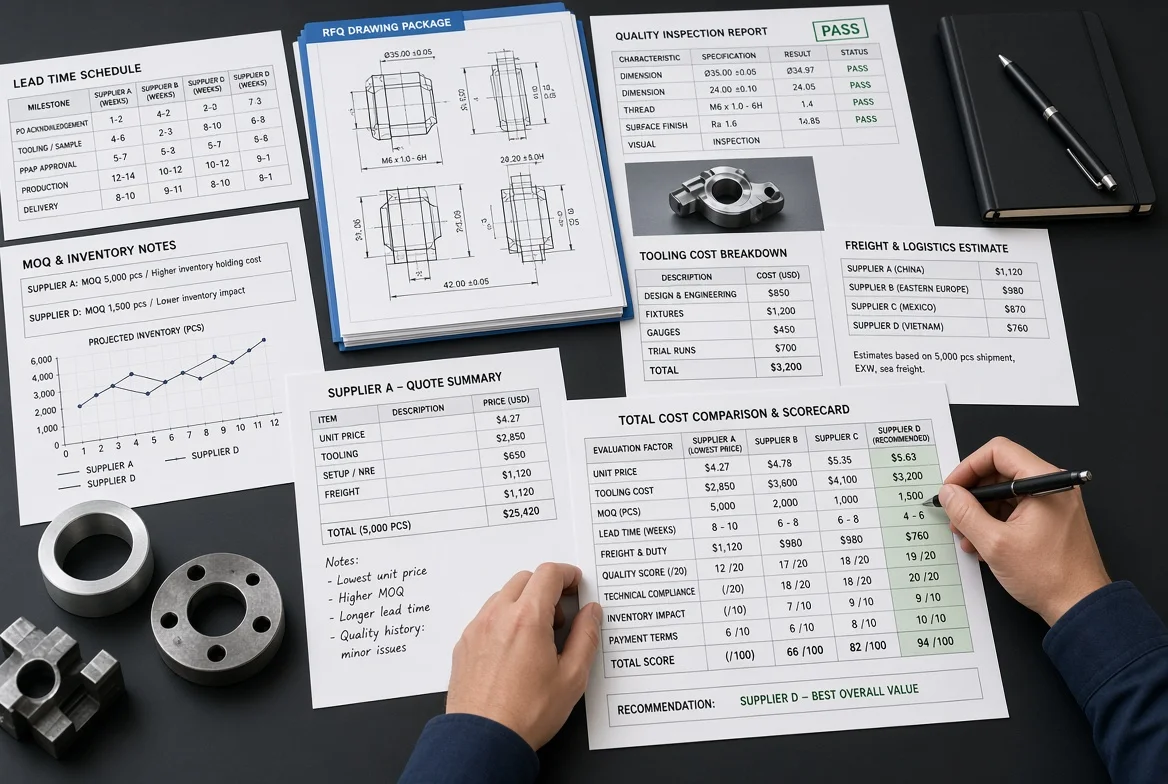
This guide helps procurement teams, purchasing managers, importers, product developers, and business buyers evaluate supplier offers beyond invoice price. It shows how to compare unit price with landed cost and total cost, covering tooling, freight, duties, inventory, quality, payment terms, delivery, failure exposure, and supplier risk so the lowest quoted price is not mistaken for the lowest-cost outcome.
Procurement teams, purchasing managers, importers, and product developers should review custom manufacturing quotes for tooling ownership, setup fees, molds, fixtures, engineering, sample trials, maintenance, testing, packaging, MOQ, and amortization. This guide explains how those charges appear, what they often exclude, and which supplier questions to settle before you approve a one-time or hidden cost.
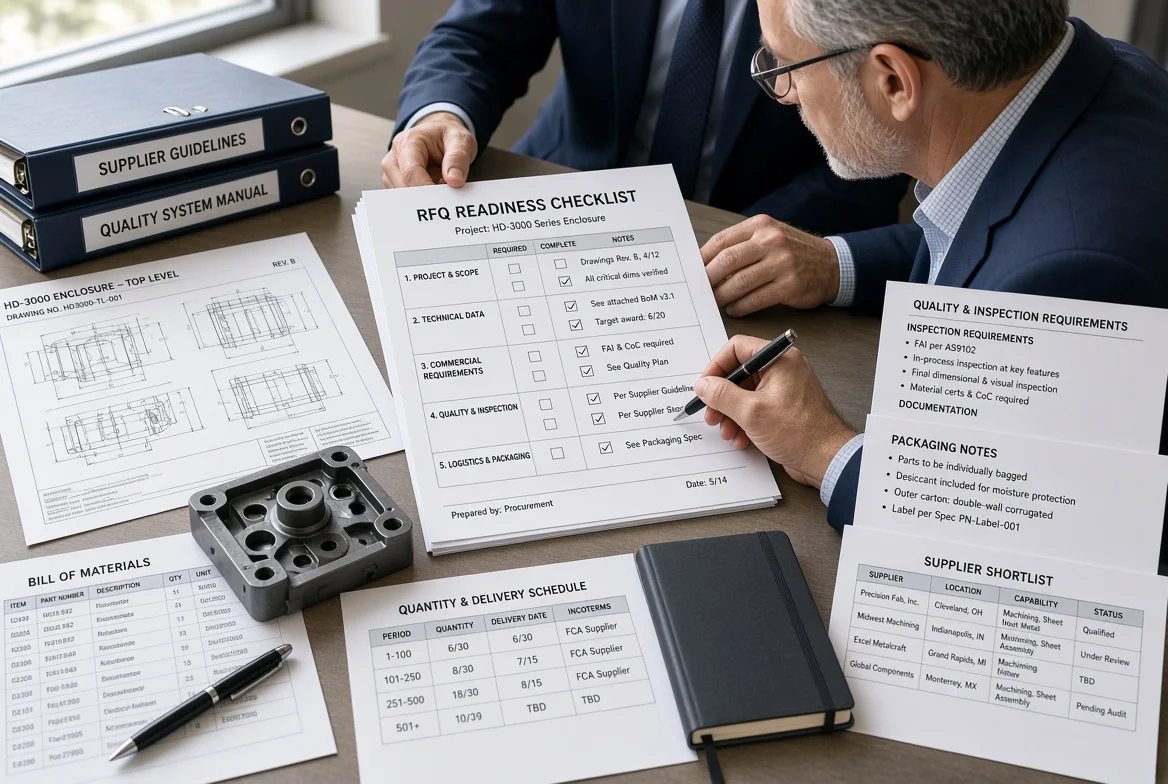
This RFQ checklist helps purchasing managers, sourcing teams, importers, and product developers prepare before contacting manufacturers. It covers product scope, drawings, quantities, quality, delivery, commercial terms, supplier qualification, and internal approval so requests produce comparable quotations instead of guesswork.
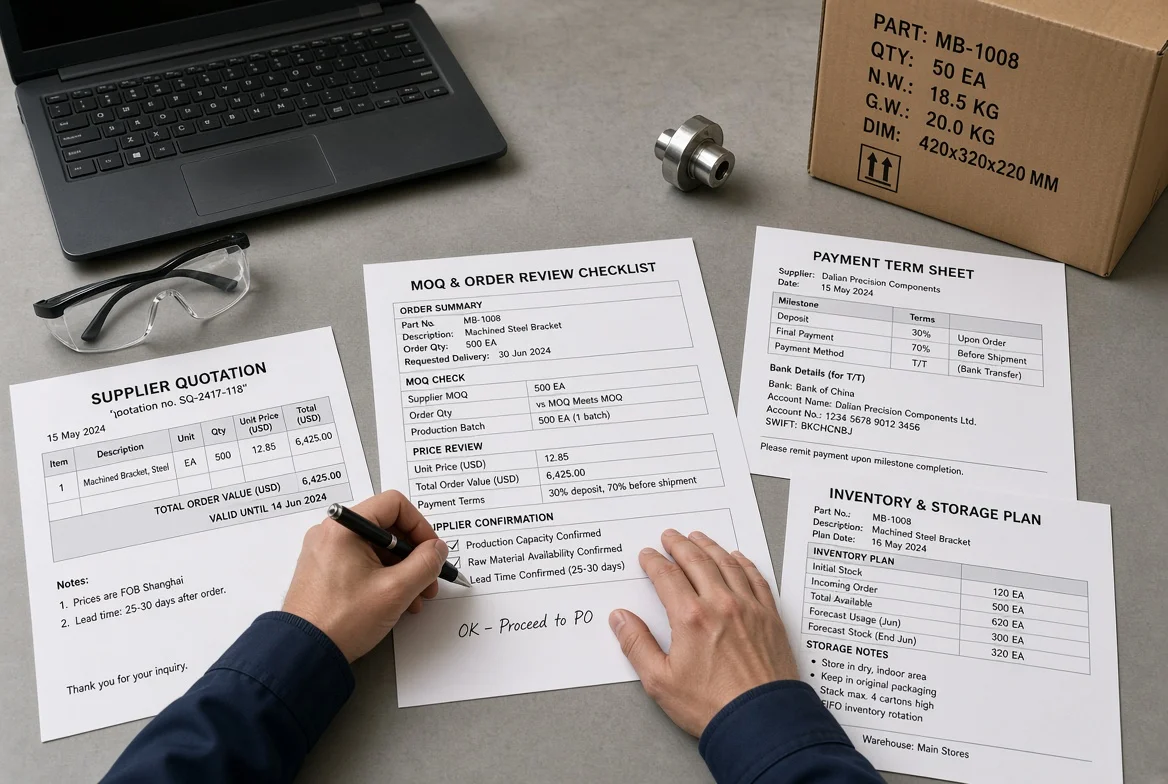
This guide is for procurement teams, purchasing managers, importers, product developers, and business buyers evaluating supplier MOQs. It explains why suppliers set minimums, how quantity changes unit pricing and quotations, how MOQ differs from price breaks, and how inventory and cash-flow exposure can offset a lower unit price. It also covers practical ways to negotiate or manage MOQ.
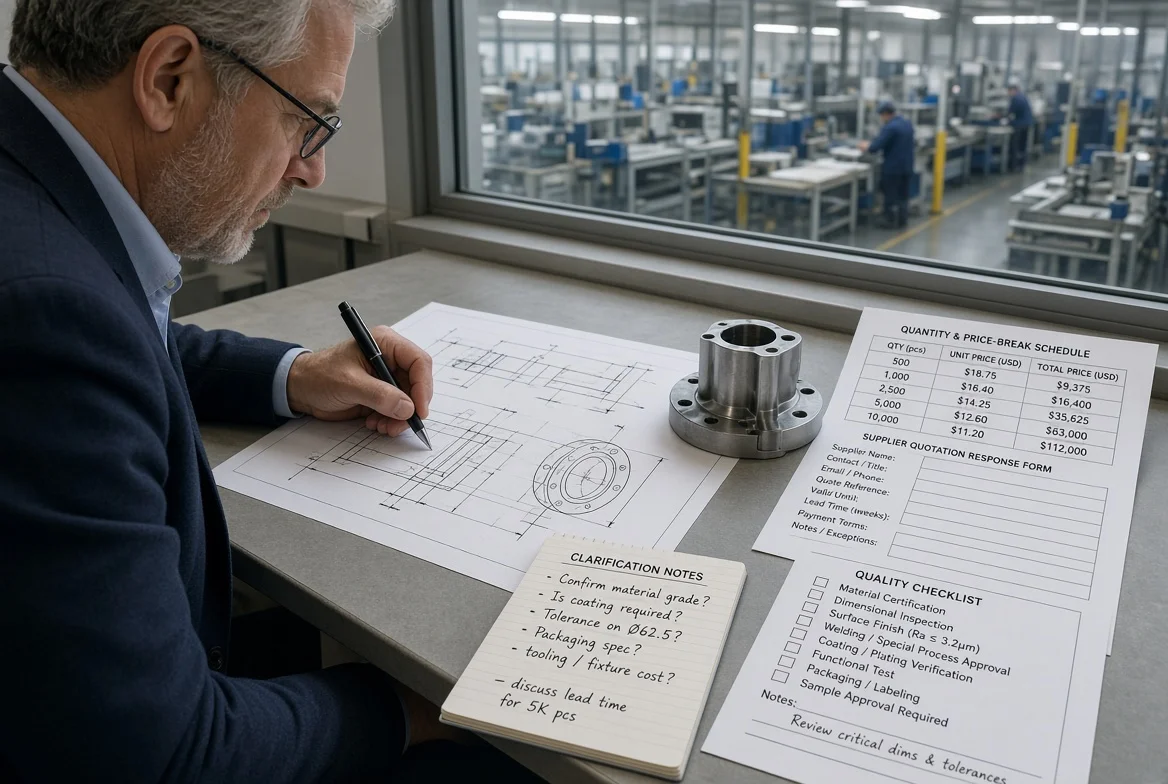
This manufacturing RFQ template helps purchasing managers, sourcing professionals, importers, and product developers request quotes for custom manufacturing, OEM products, industrial components, assemblies, or packaging. It organizes specifications, drawings, quantities, quality, packaging, delivery, and commercial terms so suppliers can return complete, comparable quotations. Copy the structure, adapt it to your process, and mark required versus optional fields before you send it.
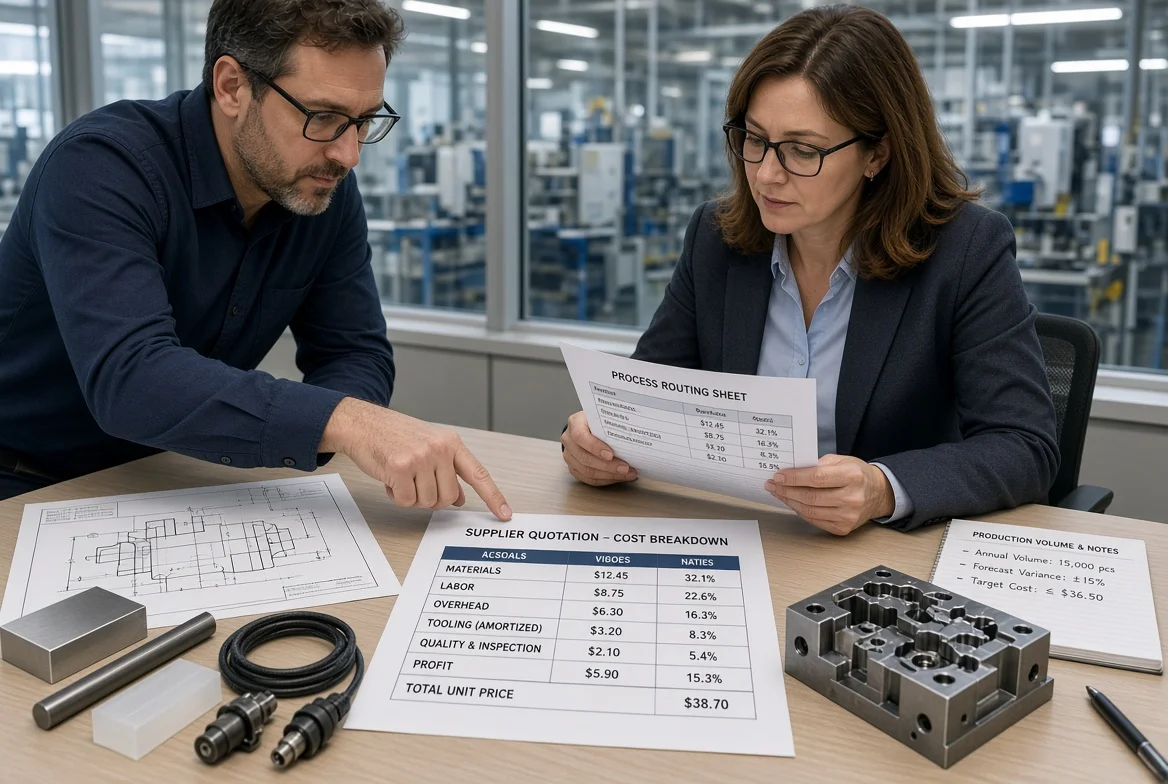
This guide helps procurement teams, purchasing managers, sourcing professionals, importers, and business buyers read manufacturing quotes with more discipline. It explains how materials, labor, machine time, overhead, tooling, quality, scrap, volume, supplier expenses, and profit margins come together, and how to use that structure without treating every factory figure as an audited cost.
A practical guide for procurement teams, purchasing managers, importers, product developers, and business buyers who need to compare manufacturing quotes from different suppliers. It shows how to level technical scope, MOQ, tooling, quality, lead time, delivery terms, hidden costs, and supplier risk so the comparison is like-for-like, not a simple sort of unit prices.
This buyer’s guide explains how manufacturers calculate product pricing so procurement teams, purchasing managers, importers, and product developers can read a factory quote with clearer cost logic. It covers direct materials, labor, overhead, tooling, production volume, yield, quality, logistics, supplier risk, and profit margin—and shows what to ask before you treat a unit price as the full story.
This guide helps purchasing managers, sourcing professionals, importers, and product developers write RFQs that manufacturers can actually quote. It covers technical specifications, quantity, quality, commercial terms, response format, deadlines, supplier questions, and the common mistakes that weaken quotation quality.
This guide helps procurement teams, purchasing managers, importers, product developers, and business buyers understand why manufacturing quotes change. It covers product complexity, materials, production volume, MOQ, tooling, quality, lead time, capacity, packaging, logistics, commercial terms, and supplier assumptions so buyers can see which drivers they can control.
This practical guide helps procurement teams, purchasing managers, sourcing professionals, importers, and business buyers compare supplier quotations for manufactured products and custom components. It shows how to verify scope, normalize quotes, review cost structure, quality, lead time, commercial terms, supplier assumptions, and hidden costs before making a documented sourcing decision.
A practical guide for procurement teams, purchasing managers, importers, product developers, and business buyers. It explains prototype, pilot, low-volume, and high-volume pricing, how economies of scale, setup, tooling, MOQ, capacity, and lead time change a quote, and why volume assumptions must match real demand and inventory risk.
Procurement teams often receive different supplier quotes for the same product. This guide explains why manufacturers quote different prices, covering materials, process, labor, overhead, tooling, volume, quality, logistics, and supplier assumptions, and shows buyers how to investigate a price gap before treating the lowest or highest number as the answer.
This guide is for purchasing managers, sourcing teams, importers, and business buyers who need a structured way to request and evaluate supplier quotations. It covers supplier selection, RFQ preparation, communication, quote collection, quotation review, and the final sourcing decision so you compare like-for-like offers instead of mismatched prices.
This guide is for procurement teams, purchasing managers, sourcing professionals, importers, and business buyers reviewing supplier offers. It explains how to judge technical compliance, quality, delivery, capacity, total cost, commercial terms, communication, and supplier risk before selecting a supplier. The questions and checklist help you record why one quotation is stronger than another.
This guide helps buyers sourcing custom parts, assemblies, OEM goods, or manufacturing services prepare a complete RFQ. It lists the technical, quantity, quality, packaging, delivery, and commercial information suppliers need so quotations are accurate and comparable before you contact factories.
Procurement teams, purchasing managers, importers, and sourcing professionals learn why the lowest supplier quote is not always the best choice. This practical guide shows how to evaluate a low offer against technical compliance, quality, delivery, capacity, MOQ, total cost, commercial terms, and long-term supplier reliability before awarding the business.
This guide helps procurement teams, importers, purchasing managers, product developers, and business buyers review supplier quotations before ordering. It shows how to find exclusions, assumptions, tooling charges, logistics costs, quality exposure, compliance costs, payment conditions, and other expenses that may sit outside the headline unit price.