
The quoted price by a manufacturer is seldom just “material plus a fixed percentage.” Usually, a factory will use direct materials, direct labour, factory setup time and machine time, manufacturing overhead, tooling and set-up, quality work, packaging, logistics, risk and a profit contribution that ensures the order is viable to determine the price of a product. It doesn't take everything that would be the internal factory cost to conclude that figure. It's important to understand what costs are included, what assumptions are behind the price, what is excluded, and what happens when the volume changes.
Some catalogue products have simpler pricing methods. Typical conditions for custom parts, assemblies, molds and contract manufactured goods include process routing, cycle time, yield and commercial. You will also not be charged the same manufacturing cost as the supplier will charge you upon delivery or what you will be asking a customer to pay for. This guide remains on the quotation itself – and the production-cost rationale of the price that suppliers calculate for manufacturing.
The Basic Structure Behind Manufacturing Product Pricing
Most factories first estimate the cost to produce acceptable units and then add the commercial items like tooling recovery, risk, financing, service and margin. A handy teaching model is:
Manufacturing cost = Direct materials + Direct labor + Manufacturing overhead.
Supplier Price = Manufacturing Cost+ Tooling/Set-up Costs/Other Costs + Risk Allowance + Suppliers margin.
This is not the standard accounting formula. Some suppliers charge "machine hours" rates. Others use labour hours, department rates, activity based costing, or a target market price which is subsequently compared to cost. The framework can still assist buyers understand why two quotes for the “exact same” drawing could be different.
Direct Materials and Purchased Components
These materials are used to produce the final product, or incorporated into the product: metal stock, resin, copper, insulation, paperboard, fasteners, adhesives, connectors, motors, labels, and bought-in subassemblies. The cost is determined by the grade, size, source, quantity purchased, market timing, approved alternatives, and how the factory purchases its cost.
Direct Labor and Production Time
Direct labor is the work associated with the job: cutting, machining, molding, assembly, wiring, soldering, welding, finishing, packing, inspection and work associated with that job. The rate is influenced by time, skill, number of operators, training, rework exposure and local productivity. A cable assembly requiring skilled crimping, electrical testing, does not come with the same price tag as a cut and pack operation.
Manufacturing Overhead
Overhead includes the factory that enables the work to be done: utilities, maintenance, depreciation, supervision, planning, quality systems, supplies, etc. It doesn't have to be waste. A well-equipped plant with climate control and calibrated equipment and a quality system has more overhead than a simple workshop and may be able to produce more repeatable output.
Supplier Margin and Commercial Price
The supplier adds a margin/ profit contribution after production cost and other obligations. Don't attempt to work that margin out of a one line quote. It changes due to capacity, relationship, payment terms, forecast quality, and the factory's desire for the program. A sustainable price requires that it be higher than the shop floor price.
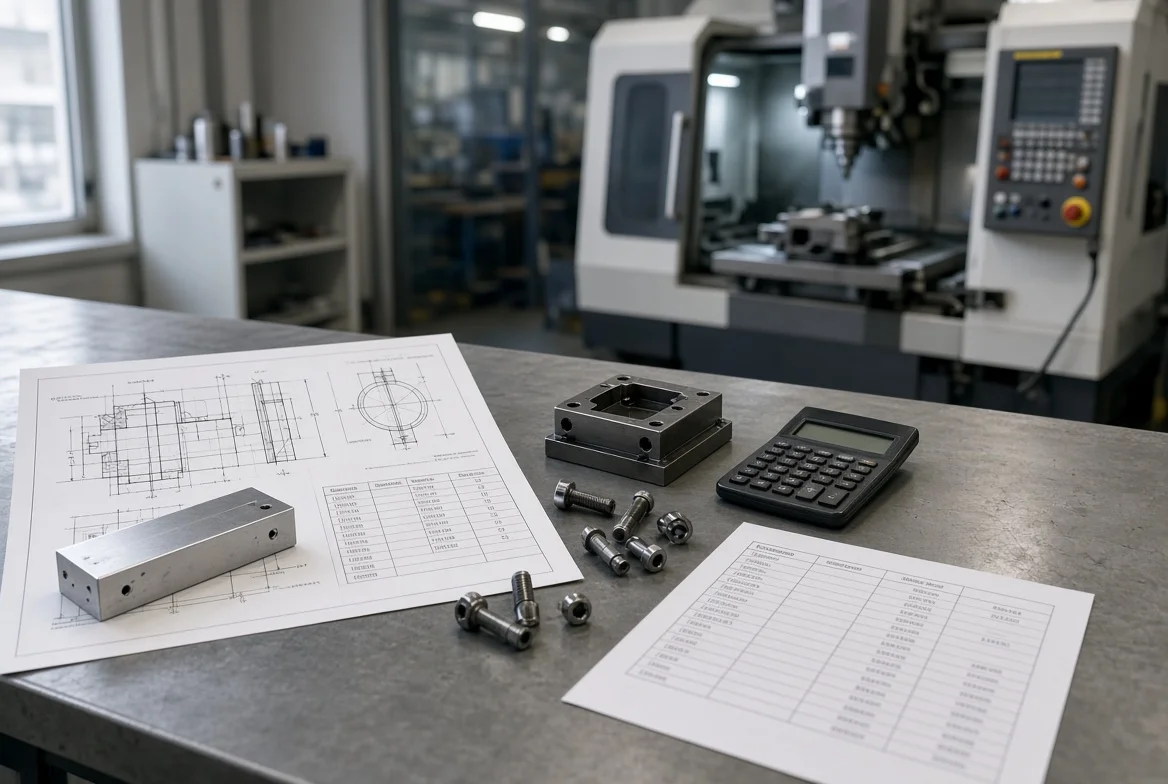
Step 1 — Calculate Direct Material and Component Cost
Manufacturers begin by stating the items that must be bought, and the quantity of each item needed. However, the cost of material does not always equal the cost of the remaining metal or resin in the finished part. Factories may purchase large lots, take process waste, and the minimums set by the mills or distributors.
Material Grade, Size, and Specification
Grade, thickness, hardness, alloy, resin formulation, copper class, paperboard structure, colour and surface condition all affect the purchasing price and process ability. Do not use an aluminum 6061-T6 block in place of 7075. The use of a commodity grade is not the same as a food-contact resin. Make sure the correct specification used in the quote is correct.
Material Quantity and Starting Stock
In the case of a CNC part, a large portion of the material is converted into chips, which began as a billet. Blank that requires stamping requires sheet layout and edge allowance. There must be additional length in cable assembly to strip, terminate, and handle the cable. Even if the finished part is small, the starting-stock size and utilization are within the material line.
Material Yield, Scrap, and Recovery
Yield is the amount of acceptable product from the purchase material. All of the trim, runners, offcuts, setup scrap, rejected lots, and process waste are effective cost per good unit. Molding, Die cutting, Printing, Machining and Cables processing create waste of different patterns. No set scrap percentage exists. What are the assumptions for the usage of the quote when material is a high percentage of the cost?
Purchased Components and Supplier Substitutions
The BOM can be dominated by connectors, ICs, motors, fasteners, packaging parts, etc., and labels. A less expensive connector or alternative might seem appealing at first, but the certification, availability or customer approval must be obtained. Verify brands, second sources, lead time and substitution.
Step 2 — Calculate Labor and Machine-Process Cost
Then the factory arrives upon a calculation of the labor, machine time, set-up and routing required to transform these materials into a finished product. Two plants can be able to quote the same drawing, expecting different process routes and different price. It's usually a routing issue, not a mystery markup.
Labor Time and Skill Requirements
Labor can be for loading, assembly, handling, inspection, rework, packing, and documentation. There is a need for different skill mixes for cable work, manual assembly, welding, finishing and 100% electrical testing. One operator quote and two operator process means the labor line is underestimated.
Machine Time and Cycle Time
Cutting, molding, forming, printing, curing, test and other operations are included in cycle time. The unit cost is influenced by machine size, speed, load/unload and downtime. A prototype cycle that works fine can become too slow or cost too much when it becomes recurrent production.
Setup, Changeover, and Programming Time
Plant sets fixtures, loads programs, changes material, sets parameters and approves first articles before first good piece. Setup cost is more difficult on smaller batches due to being applied to a smaller quantity. Inquire about the costs of set up: is it included in the price or charged as an order, batch or per SKU?
Secondary Operations and Outside Processing
Outside the “base” process are the heat treatment, plating/coating, painting, deburring, welding, assembly, printing, and outsourced test processes. The value of a quote without plating is not the same as a quote for a finished part that is plated. Verify the full journey before you start to rank prices.
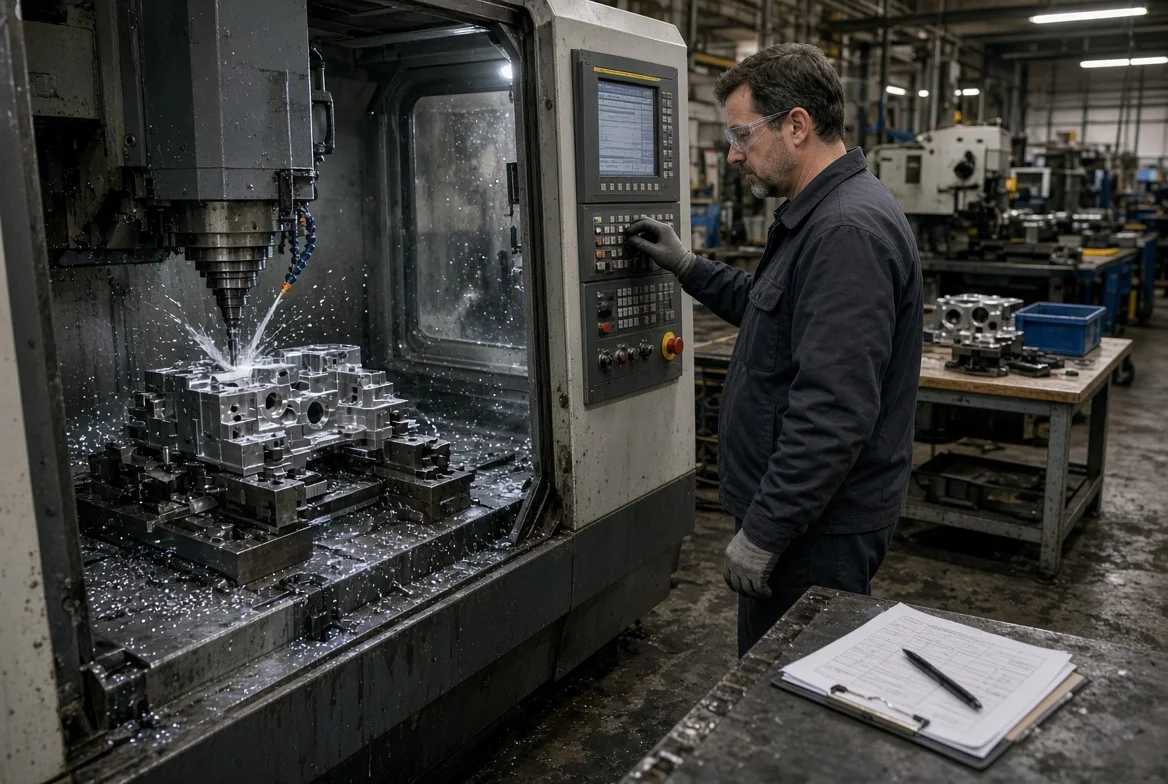
Step 3 — Allocate Manufacturing Overhead
The indirect cost of the factory needs to be recovered from the price of the product. There are various allocation methods: machine hours, labor hours, rates per department, or rules based upon activities. It's a policy decision, not a law of physics.
Facility, Utilities, and Equipment Costs
Here are rent-or-building cost, power, compressed air, water, software, insurance, safety and equipment depreciation. More modern equipment, cleaner areas and increased maintenance increase overhead. They may additionally boost capability and repeatability. The low overhead does not necessarily mean low true operating cost.
Indirect Labor and Production Support
Support for production does not only come from the booked staff of one unit, but also from supervisors, planners, maintenance, engineers, quality staff, warehouse people and coordinators. This support is needed in more abundance to address quality systems and complex products.
Quality and Compliance Overhead
Whether as overhead or on a separate line, calibration, audit, documentation, traceability, corrective action, and certifications will cost the company money. Verify if the quality work you need for your RFQ is included in the price.
Why Supplier Overhead Allocations Differ
Your job's rate depends on a variety of factors, such as plant size, automation, product utilization, product mix and accounting practices. Don't assume the lowest OH allocation equals the lowest factory cost. Evaluate the output of the judge for quality, reliability and capabilities for the price.
Step 4 — Add Tooling, Setup, and Engineering Costs
Capex is frequently required prior to repeat production. It could be embedded in the unit price, offered separately, assumed into a quotation or withheld until the end of design.
Molds, Dies, Fixtures, and Production Tooling
The tools comprise molds, dies, jigs, fixtures, gauges, test fixtures and special cutters. Inquire about the design, testing, useful life, maintenance, replacement, ownership, transfer rights, and if the tool is specific to your part.
Setup and Production Changeover
Setup includes machine preparation, programming, fixture install, material change, line clearance and first-piece approval. This may be as important as cycle time for high mix or low volume operation. Explain one-time, per-batch or unit-price.
Engineering and Design-for-Manufacturability
Real work is done in DFM review, process planning, drawing cleanup, prototype revisions and production transfer support. A supplier doing more of this can quote higher and at the same time decrease downstream scrap and delay.
Amortization Across Volume
Sometimes the low unit price is due to engineering the cost over an amount that the buyer agrees to, which is less than the total amount of mould. Once actual orders are placed at prototype and/or pilot orders, that unit price is no longer in effect! Verify the amortization basis and what will happen if it is not met.
Step 5 — Account for Yield, Scrap, Rework, and Quality Risk
Factories do not charge for all the units that went into the process, just good output. These factors change the actual cost of each acceptable part: Yield, Scrap, Rework, and Process Capability.
Good-Unit Yield
The 10 failures have to be absorbed by the 90. There are different yield profiles for molding, machining, electronics, printing, and cable assembly and finishing. Lower yield leads to higher material, labor, machine time, and overhead per good unit.
Scrap and Material Loss
All purchased material is consumed when performing layout, setting up, runners, trim, cutting loss and rejected components. If the material is costly, please clarify the assumptions put into the quote.
Rework and Inspection
Sorting, extra inspection, repair and further testing may be considered as a risk allowance or may not be considered in the base price. Make sure that the process is not stable, and clarify who will pay for having the goods inspected if they are not conforming.
Tolerance, Complexity, and Process Capability
Air tight tolerances, awkward geometry, difficult materials and demanding finishes decrease yield or require a more capable (more expensive) process. Relaxing a non-functional tolerance can reduce cost. The product will change if a functional tolerance is changed.
Quality Cost and Supplier Margin Protection
Suppliers can seek to add cost for warranty, customer rejection, change of drawing due to late drawing, or acceptance criteria that are not specified. That allowance is not necessarily presumable. Inquire about what kind of uncertainty produced it.
Step 6 — Adjust Pricing for Production Volume and MOQ
The quantity affects the amount of setup, tooling, purchasing, labour, machine use, packaging and overhead per unit produced. That's why its prototype, pilot and mass production prices should not be viewed as an equivalent product.
Prototype and Low-Volume Pricing
Fewer engineering, setup, material minimums and inspection across very few pieces are in small lots. The future production price cannot be predicted from a high prototype price.
Pilot and Production Pricing
Actual cycle time, yield, labor content and tool behavior are determined during pilot runs. The quote should be quite responsible and indicate both what is proved and what remains estimated. Once the process is stabilized, the price that is given after that time is frequently not the same as the initial estimate.
Mass-Production Economies of Scale
The bigger the volume, the better the material buying, the less changeovers, the more automation, and the more spread out the tooling. There is no such thing as "too big to scale". The unit price can't get lower than capacity, bottlenecks, quality rules, and material availability will allow.
MOQ and Price-Break Structure
Any price break is only beneficial if you can purchase, store and sell that volume. A reduced price which results in the selling out of six months' worth of stock is not necessarily a good deal. Breakdowns versus actual demand.
Step 7 — Include Quality, Packaging, Logistics, and Commercial Costs
The manufacturing price is just one of several quotes that might be delivered to the shop-floor. Manufacturing, packing, delivery terms, payment and risk may apply, be included or be missing.
Quality, Testing, and Documentation
Labor/equipment/Administration of first-article approval, functional test, material certificates, traceability and reports. Verify if your needed package is included in the base package.
Packaging and Labeling
Cost of electronics, cables, consumer goods, and industrial parts vary with export cartons, pallets, moisture barriers, anti-static bags, as well as customer marks and barcodes. Unpackaged ex-works" is not an "export packed to your spec" offer.
Freight, Delivery, and Landed Cost
EXW, FOB, CIF, DAP and DDP change the responsibility for paying freight, insurance, duties, and delivery. Factory production cost is NOT landed cost. Use real prices, not the inbound unit price as the price to calculate logistics.
Payment, Currency, and Financing Risk
The price is affected by deposits, timing of payment, currency, validity of the price and clauses concerning escalation of prices for material. If the terms of the factory are longer or volatile copper or resin risk, that will affect the higher price quoted.
Supplier Risk and Profit Expectation
Margin and risk allowance are dependent on capacity, complexity, forecast correctness, warranty and commercial relationship. The profit percentage of any factory is not a universal norm. If you want the supplier to be there for the next lot, the price has to be affordable for both parties.
How a Supplier Converts Cost into a Selling Price
The selling price is determined by the Factory's production cost estimate and their commercial extras, so that they can support the business and that particular Customer. No one manufacturer has a single formula.
Simplified Product-Cost Framework
As a teaching model:
Product cost = direct materials + direct labor + manufacturing overhead
Supplier price = product cost + tooling/setup/other charges + risk allowance + margin
Actual systems may use target pricing, market benchmarks, or strategic discounts. Treat the framework as a map, not as the supplier’s confidential ledger.
Markup vs Margin
The markup is usually a percentage that is added above the cost. Profit is usually expressed as a percentage of the selling price and is called margin. The terms are sometimes confused in the minds of the buyers. A figure of “20%” is not necessarily the same and does not indicate the calculation method unless the supplier specifies it. Avoid making a quote review into a finance debate; if they offer a number, inquire what base they are referring to.
Market-Based and Capacity-Based Pricing
A price can be pulled down by open capacity, desire to win a program, or strategic customer. It may be pushed up if the shop is full or there is a dearth of materials, or if it is the only one needed, for urgent reasons, at a given time. The input isn't limited to internal cost.
Why the Supplier Price May Change After Sampling
The first one is frequently a drawing and a best guess at cycle time. Samples and pilots can show actual yield, tool performance, inspection effort and material use. Request, in writing, the conditions for a price change once a sample is approved or an engineering change is made.
What Buyers Can Ask Manufacturers About Pricing
You can ask better questions without demanding confidential cost sheets.
Questions About the Cost Basis
- What does the term "cost basis" mean?
- What are the material grades and component specifications?
- How many and how much a year does this price correspond to?
- What are the steps and secondary operations?
- Is tooling and set-up a separate cost or amortised?
- What kinds of testing and inspection do they involve?
- On what packaging and delivery basis is the goods supplied?
- What assumptions would impact the price if they were wrong?
Questions About Cost-Reduction Options
Request different options: another approved material, a non-critical tolerance, another pack, another process, or another quantity. Maintain the same base quote.
Questions About Price Validity and Adjustments
Include validity dates, material escalation, exchange rates, component availability, quantity changes, engineering changes, tooling changes and expedites.
Questions About Production Validation
Confirm cycle time, yield, quality, capacity and tooling prior to recurring production pricing via samples, pilot, first article approval or documented trial.
Common Misunderstandings About Manufacturer Pricing
Assuming Price Equals Material Cost Plus a Fixed Markup
Typical custom manufacturing costs involve labor, machine time, setup, tooling, overhead, yield, quality, logistics, risk and volume. Material-plus-markup is not the complete solution.
Assuming a Higher Price Means Higher Profit
The lower quote might have more scope, controls, less volume, engineering or less spare capacity.
Assuming a Lower Price Means Better Efficiency
The lower quote may omit testing, use a lighter material, assume an optimistic volume, or leave risk unpriced.
Comparing Prototype and Production Prices Directly
Prototype pricing distributes the engineering and set up costs across a few units. Production Pricing assumes fixed route and different utilisation.
Assuming Every Supplier Uses the Same Costing Method
Overhead, scrap, labour and margin is distributed differently. Don't compare scope and evidence with internal category names.
Demanding a Cost Breakdown Without Understanding the Scope
It's only a benefit if the product, quantity, quality and process is clearly laid out. Demanded questions are replaced by focused questions.
Final Checklist for Understanding Manufacturer Product Pricing
Product and Cost-Basis Checks
- Performing product and cost basis checks.Running product and cost basis checks.
- Product – RFQ/ Drawing – BOM – Revision Match.
- Grades, components, finishes and substitutions of materials are identified.
- There is an understanding of process route and secondary operations.
- The concepts of labour and machine-time assumptions are explained at a practical level.
- Yield, scrap, rework and quality assumptions are recognized.
- Tooling, set-up and engineering costs are not included in the recurring unit price.
Volume and Commercial Checks
- There is distinction between prototype, pilot and production quantities.
- MOQ, price breaks, annual Volume and Batch size are confirmed.
- Compliance, documentation, testing and packaging are included/polished.
- Understands freight, Incoterms and landed-cost items.
- Conditions of payment, currencies, validity and rules of adjustment are clear.
- Assumptions, exclusions and risk allowances are recorded.
Buyer Decision Checks
- Supplier price is not considered to be only manufacturing costs.
- Only comparisons are made on the same scale and number.
- Options for cost reduction will be quoted separately.
- If it is a new process, sample/pilot validation is planned.
- There is no assumption of a universal marking.
- Both sides can make a living out of the price.
- Approval based on total cost and supplier capability.

Summary Guidance — Understand the Pricing Logic Before You Negotiate
Product pricing by manufacturers is determined by an estimation of the cost involved in the production and then adding the commercial factors necessary to operate the order and maintain the relationship. All of that's in that picture, including margin, risk, packaging, logistics, etc., as well as material, labour, process time, and overhead, plus yield and quality.
No need for supplier's private accounts. You must have a certain level of cost awareness to determine whether the quoted price is technically sound, commercially viable and feasible for the program that you really plan to operate. Better questions, related to scope, assumptions, and volume generally result in better pricing discussions than “do better on the unit price.”