This guide is for business owners, procurement managers, operations leaders, sourcing teams, and manufacturing buyers who need purchasing to keep pace with expansion. It explains how growth exposes supplier-capacity, quality, inventory, and cash-flow weaknesses, and how a practical procurement strategy helps you secure supply, protect margins, and scale without turning extra demand into operational strain.
This guide helps manufacturing procurement managers, production planners, operations leaders, sourcing teams, and plant managers prevent production delays caused by material shortages, late suppliers, and planning gaps. It covers BOM and MRP accuracy, lead-time validation, supplier capacity, quality approval, inventory, logistics, and step-by-step procurement planning to keep materials ready when production needs them.
This guide is for business owners, procurement managers, sourcing teams, operations leaders, and manufacturing buyers who confuse strategy with process. It explains the difference between long-term purchasing direction and day-to-day execution, and shows how both layers should work together so RFQs, approvals, and purchase orders support cost, quality, and supply risk.
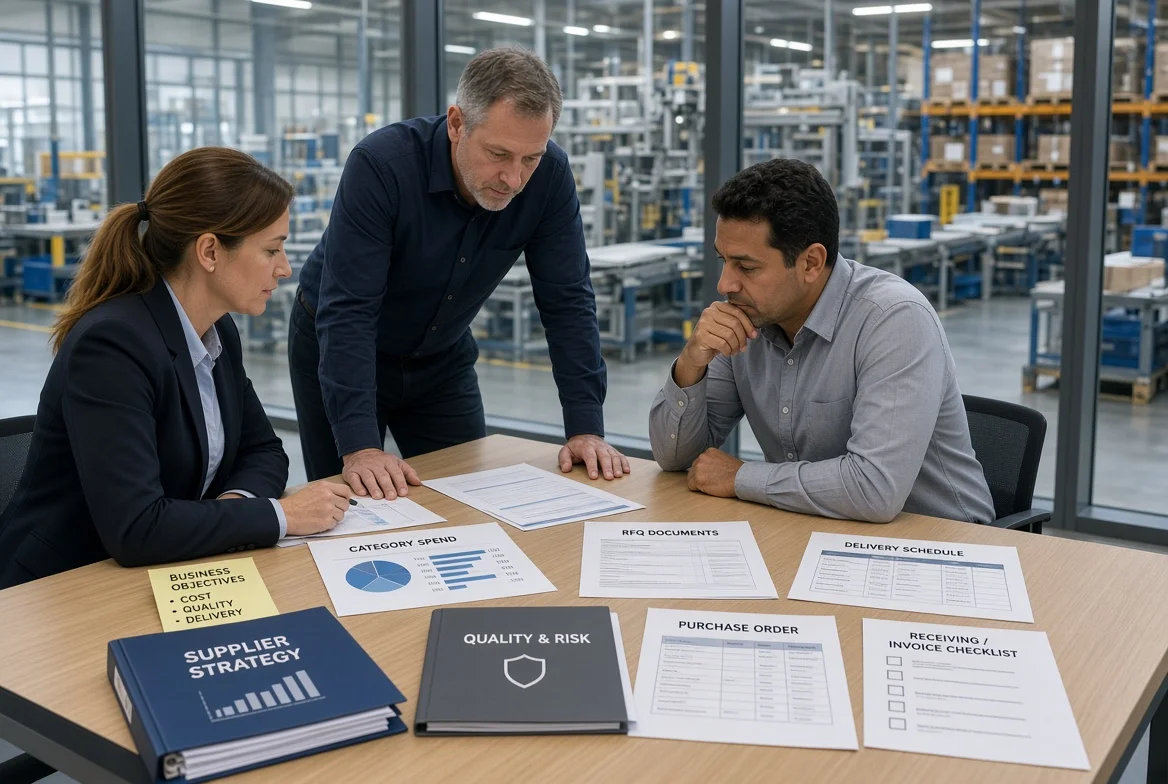
This guide explains a procurement strategy framework for procurement managers, sourcing teams, business owners, and manufacturing buyers. It shows how to organize business goals, spend categories, supplier selection, sourcing methods, commercial terms, quality, risk, and performance into one structure. The framework helps teams move from reactive buying to coordinated purchasing decisions.
This guide is for manufacturing procurement managers, sourcing teams, operations leaders, OEM buyers, and industrial supply-chain professionals. It explains how to build a manufacturing procurement strategy around direct materials, BOM cost, supplier qualification, capacity, incoming quality, lead time, and risk so purchasing decisions support production instead of disrupting it.
A practical guide for manufacturing procurement managers, sourcing teams, plant managers, operations leaders, and OEM buyers on balancing cost, quality, and delivery. It explains how to set quality and lead-time gates, compare total cost among capable suppliers, and protect production continuity without treating lowest price as the only decision.
This guide helps procurement managers, buyers, manufacturing teams, sourcing professionals, and business owners reduce supplier costs without weakening quality, delivery, or supply continuity. It explains how specification clarity, spend analysis, should-cost work, supplier productivity, value engineering, MOQ and commercial terms, quality-cost control, and logistics planning lower commercial and total cost while protecting supplier capability and long-term relationships.
This guide is for procurement managers, business owners, sourcing teams, operations leaders, and manufacturing buyers who need a workable purchasing plan before orders become urgent. It covers the inputs, nine planning steps, manufacturing and import issues, common mistakes, supporting documents, and KPIs used to organize demand, specifications, suppliers, budgets, quality gates, and delivery risk.
This guide helps global buyers, importers, procurement managers, OEM teams, and sourcing professionals turn factory quotations into reliable international supply. It covers RFQ preparation, supplier qualification, factory evaluation, sample control, quality inspection, total landed cost, Incoterms, logistics, lead time, IP and tooling protection, and supplier risk planning so teams can compare offers fairly and reduce cross-border disruption.
A practical guide for procurement managers, business owners, sourcing teams, finance leaders, operations professionals, and manufacturing buyers. It explains the key objectives of a modern procurement strategy and shows how to turn cost, quality, delivery, risk, compliance, and working-capital goals into measurable priorities.
Strategic procurement approaches for OEM manufacturing treat the factory as a long-term partner rather than a transactional vendor. This guide covers partnership models, dual sourcing, total-cost evaluation, early supplier involvement, risk mitigation and practical KPIs so buyers can protect capacity, quality and total cost across the full product lifecycle.
This guide is for procurement managers, sourcing professionals, business owners, and manufacturing buyers who mix two related terms. It explains how a long-term procurement plan differs from category-level supplier selection, and how the two should work together on cost, quality, risk, and supply continuity.
This guide is for manufacturing procurement managers, sourcing teams, operations leaders, finance professionals, and plant managers facing material and supply-cost pressure. It shows how to reduce total manufacturing cost—not just unit price—through spend analysis, BOM review, value engineering, supplier selection, quality control, inventory, and logistics, without weakening delivery.
This guide is for business owners, procurement managers, purchasing teams, sourcing professionals, and manufacturing buyers who mix the two terms. It explains how procurement strategy and purchasing strategy can differ in scope, then shows how to decide which layer your organization needs and how both should work together.
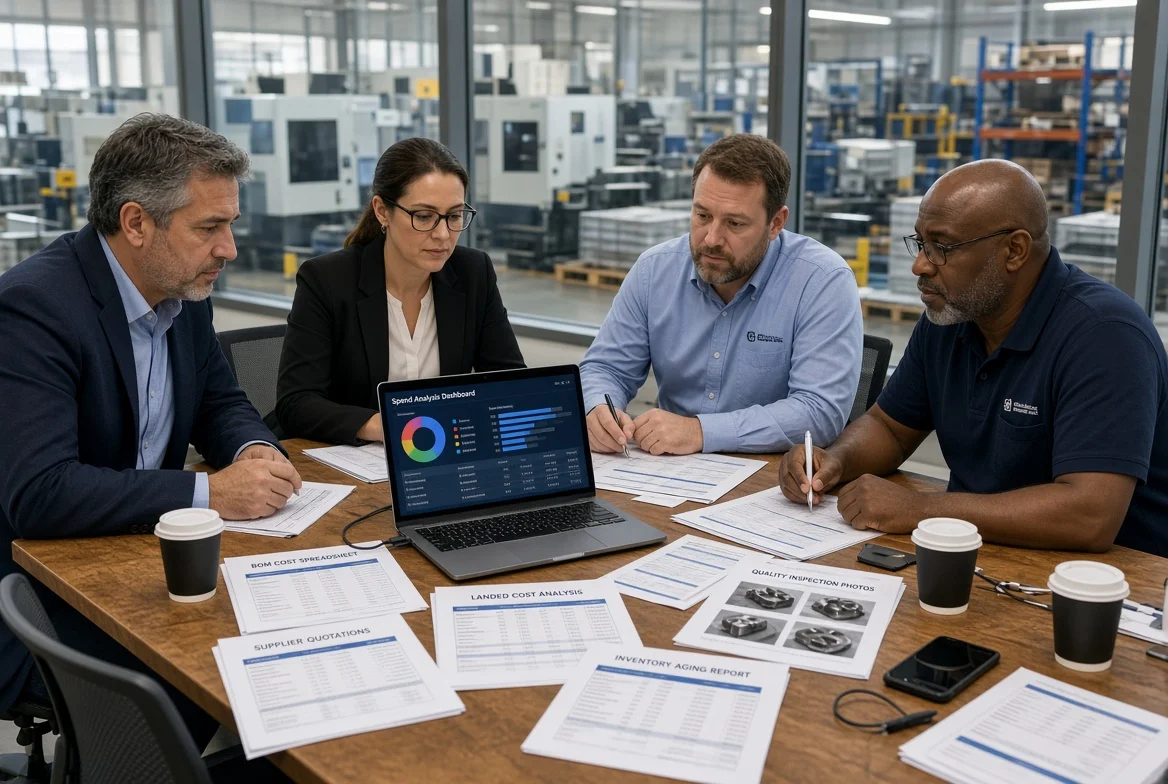
This guide is for procurement managers, buyers, business owners, sourcing professionals, and manufacturing teams who need to reduce total purchasing cost without weakening quality, delivery, supplier capability, or supply continuity. It shows how spend analysis, specification control, supplier strategy, total-cost modeling, commercial terms, quality, inventory, logistics, and process design change the cost structure behind a quote.
This guide is for business owners, procurement managers, sourcing professionals, operations leaders, and manufacturing buyers. It explains how procurement priorities differ by industry and how to adapt supplier selection, inventory, quality, risk, and KPIs to cost, delivery, compliance, and supplier capability.
For procurement managers, business owners, sourcing teams, and manufacturing buyers, this article explains how strategic procurement differs from traditional purchasing in time horizon, cost, suppliers, risk, and data. Use the comparison to see which approach fits each category and when a more strategic model is warranted.
This guide is for manufacturing procurement managers, operations leaders, sourcing teams, plant managers, and OEM buyers who lose time to stockouts, emergency freight, duplicate orders, and recurring quality issues. It shows how to align purchasing with production and MRP, segment suppliers by risk, standardize RFQs, manage inventory and performance, and measure cost, quality, delivery, and resilience as one system.
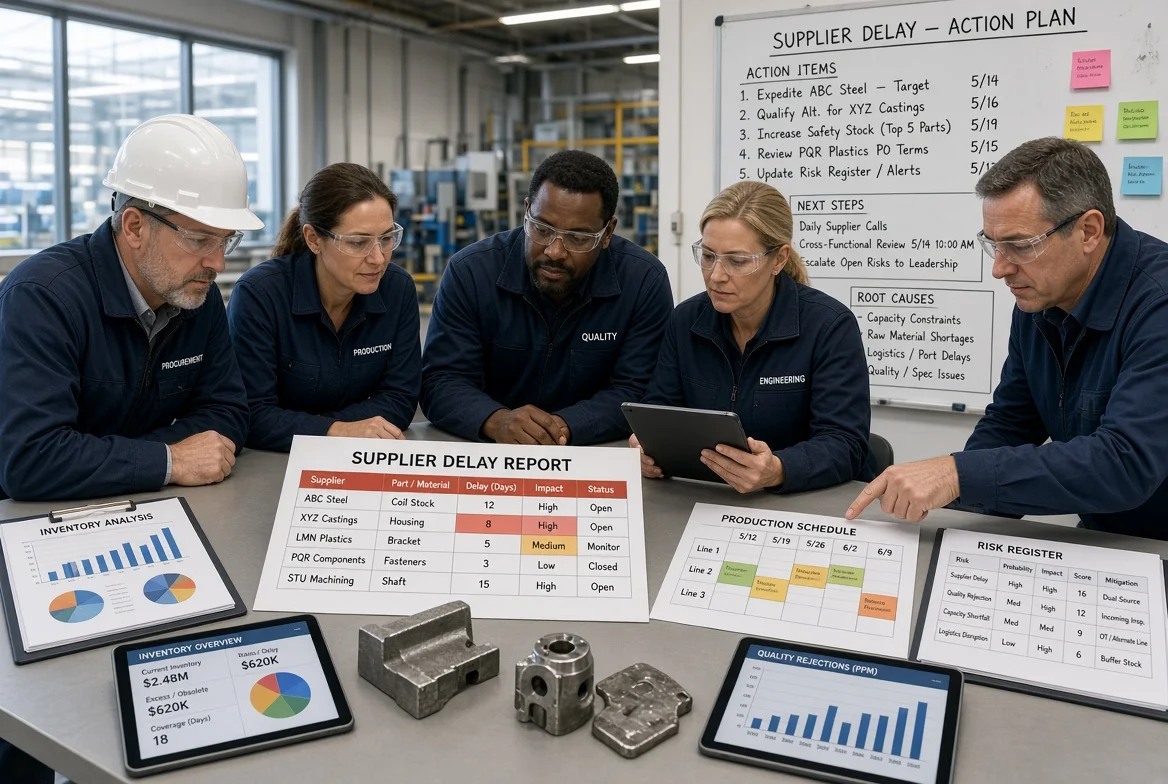
A practical guide for manufacturing procurement managers, sourcing teams, plant managers, operations leaders, and supply-chain professionals. It examines the most common procurement problems that stop production, raise costs, and create quality risk, then shows how to diagnose root causes and apply targeted solutions across supplier delivery, quality, capacity, inventory, planning, and performance management.
This guide explains what procurement strategy is and how business owners, procurement managers, sourcing professionals, and manufacturing buyers can use it to manage suppliers, total cost, quality, delivery, and risk. It covers core components, a step-by-step way to develop a plan, industry examples, performance measures, and common mistakes that weaken purchasing decisions.