
When you are considering approving a manufacturing quote, remove tooling, setup, samples, engineering, testing, maintenance, packaging, or any other costs that are not recurring from the unit price and take time to consider them separately. In custom products, it is customary to include tooling costs in supplier quotes. Just as a factory needs to have a product to manufacture, molds, dies, fixtures, programs, and first piece trials are necessary. It is not that a supplier charges for them. The difficulty is that you don't know what that number entails or who it belongs to or if it is going to repeat, or what volume will support the piece price, or what costs will be incurred beyond sample approval.
Don't assume that a low unit price indicates that the supplier is not paying anything to supply it. There can be no tooling, billed separately or amortized into the piece price, or amortized through a minimum quantity. The purchase of a mold does not provide complete control. Ownership, storage, maintenance, transfer and access should be documented before money changes hands.
What Are Tooling Costs, Setup Fees, and Hidden Charges?
On many quotations these three labels are all confused. They are not a commercial item. Use them as separate cost types to pose the appropriate question for each one.
Tooling Costs
Tooling: equipment, specially designed or prepared for the production or testing of the product. This can include molds, dies, fixtures, jigs, gauges, test fixture, special cutters, forming tools, print plates, and cylinders. There are tools that can be used in other similar jobs. Others are focused on only one buyer or one SKU. The following quote should specify the type of payment you're paying for.
A tool can be a steel injection mold with slides & inserts, a press die, a CNC work holding fixture, a crimping applicator or a die cutting tool for a carton. If the factory is unable to run your part without the asset, it goes in the tooling discussion.
Setup Fees
Setup is the task of preparing a machine, line, material, fixture, program or process before production begins. Common examples of these include CNC programming, color change, mold installation, line clearance, applicator changeover, print setup, and first-piece approval.
Set up is time and labour. It's not the same as having the tool. You can have a mold and still have to pay for the installation, warming up, and qualify the first shots that are ordered later.
Non-Recurring Engineering and Development Costs
Non-recurring engineering costs in manufacturing (NRE), sometimes referred to as NRE When a charge is not in the main quote, in a footnote, without an express warning, or is added after having committed, it is a hidden charge. These include tool maintenance, additional trial shots, fixture correction, additional samples, inspection fixtures, secondary operations, packaging development, freight and engineering changes following sample approval.
But not only are there surprise invoices. Or it's a unit price that is only valid if those extras remain unpaid or a launch date that is moved while the factory waits for your approval of a charge that wasn't scoped!
Hidden or Unclear Charges
A charge is hidden when it is missing from the main quote, buried in a footnote, excluded without a clear warning, or introduced after you have already committed. Common examples are tool maintenance, extra trial shots, fixture correction, additional samples, inspection fixtures, secondary operations, packaging development, freight, and engineering changes after sample approval.
The danger is not only surprise invoices. It is also a unit price that only works if those extras stay unpaid, or a launch date that slips while the factory waits for you to approve a charge that was never scoped.
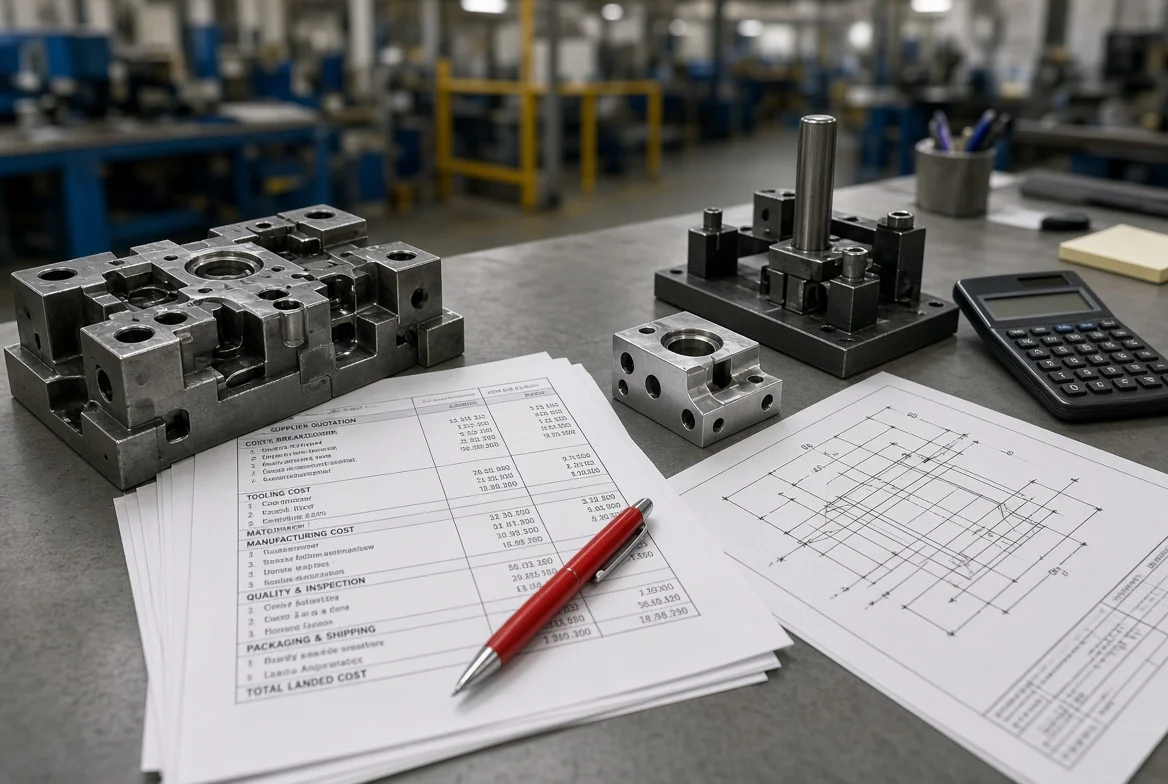
Why Manufacturers Charge for Tooling and Setup
The charges are because the custom production has fixed work that cannot be recovered from a few finished parts. The quantity yet remains to be justified. You can determine if the quote is complete by comprehending the work performed.
Tool Design and Manufacturing
Custom tool is designed, specified, machined, heat-treated, assembled, fitted and tried. There are many aspects that must be selected for an injection mold, such as steel or aluminum selection, cavities and cores, cooling, venting, ejection, surface finish, and trial shots. Punch and die matching, clearance and tryout are all required for a stamping die. To make a test fixture it must have datum points, clamping and repeatable measurement.
Number of cavities or slides, tight cosmetic faces, thin walls, insert-molded hardware, or high expected output. Inquire about tools that are incorporated and their anticipated lifespan. You should not compare two “mold” lines until they are in the same scope.
Machine Preparation and Changeover
Setup is the total number of hours used to install the tool, load programs, stage material, adjust parameters, clean the line, change the colour or applicators and approve the first output. That time can be equivalent to the run on a high-mix line.
In a short batch, setup is very significant per unit. In the long run, the same set up is thinned out. That's why a supplier might offer a setup fee for quantities above a certain threshold and bill the setup for small repeat orders.
Process Validation and Trial Production
Trial shots, sample runs, first pieces, inspection, adjustment and rework are often necessary before the release of production. Inquire about the number of trials/correction rounds included in the cost of a tooling or setup, the materials and machine time included, and what constitutes an additional charge.
A “finished” tool does not necessarily mean a production ready tool. There is still a need for filling and still a need for warpage, flash, surface and dimension to follow the agreed criteria.
Supplier Recovery of Fixed Costs
The costs of tooling and set-up are costly and an extremely small order cannot cover that. The supplier can either charge a fee for the tool or deduct it from a unit price or expect a minimum volume. It is important to be familiar with the type of model that is in front of you. Don't mistake a low piece price which is based on a high annual volume for a gift. It's a wager on a proposition you might or might not have.
Common Tooling Costs in Different Manufacturing Processes
Tooling isn't just injection molds. Assets from each process can be paid as a one-time fee, setup line or exclusion.
Injection Molding Tools
Mold cost can be in design, steel or aluminum, cavities, cores, slides, inserts, cooling, venting, ejection, surface finish, mold trials, correction, and validation. Inquire about which of those are included in the price, the number of cavities you are purchasing and what the supplier is expecting to produce. A single-cavity aluminum sample tool is not a multi-cavity production mold.
Stamping, Forming, and Sheet-Metal Tooling
Sheet-metal & stamped-part quotes include dies, bending tools, forming tools, correction fixtures, punch tooling, and inspection gauges. Most parts with multiple bends, tight angle control, custom hole patterns or high volume repeatability typically require more than a generic brake setup. If the factory is dedicated to producing the die, this should be reflected. If they intend to have soft tools and additional setups for each batch it should be apparent.
CNC Machining Fixtures and Programming
Programming, workholding, soft jaws, gauges, special cutters, probing, and first-article inspection may be required to perform the CNC work. Fixture cost may be one-time, per product version or recurring if the product design changes. Programming is considered to be a setup or NRE. When using the same part for several years, inquire if the program and fixture remain the same for your job.
Cable Assembly Tooling and Test Fixtures
Crimping applicators, dies, cutting and stripping tools, overmolding tools, pinout testers, continuity fixtures and electrical safety equipment may be needed for cable work. Inquire if the applicators are buyers-dedicated or shared, if test fixture are part of the tooling or quoted at a later stage, and if electrical report is prepared as first article report is part of the sample price.
Printing and Packaging Tooling
Print plates, cylinders, embossing or foil dies, die cutting tools, laminating setup, colour approval and artwork preparation may be required for packaging. If you have a long print run, the price per carton of the tool might seem small. In the short run the same plates and dies may be the dominant factor in the job. Make sure you know the number of SKUs, languages or reprint setups and confirm them.
Industrial Equipment and Production-Line Tooling
The machine cost is not equal to the implementation cost. The equipment line itself may not include custom fixtures, gauges, test systems, programming of automation systems, integration, commissioning, training and production validation. If the quote is for a cell and not a catalog machine, then those items are considered to be part of the commercial scope.
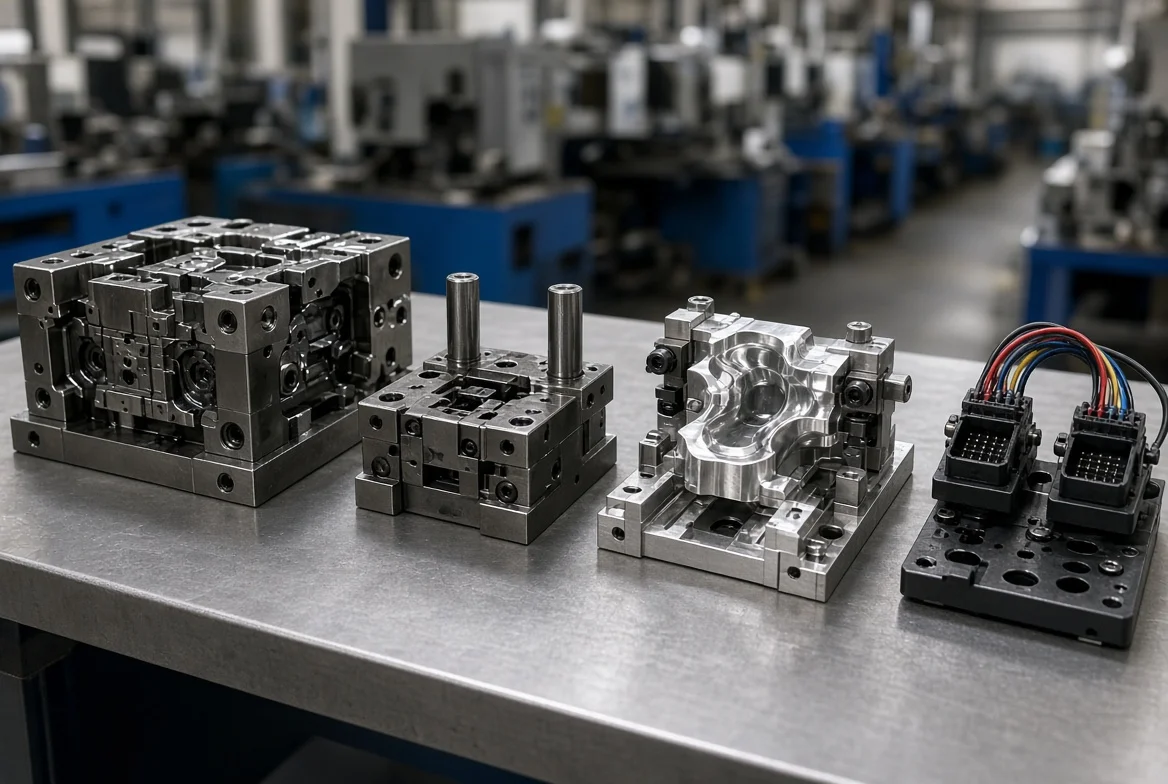
How Setup Fees Appear in Supplier Quotations
Not all manufacturing quotes state the set up fee as “set up.” Read the notes, the production conditions and the quantity assumptions, NOT the unit-price line.
One-Time Setup Fee
There may be a single charge for programming, tool installation, first piece approval or line preparation. Inquire if it will apply once per project, once per product, once per purchase order or once per production batch. One-time is not always one time in the factory!
Per-Batch or Per-Order Setup Fee
Setup can repeat for every changeover in product, material, colour, tool, program, or line. Common situations include printing colour changes, changing cable applicators, CNC fixture changes, mould changes and high mix cell changeovers. When ordering mixed SKU or short repeats this is enough to top up the original tool charge over the course of the year.
Setup Amortized into Unit Price
Some suppliers fold setup into the piece price based on a stated quantity or annual volume. Ask what quantity supports that price and what happens if actual demand is lower. If the quoted price assumes 10,000 pieces and you release 2,000, the factory may reopen setup, MOQ, or unit price.
Setup Included Only Above a Minimum Quantity
The supplier can cover the setup costs on smaller orders, but once the MOQ is reached, the supplier can absorb the setup cost and pass it on to the customer. Compare this condition with your actual demand. A no-cost setup on a number that you will never shot at is not a help.
Setup Hidden in “Engineering,” “Processing,” or “Service” Lines
Setup can also be covered as engineering, processing, service, development, and/or production preparation. Request a description of the activity in simple terms, the amount of labor and machine time required, and if there are multiple charges.
How Tooling and Setup Charges May Appear in Supplier Quotes
Quote presentation | What it may mean | Buyer question |
|---|---|---|
Separate tooling fee | Mold, die, fixture, or special tool is charged upfront | What exactly does the tooling include? |
Setup fee | Machine or line preparation is charged separately | Is it one-time or recurring? |
Amortized unit price | Tooling or setup is spread across units | What volume is the amortization based on? |
MOQ condition | Setup is absorbed only above a minimum quantity | What is the MOQ and the lower-volume price? |
Engineering / NRE line | Design, DFM, programming, or validation work | What deliverables are included? |
Processing or service fee | Broad charge for production support | Can the supplier itemize the activity? |
Excluded from quote | Buyer may be charged later | What must be added before ordering? |
Tooling Ownership, Maintenance, and Transfer Rights
The investment in a piece of equipment is not the solution to who owns it, who's responsible for its upkeep, or who will take it home with them. Ownership of tools, in manufacturing, is a commercial issue, not an emotional one. Include it in the quotation or purchase order or in the tooling contract, and let it be reviewed by a legal expert. The information in this article is not, nor is it intended to be, legal advice.
Who Owns the Tooling?
These structures are generally either buyer-owned tooling paid separately, supplier-owned tooling, tooling amortized into piece price, shared or jointly funded tooling, or customer-provided tooling. Each of the structures affects who can move the tool, who is responsible for any repairs, and what is the impact of changing suppliers.
If the tool is being paid for, don't assume that the factory owns it unless it is stated so on the documents.
What Does Ownership Include?
The ownership can include the actual tool, inserts, tool modifications, spare parts, CAD files, drawings, programs, gauges, test fixtures and documents. Many times a buyer purchases a mold, only to find out that a program, electrodes or checking fixtures were not included in the transfer. Provide a list of the assets related to the one listed above.
Tool Maintenance and Repair
Tools require cleaning, lubrication, P.M. (preventive maintenance), replacing wear parts, polishing, repair, or refurbishment. Inquire with respect to normal wear and tear, as well as maintenance costs, and who is responsible for repair costs should the product be damaged or the design be changed. An inexpensive tool that doesn't have a maintenance plan can end up costing more than a more expensive tool that has a clear wear out policy.
Tool Life and Guaranteed Output
A tool life may be specified or warranted when appropriate, as well as the acceptable number of parts. The number will vary according to the type of tools, the type of steel, the process, maintenance, and what constitutes a good part. Never take a promise on the chin that a verbal “this mold lasts forever” is a promise. When tool life is a factor, specify part size, production requirements, etc., in writing.
Tool Storage, Access, and Transfer
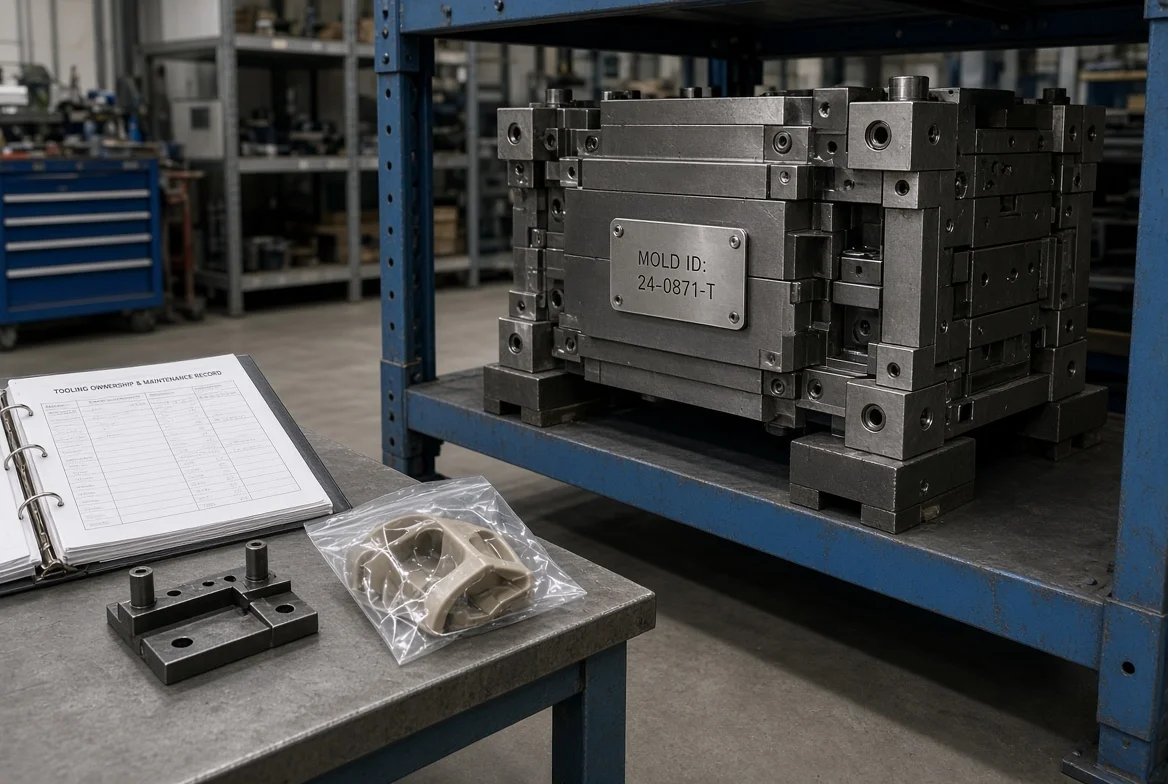
Explain where the tool is stored, how it is marked, if you can inspect it, how it can be transferred and who will be responsible for having it removed, transported and re-qualified at another supplier. If tools were not tagged as "buyer's property," it can be difficult to locate them two years later.
Sample, Trial, and Validation Charges
Tooling and set-up are sample dependent. The first tooling fee does not usually cover all the rounds of a trial, correction, test and approval.
Tool-Trial or First-Shot Charges
Typical methods like molding, die casting, and stamping typically require trial production to ensure the process, dimensions, appearance and proper filling. Inquire about the costs of trial material, machine time, labor, inspection, and sample shipment.
First-Article or Initial Sample Charges
Special inspection, report, labelling and buyer approval may be required for first article parts. A supplier can add a separate price to that package or provide only a limited number of those packages. Finalise the number of samples, the type of reporting and who is responsible for freight.
Tool Correction and Modification Charges
Corrects occur due to changes in design, shrinkage, warpage, fit, flash, surface or dimensional drift. Inquire what corrections are included in the original tooling price and what corrections are considered buyer driven changes. The difference between a drawing change after steel is cut and a supplier missing their drawing change trial target is not the same.
Number of Included Sample Rounds
Verify trial or sample rounds, quantities, scope of inspection, delivery method and approval schedule. The cost of engineering, material, machine, shipping and inspection is caused by extra rounds. Projects stall when they have an “unlimited samples until you are happy” expectation.
Validation and Production Release
Once a tool is completed, it does not necessarily go into production. The samples still need to conform to dimension, functional, cosmetic or quality standards. Break out the completion of the tools from the production approval in the schedule and commercial terms.
Hidden Charges in Supplier Quotations Beyond Tooling and Setup
Some costs are associated with the tool but don't mention the word tooling. Take some time to read them first before considering them to be set.
Inspection Fixtures and Gauges
Deburring, polishing, coating, plating, painting, heat treatment, assembly, testing or packaging may be omitted even if the base process is quoted. If the price does not include anodizing, it is not a finished-part price.
Programming and Software
Development and production charges can result from custom cartons, inserts, labels, trays, artwork, pallets, moisture barriers, anti-static materials or retail packs. Packaging of the production is not shown by sample parts in a poly bag.
Secondary Operations and Finishing
Deburring, polishing, coating, plating, painting, heat treatment, assembly, testing, or packaging may be excluded even when the base process is quoted. A machined price that omits anodizing is not a finished-part price.
Packaging Development and Special Materials
Custom cartons, inserts, labels, trays, artwork, pallets, moisture barriers, anti-static materials, or retail packs can create development and production charges. Sample parts in a poly bag do not prove production packaging is included.
Certification and Third-Party Testing
Often, lab testing, compliance testing, certificates, audits, inspections and customer-specific documentation are separate. Include a test report if your customer wants one prior to shipment, in the RFQ.
Freight, Insurance, and Delivery
Freight, insurance, customs, handling, local delivery are all additional costs incurred with shipping the tool, sending samples, moving a mold, exporting equipment or delivering production goods. There are two commercial pictures:
Storage and Idle-Tool Charges
Some suppliers charge for long-term storage, maintenance, reactivation, or requalification if a tool sits unused. This is not universal. Ask for the policy instead of assuming there is none.
Tooling Amortization and Unit-Price Impact
Some suppliers may charge fees for long-term storage, maintenance, re-activation or re-qualification when a tool is not used. This is not the case for everyone. Always request an anti-bullying policy, don't assume it exists.
Tooling Paid Separately
Tooling and set up is recovered from suppliers with a separate charge, a higher price per unit, a commitment to a volume or some combination of these. Look at the structure – not just the first invoice.
Tooling Amortized into Unit Price
The tool is paid for in advance. The periodic cost of the unit price is either ignored or minimized in tool recovery. The economics of the long-term piece are easier to discern but ownership, maintenance and transfer require documents.
Tooling Included in an All-Inclusive Unit Price
The supplier recovers the tool inside the piece price with no separate line. The quote looks simple. Ownership, remaining recovery, and transfer rights often become less clear. If you may move the tool later, this structure needs extra questions.
Comparing Different Supplier Structures
A higher upfront tool and a lower unit price can win at high volume. A lower upfront cost and a higher unit price can fit uncertain demand. Build a few realistic volume cases and compare total program cost. Do not pick the quote that looks cheapest on page one.
Tooling Cost Structures Buyers May Encounter
Structure | Upfront cost | Unit price | Main buyer question |
|---|---|---|---|
Tooling paid separately | Higher | Lower, or separate from tool recovery | Who owns and maintains the tool? |
Tooling amortized | Lower or zero | Includes tool recovery | What volume is assumed? |
All-in unit price | Low visible upfront cost | May be higher | Is tooling ownership defined? |
Shared tooling | Shared or allocated | Depends on usage | Who controls access and changes? |
Buyer-provided tooling | Buyer supplies or funds the tool | Quote may exclude the tool | Who maintains and transfers it? |
How Setup and Hidden Charges Affect Different Manufacturing Processes
One tooling model does not fit every factory. Use the process in front of you.
Injection Molding
Review mold design, steel, cavities, cooling, ejection, inserts, trials, corrections, maintenance, expected output, and sample approval. Ask about spare inserts, hot-runner ownership if used, and who pays for polish after wear.
CNC Machining
Review programming, fixtures, soft jaws, special cutters, probing, gauges, setup, first-article inspection, and secondary finishing. Repeat orders still have setup unless the cell is dedicated.
Sheet Metal and Stamping
Dies, bending tools, forming tools, correction fixtures, programming, and inspection gauges change both the quote and the repeat-order cost. Soft tooling plus frequent setup is a different commercial deal from a dedicated progressive die.
Cable Assembly
Cutting, stripping, crimping, applicators, dies, overmolding, test fixtures, labels, samples, and validation can each appear as a separate charge. Shared applicators may be cheaper upfront and slower or less controlled on your crimp.
Printing and Packaging
Plates, cylinders, dies, embossing tools, artwork, color setup, lamination, finishing, and trial production matter more on short runs and multi-SKU reprints.
Industrial Equipment
Engineering, automation programming, fixtures, integration, commissioning, training, testing, spare parts, and service may sit outside the equipment price. Treat the production-ready cell as the scope, not the machine brochure.
How Buyers Should Review Tooling Costs in Supplier Quotes
Use a review method before you approve anything. The goal is a complete scope, not a lower headline number.
Request a Line-by-Line Cost Breakdown
Ask for separate lines, adapted to the process, such as:
- Tool design
- Tool manufacture
- Tool material
- Inserts or special components
- Programming
- Setup
- Trials
- Samples
- Inspection fixtures
- Testing
- Corrections
- Maintenance
- Packaging
- Freight
- Storage
- Engineering
- Certification
What does each charge contain - labor, materials, machine time, samples, reports, revisions? The two factories may require different amounts of tooling fee, such as steel in one and steel plus two trial rounds in the other.
Verify What Is Included in Each Line
Ask what labor, materials, machine time, samples, reports, and revisions sit inside each charge. “Tooling fee” at two factories can mean steel only at one and steel plus two trial rounds at the other.
Confirm Recurring vs One-Time Charges
Question if there are charges for a single time, per batch, per product change, per delivery, per tool change, or a yearly charge. Setup charges for supplier quotes that seem insignificant on the initial PO can become a significant year for a high-mix solution.
Confirm Volume and Amortization Assumptions
Calculate unit price and tool recovery from production quantity, annual volume or program life. If that is incorrect, then it's not the price.
Review Ownership and Future Access
Ensure that the documents are owned, stored, maintained, transferred, inspected, limited, and exit conditions are documented prior to paying for tooling. If you can't check if it’s worked or move it, you've invested in an asset you don't own.
Confirm Purchase-Order and Contract Language
Transfer quotation assumptions to the purchase order, tooling agreement or supply agreement. Review with qualified commercial or legal counsel ownership, liability, transfer, warranty and change-control terms. It is easy to misplace a quote note. A PO line is not an easy one to overlook.
Common Buyer Mistakes with Tooling and Setup Charges
The vast majority of tooling disagreements begin with the buyer claiming the quantity or the scope of the work.
Comparing Tooling Prices Without Comparing Scope
The lower tooling quotations might not include trial, corrections, inspection fixtures, maintenance, or drawing. Prior to ranking prices, compare cavities, steel, sample rounds and included corrections.
Assuming Tooling Ownership Is Automatic
Don't accept a verbal “of course it's yours.” It is necessary to have ownership, access, storing and transferring in writing.
Ignoring Tool Maintenance and Tool Life
Wear parts, repair, replacement and expected output may be higher than the invoice price of the original tool. Who is responsible for the normal wear?
Accepting an Unlimited Sample Expectation
Verify trials, samples, rounds of correction, and rounds of approval. Both sides waste time when the sampling is open ended.
Assuming Setup Is Charged Only Once
Setup can be repeated per batch, per SKU, per colour, per material and per changeover. Ask the factory what exactly they do for their line scheduling.
Failing to Separate Tooling from Unit Price
We may be misled when the price of the tool is built into the price of the part – and we might leave with nothing!
Ignoring Design-Change Costs
Changes post tool release are engineering, engineering modification, material, sample, and revalidation charges. Freeze as much as possible before steel is cut.
Choosing the Lowest Tooling Quote Automatically
After price comes quality of the tool, quantity expected, performance of the sample, maintenance, delivery, and the capability of the supplier. A low cost instrument that doesn't maintain the dimension is not a savings.
Final Tooling and Setup Cost Checklist Before Ordering
Review this list prior to approving tooling, setup, sample or supplier quotation costs.
Tooling Scope Checks
- The type of tool, material, design and purpose are specified.
- The design, manufacture, trials, corrections and samples are included or priced.
- Expected tool life or acceptable output is discussed where appropriate.
- Identifies the assets, programs, test tools, gauges, fixtures, and inserts.
- Use and ownership is recorded.
- There are clear responsibilities for storage, maintenance, repair and replacement.
Setup and Sample Checks
- Setup is one-time, per order, per batch, per SKU or amortised.
- Programming and changeover is included or priced.
- The number of samples and number of trials is indicated.
- The requirements for first-article inspection and validation are well defined.It is clear the requirements of the first article inspection and validation.
- The role and responsibility of tool correction and modification is defined.
- Sample shipping and packaging is included.
Hidden and Commercial Charge Checks
- Testing, certification, and inspection fixtures are identified.
- Secondary operations and packaging are included.
- Understands freight, insurance, customs and delivery.
- Storage or idle tool fees are disclosed.
- MOQ and volume assumptions are clear.
- Conditions and validity of quotes are recorded.
- Exclusions are addressed prior to ordering.
- The final terms follow through on the purchase order or agreement.

Summary Guidance — Review the Tool, the Setup, and the Conditions
Don't assume that tooling and setup are things you can put off if the unit price is low.Do not consider tooling and set-up as a separate line that can be overlooked because it is a low unit price. Inquire about each charge: What is it, will it reoccur, will it be amortized, who is responsible for the tool, how will it be maintained, which samples are included, which corrections are included, and what additional charges may arise after ordering.
There are times when a low tooling quote is not necessarily the best quote. The good offer is the one that pays for a suitable tool, lays out who owns it, spells out a realistic validation plan, makes set-up predictable, and results in a production cost that you can still explain six months later.