
Not all the cheapest supplier quotes are the best. A low number can be a sign of missing scope, lower standard materials, lower quality, making an unrealistic MOQ, committing to an unreliable lead time, and causing the buyer to pay more total costs once quality issues, expediting, inventory and operational disruption are added up. The lowest cost should be used as a benchmark, and then validated against technical compliance, quality evidence, delivery credibility, capacity, commercial terms and supplier continuity before proceeding to place an order.
The cost remains competitive. Not picking the lowest bid doesn't signify that procurement has given up on savings. In other words, value is the offer that is the best from the perspective of the total value of the offer, the total cost, and the total risk of execution. The lowest tender is accepted if the scope is full completed and the residual risk is acceptable.
Why Buyers Are Drawn to the Lowest Supplier Quote
Price is easily viewed, easily ranked in a spreadsheet, easily reported up the hierarchy. The lowest number is appealing due to cost-reduction goals. But the challenge begins when that one number becomes the supplier value as a whole.
Unit Price Is Easy to Measure
The time for comparing Unit price is minutes. There is more to be done for quality risk, delivery reliability, technical support, and future cost. The price should not close the review, it should open it.
Low Price May Reflect Genuine Efficiency
It's possible to have a low quote that is accurate. Some suppliers can buy material more effectively, have a higher utilisation, automate better, or have excess capacity that they are able to utilise at a lower cost rate. The question to be answered is: how does this cost have been paid and is the scope still in place?
Low Price May Reflect Different Assumptions
A lower number will typically be based on different sets of assumptions regarding material grade, quantity, quality level, packaging, testing, or basis of delivery. One supplier offers standard cartons and routine inspection, but the RFQ requires them to offer export packaging and 100% inspection. Until such assumptions are congruent the prices are not comparable.
Check the Scope Before Accepting the Lowest Quote
The initial course of action would be to establish that the lowest price supplier has offered exactly the same product and the same commercial scope.
Confirm Product, Drawing, and Specification Revision
Confirm part number, drawing revision, BOM, material, finish, tolerance, performance and configuration. The lowest quote, based on a super-simplified or antiquated design, is not a cost benefit.
Confirm Materials and Components
Verify exact material grades, thicknesses, finishes, component brands, and any substitution rules. A lower price can simply mean a cheaper or unapproved material that changes performance, certification, or customer acceptance.
Confirm Quality, Testing, and Documentation
Confirm precise material grades, thicknesses, finish and components brand and any substitution rules. A lower price may simply be due to a less expensive or unapproved material, which could affect its performance, certification, or customer acceptance.
Confirm Tooling, Packaging, and Delivery
Elucidate whether or not tooling, set up, samples, packaging, labels, freight, customs, and delivery are incorporated. If the price is low but the essentials are not included in the quote, then it is not complete.

Quality Risks Behind a Low Supplier Quote
Suppliers can save on cost by implementing genuine process improvement. In addition, they may cut down on the amount of material required, the level of process control, the need for inspection, or the need for more skilled workers. This is evidence that the buyer must review, and not take on faith that the seller cut the price because they were short of funds.
Lower-Grade Materials or Unapproved Substitutions
Alternatives or if no requirement for brand and grade, one can quote a lower cost material/component. Ensure all substitutions are approved and given in writing before production.
Reduced Inspection or Testing
Lower price does not necessarily mean 100 % testing, basic inspection, detailed report, full traceability or third party verification. Perform a line-by-line comparison of quality scope.
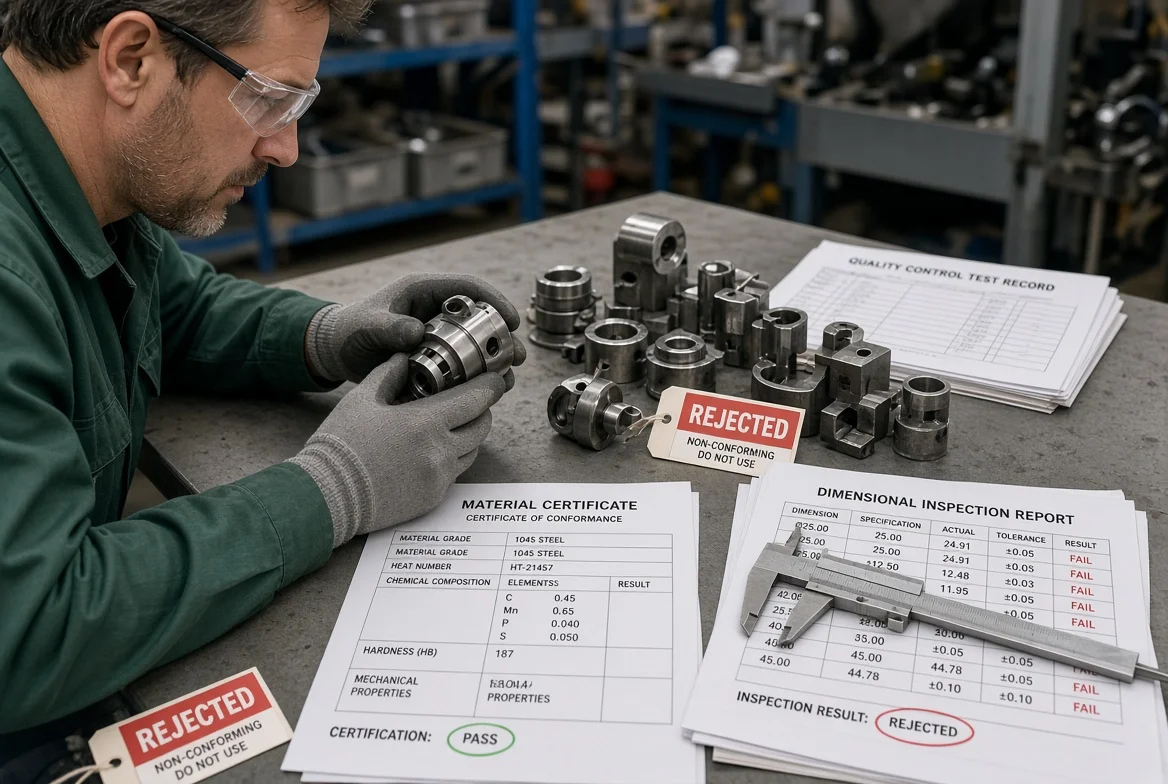
Higher Defect, Rework, or Rejection Exposure
Lower process control may result in higher sorting, rework, replacement, customer rejection or warranty cost. Measure samples, process controls, inspection evidence and supplier experience; not on assumed defect rates.
Quality Cost Can Erase the Initial Saving
The buyer's true cost are the inspection labour cost, rework cost, replacement production cost, return freight, customer claims, and production disruption. Once those items are on the scene, the first advantage in unit price can be lost.
Delivery and Capacity Risks of the Lowest Quote
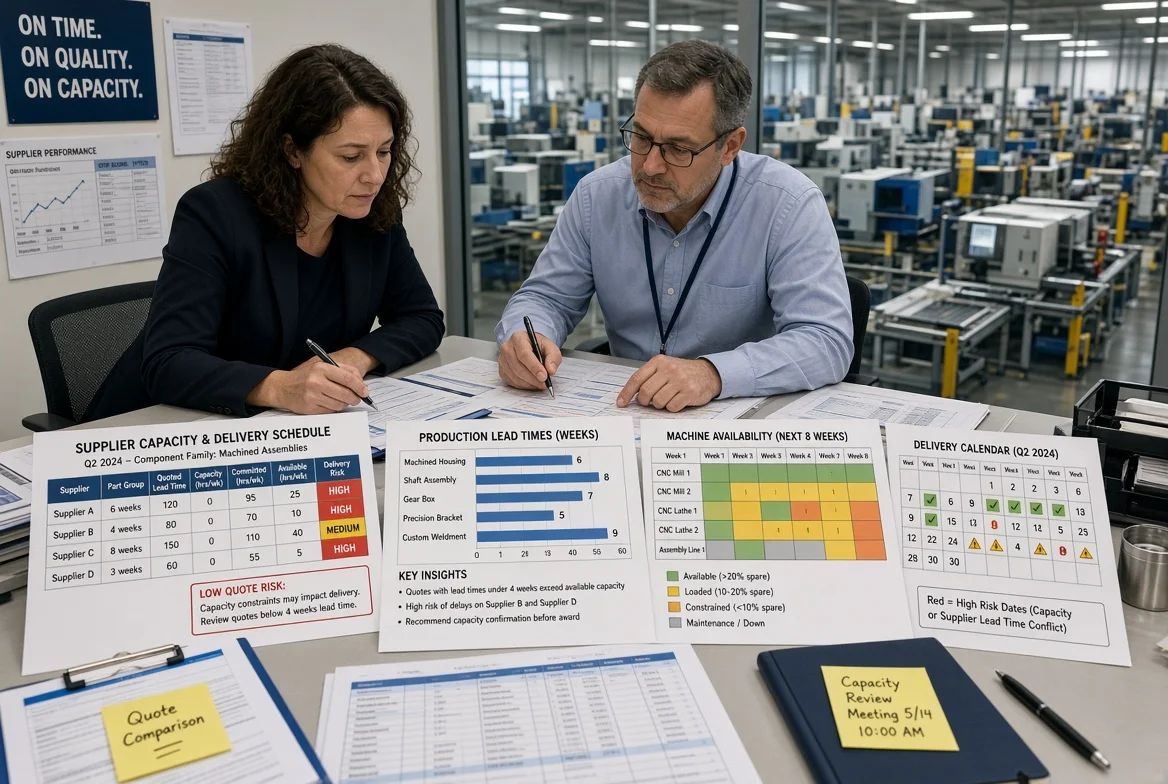
A low price is only valuable if the supplier is able to provide the amount of product that is needed and when it is needed.
Unrealistic Lead-Time Promises
An aggressive lead time can account for the absence of material procurement, tooling, production scheduling, inspection, packaging or shipping. Discuss the question of what is the start time for the clock, and if there is enough capacity to follow the schedule.
Insufficient Production Capacity
Some suppliers may bid low when they don't have the equipment, manpower, tooling or material availability to accommodate the repetitive production that the customer requires. The ability to prototype does not necessarily mean the ability to mass produce.
Delivery Delays and Expediting Cost
Late delivery leads to emergency buying, premium freight, production delays, failure to meet customer commitments and additional inventory. If delivery time is crucial, a higher cost supplier that has a good lead time might generate a lower total cost.
Capacity and Demand Growth
Determine if the supplier can meet growth expectations, seasonal demand spikes, new SKUs, and/or volume increases. A quote which is lower may be appropriate for a single order, but not for a long term supply program.
Hidden Commercial Costs in Low Supplier Quotes
A low quotation may be followed by exclusions, payment conditions, logistics, MOQ or later change charges which transfer the cost and risk to the buyer.
Tooling, Setup, and Sample Charges
Check if molds, dies, fixtures, programming, set-up, prototype, sample revisions, engineering and validation are included. However, a lower price per month can mean that you have a higher initial cost.
MOQ and Inventory Exposure
Generally, the smaller the unit price, the higher the MOQ. Which results in inventory, storage cost, financing cost, the risk of obsolescence and the risk of a lack of demand. Check the cost with realistic demands and cash-flow restrictions.
Packaging, Freight, and Import Costs
Details on factory price are provided without export packaging/labeling/ freight/ insurance/ customs/ duty/ taxes/ destination handling/local delivery. EXW vs FOB/delivered pricing has a huge impact on the landed cost.
Payment Terms and Quote Validity
The lowest quote might require a substantial initial deposit, payment of the balance due before the quote is finalized, a short time limit, or changing material prices. Better commercial value can be achieved in more manageable terms from a slightly higher quote.
Change Orders and Unresolved Assumptions
The scope is unclear, which means that the changes are charged for later, the material is changed, further tests are performed, packaging changes are made, or tests are rescheduled. Eliminate assumptions prior to approval.
Why the Lowest Supplier Quote May Not Be the Lowest-Cost Offer
Apparent Advantage | Possible Hidden Condition | Buyer Risk |
|---|---|---|
Lowest unit price | Different material or quality scope | Non-compliant or rejected product |
Low tooling-inclusive price | Tool ownership or maintenance unclear | Future access or replacement dispute |
Low factory price | Freight, duties, or destination charges excluded | Higher landed cost |
Large volume discount | High MOQ or annual forecast assumption | Excess inventory |
Short lead time | Material or capacity not confirmed | Production delay |
Low inspection cost | Basic testing only | Quality failure or added inspection |
Low initial price | Large deposit or short validity | Cash-flow or price-change exposure |
Supplier Capability and Continuity Matter More Than the Lowest Bid
The buyer must ensure the supplier is able to deliver the scope as quoted within the relationship to be expected.
Relevant Manufacturing Experience
Verify product type, material, process, tolerances, quality standards, testing, and delivery model experience. It is far more risky for a supplier to come up with a low price and lack any related capability than it is for an experienced manufacturer to quote a higher price.
Engineering and Problem-Solving Capability
There is often a need for design-for-manufacture (DFM) feedback, technical questions, corrective action, process changes and sample iteration during custom work. Industry support that can be useful adds value to the unit price.
Financial and Operational Stability
Review the capability of the supplier to obtain materials, service their equipment, employ qualified personnel, maintain quality control structures, and conduct operations. Depth of review shall be consistent with the purchase value and the criticality of the supplies.
Supply-Chain Dependencies
Continuity risk occurs when too many materials are sourced from a single supplier, subcontractor, machine, component, or shipping route. A low price that relies on an unstable supply situation can be costly when thrown off balance.
Communication and Corrective-Action Support
Evaluate the supplier's responses to inquiries, modifications, quality concerns, delays, corrective action and documentation. Performance records should be used for existing suppliers and RFQ responsiveness, samples, references, audits and technical communication should be used for new suppliers.
Compare Total Cost and Value Before Selecting the Supplier
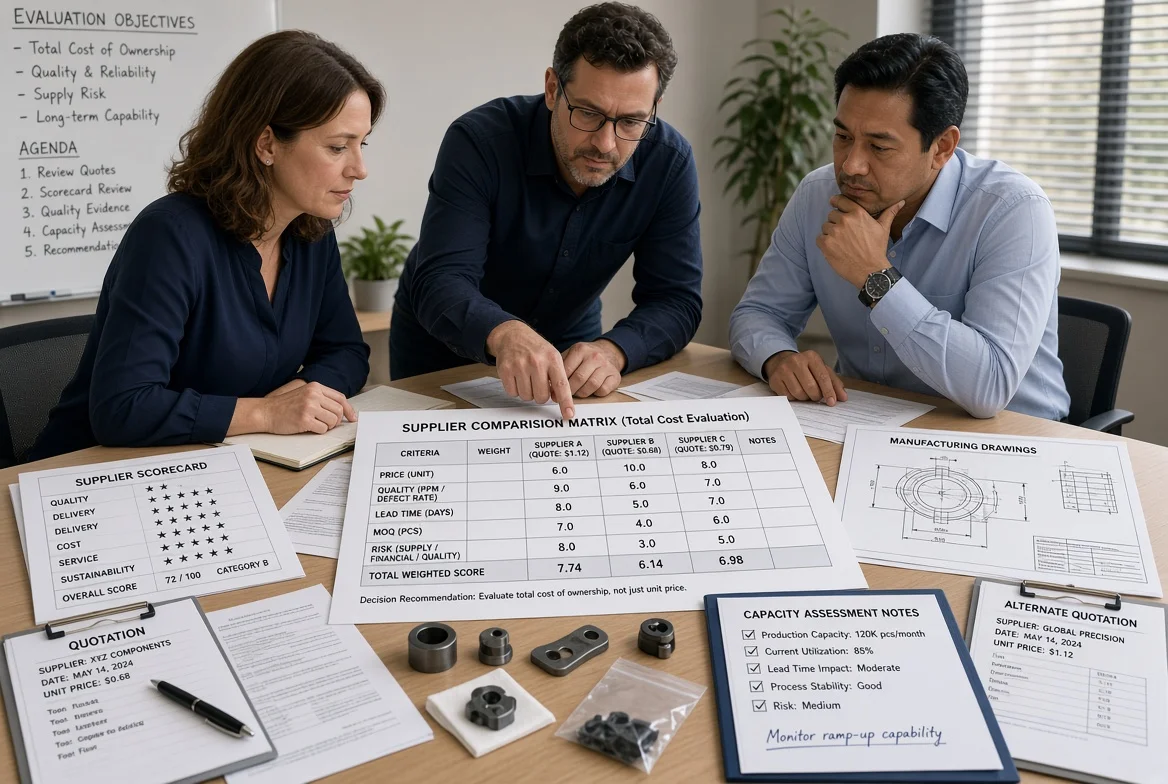
When deciding between suppliers, the whole commercial and operational cost of an offer, not just the price of the product itself, should be considered.
Calculate Landed Cost
Landed cost equals supplier's price + tooling + packaging + freight + insurance + customs + duties + taxes + destination handling + local delivery. Instead of using generic estimates, use the actual destination and/or commercial basis.
Consider Quality and Failure Cost
Quality problems result in either inspection, sorting, rework, replacement, warranty, return freight, customer claims or production downtime. Evaluate exposure based on supplier evidence and not make up defect probabilities.
Consider Inventory and Working Capital
MOQ, lead time, deposits, payment terms and batch size impact inventory and cash flow. Slightly higher unit price may be better, if you can get smaller orders, shorter replenishment or more flexibility in payment.
Consider Supplier Support and Lifecycle Value
Value can be added to a quotation through engineering support, training, spare parts, warranty, technical service, documentation and continuous improvement. This is particularly true of machinery, long-term OEM programs and complex assemblies.
Document the Trade-Off
Write their answers and explain why the chosen supplier provides the optimum combination of price, quality, delivery, capability and risk. The decision record will include clear supporting evidence if the selected supplier is not the lowest quote.
How to Evaluate the Lowest Supplier Quote Step by Step
If a single supplier is much less expensive than others, review in a structured manner.
Step 1 — Verify Technical and Commercial Scope
Verify product revision, materials, quality, testing, packaging, quantity, tooling, delivery, payment and exclusions.
Step 2 — Ask the Supplier to Explain the Price Basis
Request clear answers on:
- Which materials and components are included?
- How much and how much per year justify the price?
- What is taken for granted in the process and equipment?
- What tools and set up is included?
- What inspections and tests do they cover?
- On what basis is the packaging and delivery going to take place?
- What are the conditions and exclusions that may affect the price?
Step 3 — Validate Capability and Evidence
Review samples, inspection records, equipment, capacity, quality systems, relevant experience, references, and communication quality.
Step 4 — Calculate Total Cost and Risk
Include landed cost, MOQ, inventory, quality, delivery, payment, support, and potential failure exposure.
Step 5 — Negotiate Based on Facts
Negotiate scope, material, process, volume, packaging, delivery, and payment on the basis of evidence rather than demanding an arbitrary price cut.
Step 6 — Document the Final Decision
Record the selected supplier, final scope, negotiated terms, remaining risks, required samples, and approval conditions.
Common Mistakes When Choosing the Lowest Supplier Quote
Price-only decisions usually result from process shortcuts, internal pressure, or incomplete comparison.
Ranking Supplier Prices Before Checking Compliance
Do not rank quotes until materials, revisions, quality, testing, packaging, quantity, and delivery are confirmed.
Assuming the Lowest Price Is a Proven Cost Advantage
Investigate whether the supplier has genuine process efficiency or has simply omitted scope and risk.
Ignoring Supplier Questions and Warning Signs
If there is any doubt about the accuracy of responses, missing documentation, not clarifying material, unrealistic lead times or the inconsistent commercial terms, then review the response again.
Treating Quality Problems as Supplier Responsibility Only
When the supplier is contractually responsible for nonconformances, the buyer still has production, customer, logistics, inspection and management costs.
Ignoring MOQ, Payment, and Inventory
The cheapest unit price might demand stocks of more than what the business can manage, deposits of large sums or inflexibility in order that the company has to accept.
Failing to Record Why a Higher Quote Was Rejected
Record the value / risk trade-off. Later, it can be hard to justify an undocumented price-only decision.
Final Checklist Before Selecting the Lowest Supplier Quote
Before accepting the cheapest deal, make sure to do a few checks.
Scope and Compliance Checks
- RFQ, drawing, BOM, sample and revision confirmed correct.
- Materials, components, finishes, tolerances and performance meet
- The quality of the production, inspection, testing, certification and documentation are included.
- Tooling, Set-up, Sample, Engineering and Packaging Clear.
- Supplier deviations, substitutions, assumptions and exclusions addressed.
Commercial and Total-Cost Checks
- Assumptions for quantity/moq are realistic, and the same is true for the batch size and price-break assumptions.
- All price terms are included in this price, such as currency, Incoterms, freight, duties, taxes, and delivery understood.
- Payment terms, deposit, quote validity and price adjustments acceptable
- Landed cost calculated
- All costs associated with inventory, quality, rework, warranty and support are taken into account.
- Offer is not based on an unrealistic forecast or volume commitment
- This involves supplier capability and decision checks.This includes supplier capability and decision checks.
Supplier Capability and Decision Checks
- Capacities are the resources that can be added when new capacity is needed.
- Quality evidence is in place and samples perform acceptably.
- Communication and corrective-action capability suitable
- Understands supply-chain vulnerabilities and continuity threats.Awareness of supply chain vulnerabilities and continuity threats.
- Final decision on value & risk (not just price)
Summary Guidance — Choose the Supplier That Delivers the Best Acceptable Value
If the supplier quote is the lowest, it is a good option if it is capable of the entire requirement, if the supplier is capable, and it results in the acceptable total cost and risk. It should never be allowed because it is the lowest number on the page. Technical compliance, quality, delivery, capacity, MOQ, payment, logistics, supplier support, continuity and failure costs need to be considered.
Price should begin the discussion. Capability and total value should complete it.