
Never accept a supplier quotation without establishing what is and isn't covered by the unit rate. Hidden costs in supplier quotes are those that remain undisclosed until they are negotiated and clarified either in the initial quote or afterwards when the project changes. These are all non-core factors for the headline number and they can all sit outside of the figure.All of these factors are non-headline and can be removed from the number.
Not every line that is not in this list is a trick. There are numerous gaps due to a requirement which was not specified in the RFQ, a standard scope has been priced by the factory, or the commercial model includes additional charges for tooling, freight or inspection. It is not the task to squeeze all costs into one unit price. The idea is to make responsibility and exposure real before releasing a purchase order.
What Are Hidden Costs in Supplier Quotations?
Hidden costs are hidden costs that occur to the buyer, that are not apparent in the stated price. They head up out of the blue when you ask about exclusions, order conditions, delivery scope or project changes. Some are valid additional charges. If it can be seen, understood, and approved, then a mold charge on page two isn't hidden. Once production has been started, a required process that is discovered is another issue. This is a surprise that I don't want to see.
It is possible to have an honest low price. It may just take it for granted that it will be shipped at a high annual volume, domestic packing, buyer paid freight, limited inspection, or a single sample round. Your review should distinguish the products offered by the supplier from the products that your project still needs.
Excluded Costs vs Unclear Costs
Freight, tooling, inspection, or taxes are frequently not included in the terms of the supplier. When you see those lines, they're easy to handle. The more difficult ones include “standard packaging”, “subject to approval”, “testing optional”, or “price based on annual volume.” There can be a true cost difference behind those words.
Consider each line as being one of the following: to be included, excluded, optional, estimated, assumed, buyer-supplied, or to be quoted later. If a line that doesn't adhere to one of those labels, request written clarification before you compare quotes.
One-Time Costs vs Recurring Costs
Other hidden supplier quotation charges are incurred one time. Those are the types of work that come under that category: new molds, first article fixtures, initial sample development. Other charges include setup costs per batch, outgoing inspection costs, costs for export cartons, third party testing, and rework after an inspection fails.
It may be a low cost per piece but it may be a high cost overall due to the changeover fee charged for each production run; this is why a quote for machining is important.It may be a low price per piece but it may be a high price overall if the supplier charges a changeover fee for each production run; a quote for machining is important. A small difference in unit price can be more than made up for by the recurring setup if the twelve small batches are purchased throughout the year.
Supplier-Side Costs vs Buyer-Side Costs
There are some costs that are shown on the supplier bill. Others never do. There is still spend to be created by freight forwarders, customs brokers, inspectors, warehouses, banks and your own team. We can complete the factory price FOB until you include origin handling, ocean or air freight, insurance, duties, brokerage, and destination handling and local delivery.
Look at overall sourcing exposure, not just the charges on the quotation.

Start with a Scope and Inclusion Review
Most hidden fees in manufacturing quotations start with a scope mismatch. The supplier has a price to your purchase for a part of the job. Make sure you determine the commercial boundary before you start debating the number.
Confirm Product and Document Revision
Ensure that the Quotation is aligned with the latest revision of the Drawing, BOM, Sample, specification, Packaging artwork and configuration. The reasons given for this have been revision by the factory of the last month, and failure to include a new insert, a tighter tolerance, an extra finish, a revised label or an added test. It's not a comparable price if the revision on the quote is an older revision than the one you are ordering.
Confirm Material and Component Requirements
Verify material grades, finishes, approved brands and substitution requirements. An inexpensive resin or generic connector or an unapproved coating can cause approval, performance, certification or warranty issues later. If substitutes are allowed, write the conditions. If they are not, state this in the RFQ and request it to be written the same way on the quote.
Confirm Supplier Responsibility Boundaries
Identify the people involved in purchasing materials, assembling materials, testing materials, packing materials, labelling materials, owning tooling, inspecting materials, issuing documents, booking freight and installing or servicing the product.
This could be who provides connectors, who overmolds, who does electrical tests, and who prints the labels on a cable assembly. On a machined part, it could be those who perform heat treat, platting, deburring and first-article reports. In machinery, it could refer to whom to hire for the line, and whom to train to operate the machinery. In packaging, it can refer to the provider of carton, pallet and bar code supplies. It could refer to the identity of the person who owns the mould and who is approving the colour and finish in an OEM product.
Request a Written Inclusion and Exclusion List
Request the supplier to indicate each item as follows:
- Included
- Excluded
- Optional
- Buyer-supplied
- Estimated
- Assumed
- Subject to approval
- Priced separately
- To be quoted later
That limited list frequently shows more than a slick summary page. This will also provide you with a record you can attach to the purchase order.
Tooling, Molds, Dies, and Setup Charges
Some of the most frequently overlooked manufacturing quote hidden cost factors include tooling, setup, molded parts, stamped components, custom packaging, fabricated assemblies and cable/electronics fixtures. Review the initial invoice and long term obligations.
New Tooling and Mold Costs
Determine if molds or dies, fixtures, jigs, gauges or test fixtures are needed. Inquire if it is a quoted tooling or if the quote includes design, manufacture, trial shots, adjustments and approval samples. Do not add the tooling charge into the unit price; attach it to the product revision and anticipated quantity produced. You should never get a mold quote that doesn't include the steel or trials or first article parts.
Tooling Maintenance, Modification, and Replacement
Tools wear. Things like insertions, spare spaces, repairs and modification, resulting from a change in design, might show up months later. Inquire about the maintenance procedure, wear part costs, and if wear parts will be replaced after a specified shot life or later. Don't assume that the original tooling invoice will cover all of the changes that occur in the future.
Tooling Ownership, Storage, and Transfer
Make sure everyone understands who owns the tool, where it is kept, if it is only for your part of the tool, who's allowed to use it, how it can be moved, and who is responsible for paying for transport or reinstallation. Document who owns this and who has access to it in the terms of the purchase agreement. Don't worry about legal interpretation, it's the responsibility of your contracts team. The first thing you need to do is to break a silent rule.
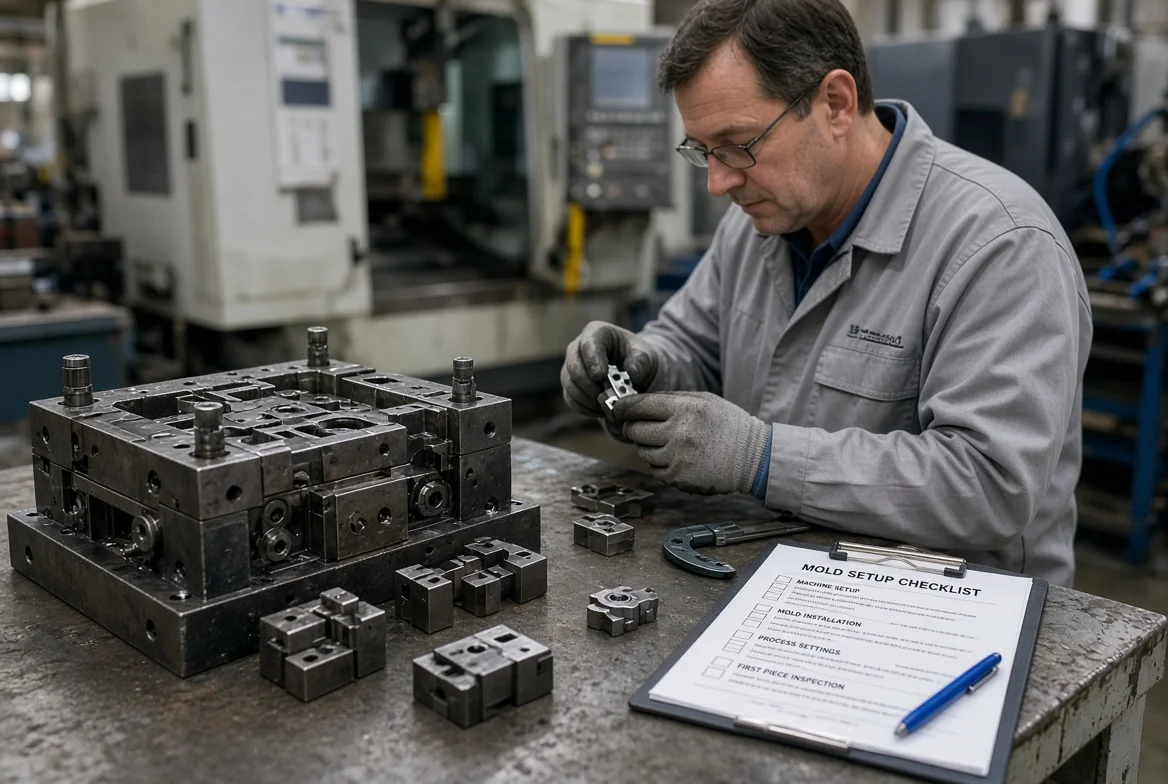
Setup, Changeover, and Programming Fees
Setup may be defined as machine preparation, CNC programming, fixture installation, material staging, line clearance, artwork changeover, or first piece approval. Inquire if setup is one time, per order, per batch, per SKU or if it is a part of the unit price. If you model your actual orders and use a low piece price, where there is a setup cost per batch, this can make a big difference in your annual cost.
Samples, Engineering, and Product-Development Costs
The cost of a sample or development model often does not end with the first sample or development model. Establish the number of sample rounds, engineering revisions, validations and trials that are contained within the quote.
Prototype and Sample Charges
Prototype units, special materials, expedited components, temporary tooling, engineering time and sample packaging may be charged as separate fees by suppliers. Verify quantity, lead time, shipping, test requirements and sample charges credit to production. If it is a “free sample” with no freight, fixtures or overtime, then it is not “free”.
Design-for-Manufacturability and Engineering Fees
The review, process planning, drawing correction, development support, and production-transfer work can be charged or absorbed in DFM. A quote without engineering can appear to be cheaper and then pass it on to your team or come in as a late change order.
Sample Rounds and Validation Limits
One included sample round is common. Extra rounds often start when you change design, material, finish, tooling, or packaging. Ask how many rounds are included and what conditions trigger a new charge. If your project needs multiple customer approvals, price that reality now.
Customer-Supplied Information and Approval Delays
A lot of quotations are made based on the assumption that you will be able to give final drawings, customer sign-off on the artwork, approved samples, test methods, and packaging artwork on time. Delayed or missing inputs may result in storage costs, rescheduling costs, engineering costs or expedite costs. The quotation should refer to those dependencies.
Testing, Inspection, Certification, and Compliance Costs
The meaning of the words 'quality' and 'compliance' are often not defined. Check exactly what inspection, testing, certification and documentation are consist of.
Inspection and Quality-Control Charges
Inspection may be incoming material inspection, in process, final inspection, first article inspection, sample, 100%, dimensional report or third party inspection. Do you include labour, reports, inspectors, time of measuring, and sample retention? A standard QC” line is far from a customer-specific inspection plan.
Functional and Reliability Testing
Fixtures, lab time and/or additional production hours may be required for electrical, pressure, load, temperature, environment, reliability or safety testing. Continuity and high-pot testing could be required for cable assemblies. Functional and burn-in tests may be required for electronics.Functional and burn-in tests may be required for electronics. Load and safety checks might be required for machinery. Performance or safety lab work may be required for consumer products. It should go on the quote if your customer needs to have a test.
Certificates and Traceability Documentation
Certificates of material, certificates of conformity, test reports, lot traceability, serial numbers, customer quality forms take time. Define format, frequency, retention and approval. Even if the parts are acceptable, missing paperwork can prevent you from receiving the order.
Certification and Regulatory Costs
There are so many other criteria that can be applied to product certification, laboratory test, restricted substance compliance, market-specific files and customer approval, which can be outside of manufacturing price. Verify with technical, regulatory or legal experts. A factory price does not necessarily mean that the player has a market approval.
Packaging, Labeling, and Export-Preparation Costs
A common problem is packaging as many factories will quote domestic factory packing unless the RFQ requires otherwise.
Unit Packaging and Protective Materials
Ensure bags, trays, foam, inserts, anti-static, moisture barrier, corrosion protection, cable winding or protective film is confirmed. ESD and moisture control are required for electronics and cables. Dividers are necessary for fragile parts. Rust prevention may be required for industrial parts. Retail-ready packs might be required for consumer products.
Export Packaging and Palletization
These costs are higher than local delivery packing, for export cartons, Pallets, treatment (where applicable), moisture protection, stacking strength and container loading. When packaging performance is a factor, state the mode of transport, handling environment, and stacking expectation.
Labels, Barcodes, and Carton Marks
Extras may include product labels, barcodes, carton marks, customer labels, country-of-origin marks, warnings and/or language versions. Errors on labels result in relabeling, delay in warehouse, questions about customs or rejection by the customer. Set the price for the label set that is needed.
Packaging Changes and Overs/Unders
Printed cartons and custom packs may not be exactly as the products are available. Discuss the suppliers policy regarding overage, underage, unused packaging, reprint liability, and disposal issues. Avoid using a general level of tolerance. Follow the written rule provided by the supplier.
Freight, Duties, Taxes, and Destination Charges
If the supplier quote only includes factory production costs, then it is not a complete quote. This can involve a small difference in piece price and the movement, importation, clearance, receipt and delivery of goods.
Incoterm and Freight Scope
The EXW, FOB, CIF, DAP, DDP, etc., terms provide an option of transferring freight, insurance, export handling, import, and destination work from the supplier to the buyer. Never attempt a comparison of mixed terms when they are not the same offer. If you're shipping internationally or for high dollar goods, ask a logistics professional to examine the actual scope. This is not a customs or legal opinion.
Freight, Insurance, and Surcharges
Origin handling, documents, fuel surcharges or peak-season surcharges, container charges, insurance, port fees, and destination handling are all examples of freight. If the freight is quoted, ask if it is a fixed, estimated, current or adjustable freight figure.
Duties, Taxes, Brokerage, and Customs
The buyer will frequently be liable for import duties, VAT/GST, brokerage, inspection, port fees, security fees and local delivery costs even on a factory/FOB price. Check classification, origin, income tax and responsibility with a qualified trade expert. A generic duty rate cannot be used from another project.
Domestic Delivery, Warehousing, and Handling
Drayage, unloading, storage, appointment delivery, warehouse receiving, pallet handling, inspection, and inland transport may still be charged, after the port/airport. Next to the factory price, there is a number that should be considered as landed cost.

MOQ, Inventory, and Working-Capital Costs
Not all costs come in the form of supplier invoice. Buyer-side spend can occur due to MOQ, batch size, lead time and payment time.
MOQ and Excess Inventory
A lower price cost per unit could mean that you are ordering more than you need. Extra stock gives rise to the risks of damage, obsolescence, demand, storage and handling, and financing. The exposure is greater for items that are seasonal, customized, have a short life cycle, are printed packaging, or have frequent changes.
Deposit and Payment Timing
Deposits, milestone payments, prepayments for materials and early payments, all of these tie up cash that is not available for sales or use of the goods. Check price quotes for both unit price and cash on delivery prior to comparing prices.
Long Lead Time and Safety Stock
A long lead time might require that some orders be placed in advance and that more safety stock be kept. The extra cost and quicker (but more flexible) replenishment may be less expensive when inventory risk is taken into account.
Multi-Supplier Coordination Costs
Coordinating work between factories can introduce coordination, inspection, packaging standards, freight origins, receiving, documents and relationship management. The advantages of a lower piece price may be lost when there are multiple MOQs and shipment points.
Quality Failure, Rework, Replacement, and Warranty Exposure
The quotation might not include the cost of poor quality. However, one still has to consider the exposure before ordering.
Sorting, Rework, and Reinspection
Unsatisfactory lots can require sorting, rework, additional testing, relabelling or repacking. Inquire who is responsible and how decisions are made. If there is no quote, then the supplier is not necessarily going to pick it up.
Rejection, Replacement, and Return Freight
A rejected lot may result in disposal, replacement production, a line stop, customs, return freight or expedited shipping. Terms for inspection, acceptance, rejection, remedy and replacement of documents. Do not use a blanket rule that is not applicable to the contract.
Warranty and Customer-Claim Exposure
Failure in the field is likely to result in replacement, service, customer claims, recalls or loss of production. The risk is dependent on the importance of the part. Align supplier's quality capability and remedy terms with that criticality.
Quality Risk Allowance in Total Cost
Avoid adding up a "defect percentage. Utilize supplier history, samples, audits, inspection results, product criticality, process controls. Price and quality should go together!
Payment, Currency, Quote Validity, and Price-Change Costs
Commercial terms can move cost even when the printed unit price stays the same.
Payment Fees and Currency Exposure
Many quotes exclude bank fees, the effect of exchange rate changes, platform charges, and financing. Contrast offers in one currency and log exchange-rate basis, as appropriate.
Quote Validity and Material Escalation
The price may expire or may be subject to changes in materials, components, currency and/or freight. Why is it that a revision can be made and when is the price set?
Change Orders and Engineering Revisions
Once approved, a drawing change, material change, packaging change, or other revisions may cause engineering revisions, tool changes, scraps, reprogramming, samples, testing and scheduling changes. Establish change control in advance of ordering, and maintain control of revisions.
Cancellation, Rescheduling, and Storage Costs
Suppliers can charge for the use of purchased materials, finished goods, reserved capacity, tooling, storage and cancellation if the order is delayed and/or cancelled. Where the time is not certain, those should be included on the quotation.
Installation, Training, Service, and Spare-Part Costs
This section is applicable when purchasing equipment, machinery, automation, test systems, and other complex industrial products. Not all component quotes will have it.
Installation and Commissioning
Installation, calibration, commissioning, site preparation, traveling, lifting, electrical work, utilities and integration are generally not included in the equipment price. Split equipment supply from scope of work.
Training and Documentation
Extra operator training, maintenance training, manuals, translations, software instruction and process qualification may be available. Verify sessions, participants, location and documents included.
Spare Parts, Consumables, and Maintenance
Cost of ownership includes wear parts, consumables, preventive maintenance, calibration, licenses, and service visits. Please don't assume that everything is covered by the warranty, including all visits or consumables.
After-Sales Support and Response
The actual benefits of the offer include response time, remote support, on-site service, spare availability, and handling warrants. That's important if a failure can bring your line to an end.
How to Review a Supplier Quote for Hidden Costs
From categories to a method that can be run prior to the purchase order.
Ask the Supplier to Classify Every Cost
Request it on all material lines and commercial notes:
- Included
- Excluded
- Optional
- Buyer-supplied
- Estimated
- Assumed
- One-time
- Recurring
- Subject to approval
- Priced later
That makes what amounts to nothing more than the vague language into a usable record.
Review the Quote Against the RFQ Line by Line
A comparison of the product, materials, quantity, quality, testing, packaging, delivery, tooling, payment, and documents. Please don't end at the summary page. Often exclusions are found in notes, emails, footnotes, or attachments.
Build a Total Cost and Exposure Worksheet
Where applicable, utilize categories of product cost, tooling, samples, quality, packaging, logistics, import, payment, inventory, rework, compliance and service. Provide correct numbers, estimates, or stated intervals. Avoid adding up "dummy" rates.
Ask Direct Questions Before Approval
- What is part of the unit price?
- What are the costs that are not included or optional?
- Is there an additional cost involved for tooling, set-up, samples, testing, and inspection?
- What packaging level are they included in?
- What are the delivery term and destination scope?
- What is the minimum quantity and annual consumption that will justify this price?
- How does the design change if there is a change in the design?
- Who bears the cost of rework/rejection/replacement and additional testing?
- Under what scenarios might the price and/or the lead time vary?
Hidden Cost Review Checklist for Supplier Quotations
Cost Area | What Buyers Should Check | Question to Ask the Supplier |
|---|---|---|
Tooling | Mold, die, fixture, maintenance, ownership | What is included in the tooling charge? |
Setup | Programming, changeover, first-piece approval | Is setup charged once or per batch? |
Samples | Quantity, revisions, shipping, credit | How many sample rounds are included? |
Testing | Functional, reliability, certification, reports | Which tests and documents are included? |
Packaging | Unit, export, retail, labels, pallets | What packaging level is priced? |
Logistics | Freight, insurance, duties, handling, delivery | Which destination costs remain with the buyer? |
MOQ | Minimum order and volume basis | What order quantity supports this unit price? |
Quality risk | Rework, sorting, rejection, replacement | How are nonconforming goods handled? |
Payment | Deposit, balance, fees, currency | What cash is required before delivery? |
Changes | Engineering, tooling, material, rescheduling | What charges apply after approval? |
Common Buyer Mistakes When Checking Hidden Costs
Hidden-cost issues frequently begin with the lack of questions prior to the issuing of the purchase order.
Assuming “Not Listed” Means “Included”
Inclusion is not silent. Request a written confirmation.
Comparing Mixed Incoterms
Until you incorporate logistics and import responsibility, EXW quotes are not interchangeable with FOB, CIF, DAP or DDP quotes.
Ignoring Recurring Setup and Testing Costs
Setup, testing, inspection, or documents may repeat with every batch.
Focusing Only on Factory Price
Freight, duties, customs, local delivery, quality exposure, inventory, payment, and management effort still belong in the decision.
Accepting Vague “Standard Packaging”
Standard packing may fail export, retail, moisture, ESD, stacking, labeling, or customer rules.
Failing to Clarify Change-Order Responsibility
Drawing, material, sample, quantity, and delivery changes can create charges after ordering.
Treating Quality Risk as Free
Sorting, rework, replacement, claims, and line stops can dwarf a small unit-price saving.
Final Hidden-Cost Checklist Before Ordering
Use this list before you approve a quotation or issue a purchase order.
Product and Project Costs
- Product scope and document revision are confirmed.
- Material and component specifications are correct.
- Tooling, molds, dies, fixtures, and ownership are clear.
- Setup, programming, engineering, and sample costs are stated.
- Validation and sample-round limits are understood.
- Design-change and rescheduling charges are documented.
Quality, Packaging, and Delivery Costs
- Inspection and testing scope is clear.
- Certificates, traceability, and reports are included or priced.
- Rework, rejection, replacement, and warranty responsibilities are defined.
- Unit and export packaging are specified.
- Labels, barcodes, carton marks, and pallets are included.
- Freight, insurance, duties, customs, handling, and local delivery are understood.
- Incoterm and destination are confirmed.
Commercial and Risk Costs
- MOQ, batch size, and price-break assumptions are confirmed.
- Deposit, balance, payment fees, and currency are reviewed.
- Quote validity and price-adjustment conditions are clear.
- Buyer-supplied items and responsibilities are listed.
- Supplier exclusions and assumptions are documented.
- Inventory, working-capital, and long-lead-time exposure are considered.
- Installation, training, service, spare parts, or maintenance are reviewed where relevant.

Summary Guidance — Make Every Cost and Responsibility Visible Before Ordering
You do not need every cost buried inside a single unit price. You do need a clear record of what is included, excluded, optional, buyer-supplied, estimated, assumed, recurring, or subject to change. Review the quotation against the RFQ, ask direct questions, calculate total sourcing exposure, and write down the final assumptions before you commit to tooling, materials, production, and delivery. The cheapest time to find a hidden cost is before the order is placed.