
The manufacturing quotes are dependent on production volume as this dictates the way the factory allocates set cost, tooling cost, material cost, labour cost, machine time, overhead cost, quality work, packaging cost and capacity cost over the order. If the run is larger, the unit price will be lower. That price may be there for a higher MOQ, additional tooling, extended material lead time, or a forecast used by the buyer that he or she is unable to make.
The meaning of a unit price is not realised if the supplier is not aware if the request is for a prototype, a pilot batch, a first production order, successive production orders or a programme of production in a year. Not all the biggest amount is necessarily a good deal. Compare unit price with order value, inventory, cash, certainty of demand, lead time and real capacity of the supplier.
What Does Production Volume Mean in Manufacturing Quotes?
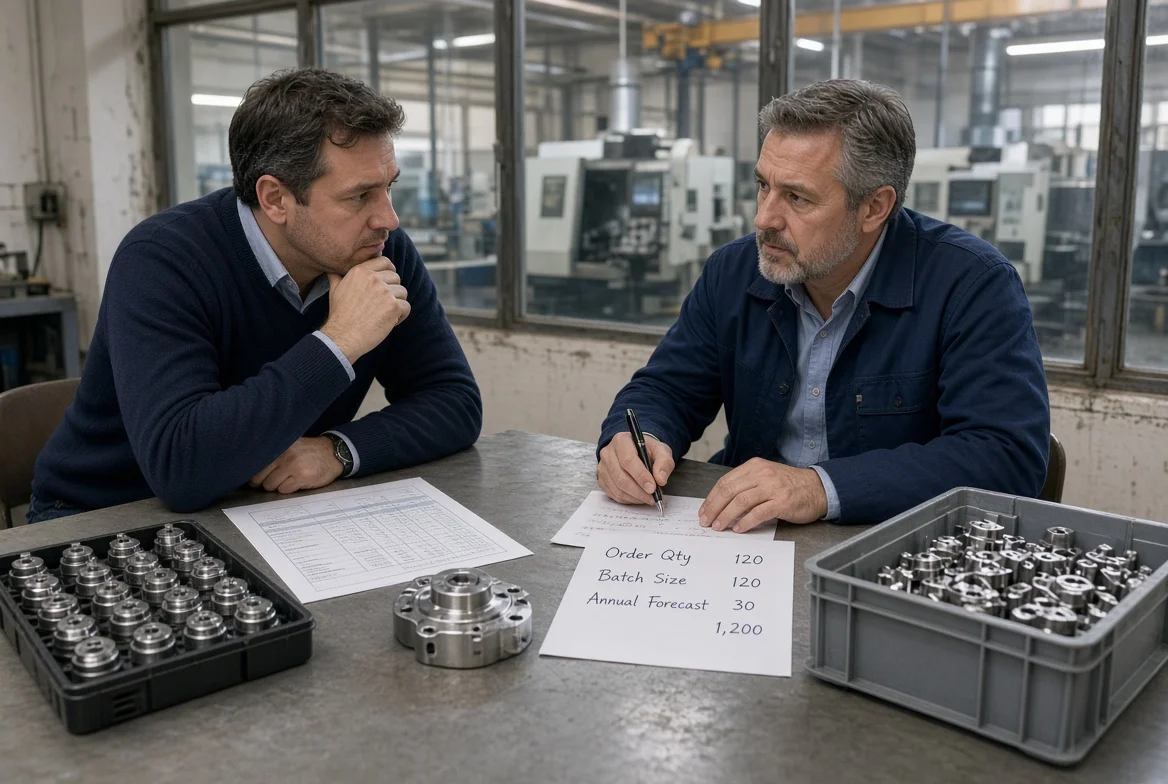
When giving a manufacturing quote, the production volume is the number that the supplier believes they can produce within a certain order, batch, release schedule, or annual program. A common occurrence in factories is that multiple volume ideas are mixed together in a single document. The price is only a rational price when you understand which number is driving materials, set-up and capacity.
Initial Order Quantity
Initial order quantity is the amount of units desired for the first order or first production run. State it clearly. It is for immediate materials purchase, setup and labor, packaging, inspection and delivery. A quote for a “possible future volume” is NOT a quote for the first shipment.
Production Batch Size
The number of units produced at one time in the factory is the batch size. Can be different than annual requirement and MOQ of supplier. Even though the line, oven, press or print run is scheduled into 2,500 unit batches, a quote may be still be given to a buyer if he requires 10,000 units per year. Changeovers, yield, and frequency of return of set-up costs are influenced by the batch size.
Annual Volume and Forecast
Expected demand in a period is called annual volume. A forecast is generally not committed. Some suppliers will quote for future quantities. If that volume is confirmed, estimated, or pending customer approval, ask for that information. It can be a price based on some optimistic projection but it may be lost once the first real order is smaller.
Price-Break Quantity
The quantity at which the unit price will change is called the price-break quantity. It isn't necessarily the MOQ or the actual production batch. Request specific tiers and the requirements of each tier: one shipment, blanket order, 12-month commitment or, if material must be purchased in a larger quantity, only if necessary.
Order Frequency and Scheduled Releases
One large order, monthly repeats, quarterly releases and a blanket schedule are not the same commercial problem for the factory. Recurring releases can facilitate a better material planning. One spike can result in overtime, extra purchases or a capacity resume. Specify the release pattern in the RFQ.
Why Higher Production Volume Often Lowers Unit Cost
As the size of a volume increases, the unit cost may decrease. Not necessarily a commitment. The effect is dependent on the process, tooling, material market, product complexity, quality rules etc. and whether the additional quantity is actually produced in less changeovers.
Fixed Setup Cost Spread Across More Units
Even with a small or large run, machine setup, programming, fixture installation, material staging, parameter adjustment, first-piece approval and line clearance often occur. The more units that are removed from the same setup, the lower the set up cost per unit. The benefit of the factory's ability to stop and reset diminishes if the factory is required to stop and reset between small lots.
Tooling Amortization
More parts can be produced using molds, dies, fixtures, gauges and engineering time. If it is a few hundred units, the tool may cost a lot more than the molded housing or printed carton looks. The same tool is a smaller portion of each unit at a constant output level. Question if that unit price is a level price or if there is an additional tool payment.
Material Purchasing and Volume Leverage
The possibility of purchasing in bulk or at better prices may be available for resin, sheet metal, cable and connectors, board, or electronic components. The buyer's power is determined by the real buy, specification and availability of the factory, market conditions. If the supplier continues to buy in small lots, the price of the resin or connector doesn't necessarily improve as a result of a buyer forecast.
Labor Efficiency and Learning Effects
Repeated work can minimize handling time, repeated setup, training and operator hesitation. Process notes are cleaner. This advantage is lost if the design is continually changing, mix is high or quality issues cause a run to be broken. Don't assume learning occurs automatically.
Machine Utilization and Process Stability
Longer runs mean fewer changeovers, and hold a press, CNC cell, printer or assembly line busy. Once the process is settled, cycle time and yield are more predictable. This becomes apparent in machining, molding, printing, cable assembly, and packaging—assuming the product and quality plan remain constant.
Packaging and Shipping Efficiency
Larger shipments can fit more into cartons, pallets and containers, and reduce freight per unit. This can increase warehouse space, cash tying up in inventory, and the risk of damage and obsolescence to the buyer.
Why Low-Volume Production Quotes Are Often Higher
A high unit price for a small order may be a fair reflection on it, rather than a penalty. Low volume jobs require more engineering per piece, too.
Setup and Programming Cost Per Unit
A 20-piece or 200-piece job can be eaten up by CNC programming, fixture prep, first-piece approval, print-plate setup or cable test-fixture setup. A smaller line on the quote is the same setup on a 5,000 piece run.
Small Material Purchases
You may need to purchase an entire reel, sheet, drum or carton lot, larger than what you need in order to get the factory to purchase it. Unused material equals supplier inventory, storage and risk. This cost is sometimes included in the unit price or as a minimum material requirement.
Manual Labor and Lower Automation
A small run will not likely warrant multi-cavity tools, a dedicated fixture, or purpose built line. Flexible machines and more manual work may be used by the supplier. Unit price rises. Initial investment remains low which can be a good deal for a pilot or ambiguous demand.
Higher Engineering and Quality Effort Per Unit
An increased amount of drawing review, communication, inspection and testing will be required per unit on prototypes and pilots compared to a settled recurring job. The words should be in the quote.
Lower Process Yield or Limited Historical Data
New or low volume parts may not have demonstrated yield, cycle and tool behavior. Suppliers can add time to the process or risk if not proven. It's the commercial caution, not the hidden markup by default.
How Production Volume Affects Manufacturing Quote Components
Not all of the lines of a quote will be moved by volume in the same proportion. Read the quote, line by line.
Materials and Purchased Components
The price of materials, MOQ of components, unused balance, and inventory risk can all be altered with volume. Common cable reel materials include resin, paperboard, sheet metal, electronic parts, specialty coatings and more. The prices of quotes based on mill stock left in the bin are not the same as the prices of quotes based on a new mill lot.
Labor and Machine Time
More volume may mean fewer set up and better output/hour. With less volume there is more set-up and handling per piece. If the cycle time is used on a first article run, it ought to be assumed at high volume and not mentioned.
Tooling and Engineering
Tools and engineering can be quoted separately, or can be included in the unit price, and can also be included at a minimum quantity level. Do you have to pay a tool payment, or a yearly-volume commitment to set up the unit price?
Quality, Testing, and Inspection
On a long run, the use of fixed inspection or test setups may appear to be less expensive per unit. There is still a possibility of accumulating more inspection hours. When everyone should be tested, or some must be traced back, it can be complicated more than it is simplified.
Packaging and Logistics
Volume changes carton buys, pallet patterns, container fills, freight frequency, labels and handling in the warehouse. Verify container counts and if it is a mixed small container shipment or a full container shipment.
Supplier Margin and Capacity
The price of a larger program could be lower with a thinner unit margin if they are filling the plant usefully and appear to be a long-term investment. An existing plant can offer a higher quote or longer lead time, as the order uses up machines and people. Capacity included as part of the cost.

Production Volume by Manufacturing Stage
Never assume that an economics of mass production price is the same as a prototype price. Don't take a high-volume price for granted until it has been proved.
Prototype and Engineering Sample
Prototype unit prices are expensive because there are only a few pieces, and all the engineering, programming, special material buys, manual work, temporary tooling and testing costs are located on a few items. The quote is not to predict the recurring cost, rather it is to validate design and process.
Pilot Production
During a pilot, a test of tooling, routing, cycle time, yield, assembly, packaging and documentation is conducted under more realistic conditions. Prices are frequently adjusted after the pilot since the real data is gathered instead of the early estimates. Consider the pilot as a measurement step.
Initial Production Order
Additional cost can be added to the first production order: Process confirmation, First article work, Training, Material pipeline, Quality stabilization. If there is a difference between the launch price and settled repeat price, these should be quoted separately.
Stable Recurring Production
If tools, set up, cycle time, operators and yield are known, recurring volume is typically the purest unit price basis. The factory will have less surprises when it comes to scheduling, purchasing, and staffing.
High-Volume or Scaled Production
Scale can reduce unit cost in three ways: with dedicated tools, automation and improved purchasing. It also needs capital, better quality systems, capacity planning and a longer ramp. Question — what is the lowest tier funded by? — investment or time.
Volume, MOQ, Capacity, and Lead Time Are Connected
Prices don't just go up and down. This may mean that a lower cost per unit can be available, but at a higher order quantity (MOQ), longer ordering cycles for materials, increased capacity, larger tools, or more complex delivery arrangements.
Volume and MOQ
The MOQ is typically based on setup minimums, minimums on material purchase, packaging, or upstream component lots. Any price break quantity less than the actual MOQ is not a viable offer. Keep the minimum quantity you can purchase apart from the quantity the factory would like to run.
Volume and Capacity
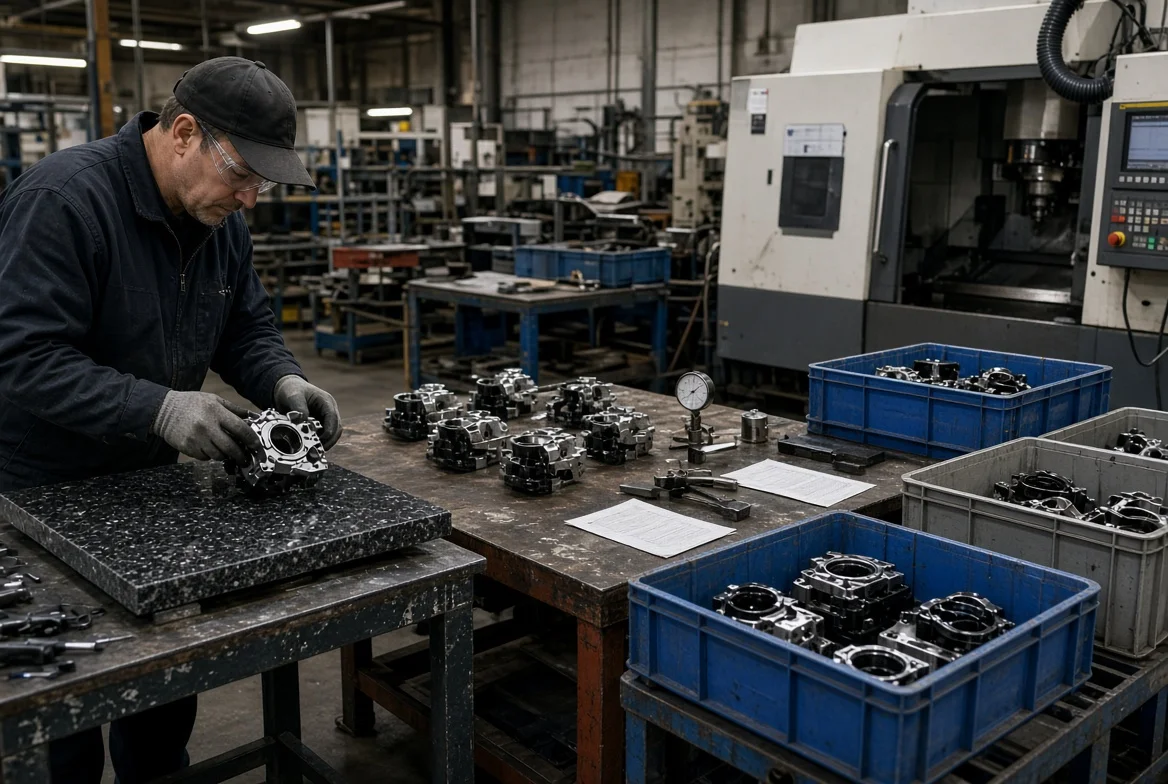
When scaling, issues that may have been present in a small batch can be revealed: heat, mix-up, wear, packaging damage, or yield loss. Question if the process has been executed at or close to the desired volume.
Volume and Lead Time
More volume reduces unit cost and increases days of production, material lead-time, tool lead-time, inspection load, and shipping prep. Ask for lead time for each quantity level. Don't assume, especially that a production lot is shipped on the same clock as a sample.
Volume and Quality Risk
The more purchased to achieve a lower price per unit means more storage, working capital, damage and obsolescence. The optimum volume should be commensurate with requirements and the way in which stock is replenished.
Volume and Inventory
Buying more to reach a cheaper unit price increases storage, working capital, damage, and obsolescence. The preferred volume should match demand and how you actually replenish.
How Buyers Should Request Volume-Based Manufacturing Quotes
Provide the factory with sufficient quantity structure to be able to give the price of the work to be purchased.
Request Multiple Quantity Tiers
Request sample, initial order, realistic mid volume, higher volume and realistic annual level. Maintain the same drawing, material and quality scope at each level, unless a different specification is specifically requested.
State Initial Quantity and Forecast Separately
Specify the immediate order, the yearly forecast, the frequency of the order, and if the order is binding or not. The factory should be informed of commitments and planning.
Ask for MOQ and Batch Size
Ask for MOQ, minimum production batch, standard pack quantity, minimums of materials, and if releases can be scheduled. Those numbers help to explain how two "1,000-piece" quotes can be different.
Request Tooling and Setup Separately
Separate molds, fixtures, engineering, programming, setup, samples and testing from the unit price with their suppliers. This is a way of comparing investment in the launch with subsequent unit economics.
Request Lead Time for Each Volume Level
Request sample, pilot and production lead times throughout all the appropriate levels. Ensure that the correct entity initiates the clock – either drawing freeze, deposit, material arrival or tool approval.
Ask Suppliers to State Volume Assumptions
Have them record assumed volume, machine availability, material purchasing lot, batch size, packaging, payment and capacity. Volume prices collapse at some point through hidden assumptions.
How Buyers Should Evaluate Volume-Based Pricing
Discuss the unit price, order total value, inventory, cash, lead time, quality, capability and demand together.
Compare Unit Price and Total Order Value
If there is a lower rate for the unit, then a much bigger purchase can be made. Not just the number of pieces that you have to put in, but the money you have to invest at each level.
Compare Volume with Actual Demand
Make sure to have a number that will hold up under scrutiny. Avoid choosing a tier based on the lowest unit cost.
Compare Tooling and Upfront Investment
Large volume offers might require tools, automation, fixtures, or engineering which alters the project payback. Don't say that the quote is cheap until you have added those costs.
Compare Inventory and Working Capital
Provide storage, financing, insurance, damage and the possibility of the part or packaging going out of style.
Compare Lead Time and Capacity
The selected volume must be producible and meet your delivery requirement. A relatively inexpensive Tier, that's 16 weeks of material story, may not be a launch.
Compare Quality and Process Maturity
When tooling is proven, yield is known, records are available and the supplier can have experience running similar work, high volume pricing is more believable.
How to Compare Manufacturing Quotes at Different Production Volumes
Volume tier | What to review | Buyer decision question |
|---|---|---|
Sample | Engineering, setup, testing, delivery | Is the sample cost acceptable for validation? |
Pilot | Tooling, yield, process stability, quality | Does the process work under realistic conditions? |
Initial production | MOQ, capacity, lead time, packaging | Can the supplier support launch demand? |
Medium volume | Price break, batch size, inventory | Does the unit-price reduction justify the stock? |
High volume | Tooling, automation, capacity, forecast | Is demand strong enough to support the commitment? |
Annual program | Releases, continuity, payment, price validity | Is the commercial model sustainable? |
Common Buyer Mistakes When Evaluating Production Volume
A price-break table is not a buying recommendation. It's a group of conditions.
Asking for a Quote Without Stating Quantity
The supplier can not provide a meaningful price, MOQ, lead time or capacity response without a quantity basis.
Treating Forecast Volume as Guaranteed
This means that you may end up with months worth of inventory that you didn't require, which is going to make the cheaper unit a problem for you.
Comparing Different Supplier Volume Assumptions
High volume can mean more tools, more automation, more quality investment, reserved capacity, or longer lead time. Those items can negate the unit price benefit.
Ignoring Inventory and Cash-Flow Impact
If the plant doesn't have the machines, labour, material and planning to implement an attractive high volume number is worth nothing.
Assuming High Volume Always Improves Cost
High volume can add tools, automation, quality investment, capacity reservation, or longer lead time. Those items can erase the unit-price gain.
Ignoring Supplier Capacity
Prices for prototypes include engineering and setup and should not be used as a recurring cost model.
Using Prototype Pricing to Judge Mass Production
If you have pilot yield, cycle time, quality and set-up information, utilize the relevant data before closing out later production pricing.
Failing to Validate Pilot Data
Where you have pilot yield, cycle time, quality, and setup data, use it before locking later production pricing.
Final Production-Volume and Manufacturing-Quote Checklist
This should be applied prior to approving a volume-based quotation.
Quantity and Pricing Checks
- The first-order quantity is given.
- Price break levels are in sync between suppliers.
- MOQ vs Minimum Production Batch.
- The volume is specified annually as confirmed, estimated or non-binding.
- Both unit price and total order value is checked.
- The tooling, set-up, engineering and samples are separated.
Production and Supplier Checks
- Supplier capacity is equal to the quantity quoted.
- Availability of material/component confirmed.
- Maturity, quality, yield and cycle time appear reasonable.
- Separate sample, pilot and production lead time.
- This includes packaging and shipping specifications.
- Supplier expectations of the production schedule are recorded.
Buyer Risk and Commercial Checks
- Demand is supportive of the proposed volume.
- Assessment of inventory, storage financing and obsolescence.
- Payment/deposit terms are acceptable.
- Staged delivery/scheduled releases have been assessed.
- Quality and delivery risk is checked.
- Price is not the only factor to consider when making a decision.
- The final decision on the volume is recorded with its assumptions.

Summary Guidance — Match Production Volume to Real Demand and Supplier Economics
The manufacturing quote is varied through production volume changes, which involve varying the allocation of fixed cost, materials, labour, tooling, quality, packaging, and capacity in the manufacturing process. Ask for multiple quantities. Don't combine the first order with the forecast. Look at the value of the order and the stock, not the price of the item. Verify capacity and lead time at the quantity desired. Do not take a high-volume price for granted without considering the pilot data.
The production volume doesn't necessarily have to be the largest. It is the volume which provides a satisfactory unit price and total cost, and also satisfies real demand, cash, quality, delivery and the capacity of the factory to operate the work.