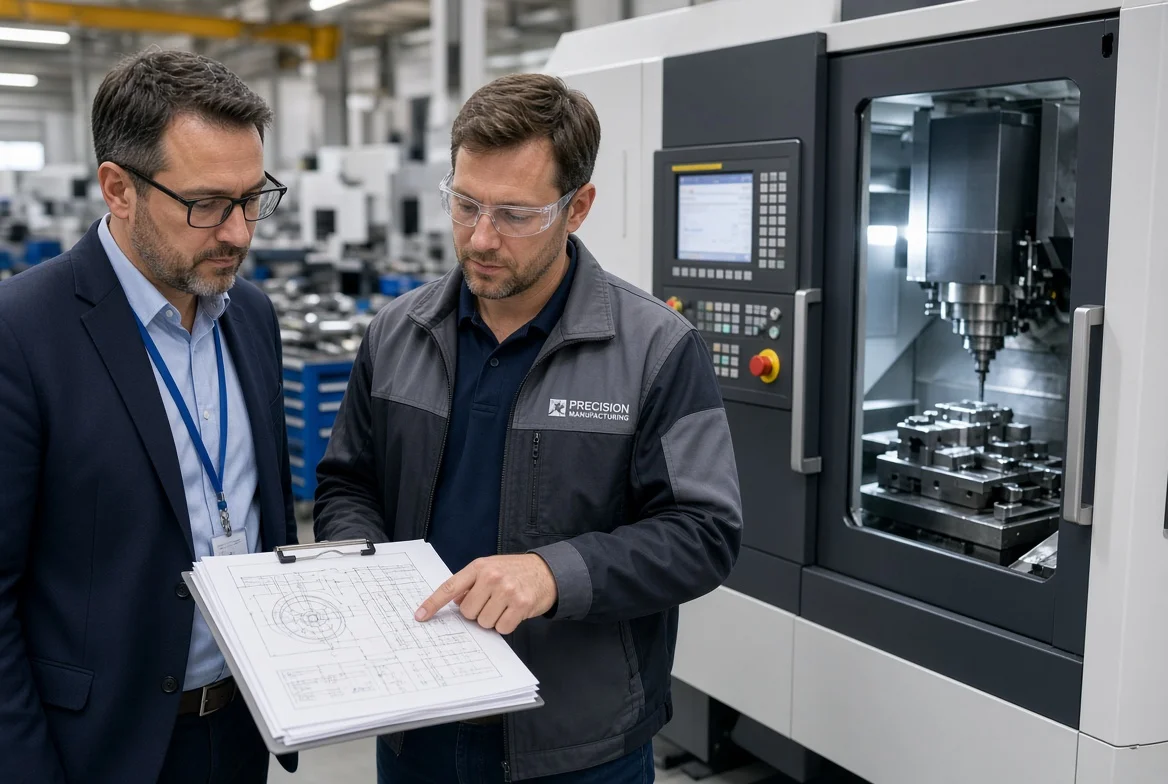
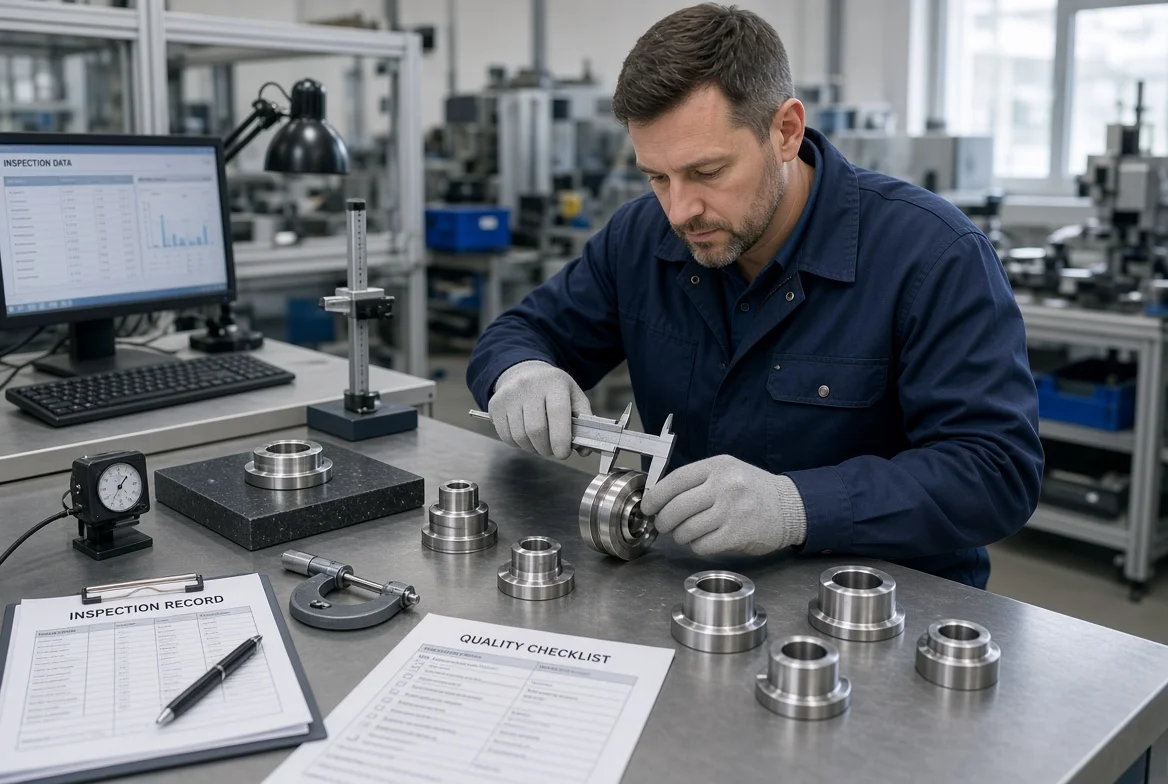
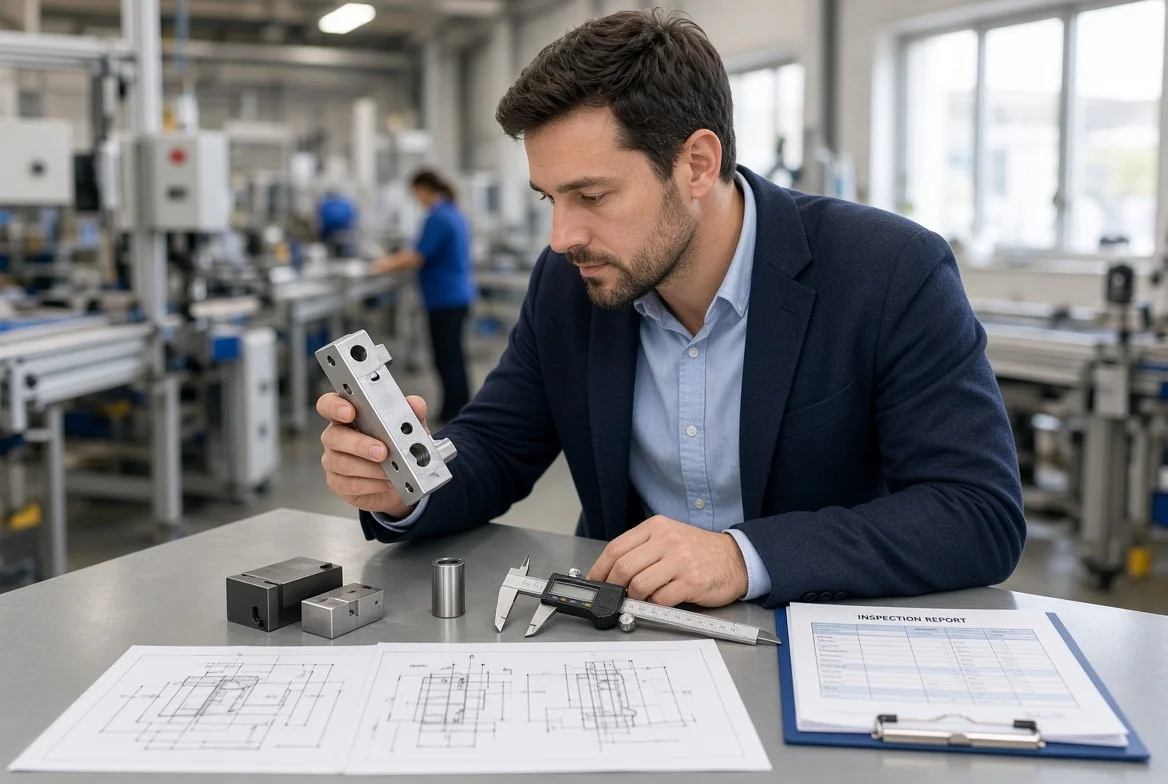
An international buyer's factory evaluation checklist is a document of factors that they employ to evaluate whether a factory will be able to deliver the products they require, whether they will be of quality, whether they will be able to provide the quantity of products they need, whether the product will comply with their requirements and whether they can obtain the products within their required time frame, and they perform these checks, not just after seeing the factory on a tour. It is a “tool” that you can tailor to various products, industries and risk sizes. Some products are more important for custom or regulated products, while others are applicable for almost every visit or audit.
Many purchasers see assessment as a one-size-fits-all assessment or a full day formal evaluation. Both methods are not effective. Adjust effort relative to risk of the product, order value, customization needed and implications of failure. For low risk standard items, a light check and trial order may suffice. A deeper review is typically required for a high value, custom or production critical part.
Before the Visit – Prepare Your Factory Evaluation Checklist
A generic list is not a proper way to assess a factory. The visit is made more like an assessment through preparation.
Determine evaluation priorities specific to products
Be prepared with product information before arriving: drawings, dimensions, material grades, tolerances, finishes, performance requirements, packaging, labelling, testing requirements and certifications.
When considering a custom metal part, assess supplier manufacturing capabilities through CNC equipment, tolerance control methods, inspection tools, material tracking, and experience with similar parts. These details determine which items on the checklists are more significant.
Determine an evaluation depth according to the risk.
Match depth to consequences of failure. A low priced product that has a fault is inconvenient. Failure of a critical industrial component may halt a production line or lead to a product recall. Very simple capability and quality check may be sufficient for low value standard products. Items of custom, high value, regulatory or production importance might warrant a comprehensive audit, repeat visits, or assistance from a third party.
Form the appropriate Evaluation Team and Tools
Many of the simpler products can be managed by a single trained buyer. Engineering, quality or logistics colleagues are helpful for complex or technical items. Carry the checklist, camera (if permitted), simple measurement tools (if applicable), a notebook and draw your reference samples or drawings if necessary.
1. Factory Identity, Legitimacy, and Business Scope
Start with identity. Verify you are in touch with a genuine company that is fully registered and has the capacity to manufacture your product.
Check Business License & Registration.
Ask for business license and/or registration documents. Verify the name of a company, legal form, registered address, and business scope. Check these details against the website, email domain, bank account name and contract proposal. If there are inconsistencies, they should be sorted out before moving on.
Verify Factory Address and Production Site.
The address listed on the license should be the same as the one at the production location being reviewed. Some suppliers have their own sales office. Be certain of the location being evaluated. Don't be afraid to give the exact production address.
Look for Warning Signs
Be careful of a company's name mismatch, unclear ownership narratives, lack of providing basic documents, or different responses to "Who is this factory and who is responsible for it?". If there is one anomaly, it may be simply explained, but if there are repeated inconsistencies, they are more problematic.
2. Production Equipment and Technical Capability
It may be possible to sell the product in the factory, but only if you have the right equipment and technical know-how.
Match Equipment to Product Requirements
Make comparisons of machine types, sizes, precision, tooling and special processes to requirements. When producing a precision metal component, verify CNC accuracy, spindle condition, tool management, fixture capability and ability to maintain tolerances.
Examine the condition and maintenance of equipment.
Don't just focus on a machine's presence. Inspect cleanliness, age and maintenance history, calibration and spares. Older equipment can be reliable if it is well-maintained and poorly maintained new equipment is a risk. Inquire about maintenance routines and issues that have occurred in the past.
Assess Technical Skills and Engineering Support
Evaluate operator training, Process Engineers, Quality Engineers and process changes or improvements. Ask for information regarding staff turnover, training and how technical problems are escalated and resolved.
Use a sheet of transparent paper to draw the Production Flow map.
Follow the flow of raw material receiving to storage, primary and finishing processes, assembly, inspection, packaging and warehousing. Identify logical flow, work in progress zones, separating conforming and non-conforming product.
Determine Key Process Controls (KPC's) and Critical Steps (CS's).
Note setup check, first article, in-process and final inspection. Discuss how errors are prevented at critical stages in the factory and what would happen if it is out of control.
Work Instructions and Standardization review
Ensure that clear and current work procedures and visual aids are present at work stations. Incomplete or obsolete instructions lead to variations, particularly in complicated or individualized products.
4. Quality Control System and Inspection Practices
Quality systems provide insight into how the factory is preventing and identifying faults.
Incoming Material Control
Inquire regarding supplier approval, material certificates, sampling, testing and storage conditions. Even if the production process gives the impression of being solid, weak incoming control can cause batch-to-batch variability.
In-Process and Final Inspection.
Discuss inspection points, interval, records, acceptance and product non-conforming action. Ask for samples to check reports, and compare with your needs.
For every violation, the staff member will create a plan for corrective action and continuous improvement.
Discuss factory investigation of defects and complaints. Search for a root cause analysis, corrective and preventive actions, and a monitoring of repeat problems. It's better to have a factory that learns from problems than claims there are none.
5. Capacity, Lead Time, and Production Planning
The factory can only produce on consistent schedules when it has the capacity and planning that it needs.
Determine Available Capacity and Utilization
Review number of lines, shifts, current utilization and order backlog. If a factory has to deal with rush orders or demand spikes, it will have a problem if it is operating at near 100% capacity.
Discuss Production Planning and Scheduling
Inquire about order review, materials planning, utilization and delay notification. Watch for signs of realistic planning and not for optimism.
Verify Lead-Time Claims
Compare lead times that are quoted with previous production experience or reference customers. Schedules may vary from what they would be like to what they actually are. Explain allocation of capacity and what happens if materials, equipment or labour changes.
Check cleanliness, lighting, ventilation, safety equipment, and overall working conditions and practices. Any obvious unsafe conditions, or extreme labour issues, are red flags. Audits may be required for formal CSR programs against certain standards.
Environmental and Regulatory Compliance
Inquire about environmental permits, waste management, compliance with local regulations. If regulated products, check relevant certifications / inspection history. Evasiveness on these topics is a concern.
Fire Safety and Facility Security.
Inspect fire safety equipment, fire exits, emergency plans and basic facility security. Inadequate fire safety and/or lack of control over access is likely to indicate poor overall management.
7. Documentation, Traceability, and Record Keeping
Documentation is necessary for regulated/safety critical products and is used for accountability.
Production and Quality Records
Check production and quality records, including inspection records and test reports. Disciplined operations are reflected in consistent and complete records. A lack of or incomplete records increases risk.
Traceability of material and products
Question the factory about the number of batches, lots or serial numbers and how they are traced to the inspection records. Traceability is essential for safety-critical parts, regulated items or products that have high warranty exposures.
Document Control & Revision Management
Review the control of drawings, specifications, work instructions and quality procedures. Uncontrolled and outdated documents result in incorrect products and quality.
8. Sample Quality and Production Representativeness
Samples check the difference between the representation and the performance.
Compare and contrast samples to written acceptance criteria
Compare samples with agreed specifications—material, size, fit, functionality, aesthetics, packaging and any test results—not just on looks. Record observations and make clear what changes are needed.
Confirm the sample is mass production or not.
See if the sample featured the same process and materials used for the production tooling that will be used at scale. Even the best hand-built samples can not ensure consistency in production. Have a preproduction sample or a pilot run when risk is warranted.
9. Communication, Responsiveness, and Management Commitment
The ongoing working process can make or break the success.
Skill in clarity, consistency and technical understanding.
Evaluate the completeness and relevance of answers that factory representatives provide and whether they are candid about their limitation. A factory which requests clarifying questions and gives realistic commitments is more prone to be reliable than a factory that responds immediately with vague commitments.
The management's commitment to quality and improvement.Monitor the preparedness to invest in improved quality, acceptance of audit and willingness to make improvements. Discuss priorities, direction and future goals with managers. When the customer doesn't show interest in quality or when they don't care about the issue with quality, it is a warning sign.
10. Risk Factors and Overall Fit
The last step is the overall fit and risk remaining.
Geographic, Operational and Supply-Chain Risks:
Think about political, regulatory and logistics risks, capacity limitations, history of quality and raw material needs. Consider dual sourcing or buffer inventories for critical items.
A strategic alignment and long-term potential outline.
Make a decision if the factory's ability, culture and growth goals match up with your needs. A factory designed for today's volume may not work for tomorrow's demands for complexity or compliance. For critical suppliers, a longer term perspective is warranted.
How to Use This Checklist in Real Factory Visits
Using the Checklist, customize it to Your Product and Risk.
Not all visits will require the same depth. Adjust the factory evaluation checklist based on the product value, customization requirements, conformability and criticality with the supply chain. For a routine, low-risk buy, a simple check and trial order might be sufficient. If a custom, high-value or production-critical project, then more in-depth evaluation is typically needed.
Develop a simple scoring or rating system
Balance the sections based on the type of product and risk level. A single high / medium / low rating per area is helpful for consistency if comparing different factories.
Record the findings and follow up on the results.
Take notes, photographs (as appropriate), sample evaluations and action items. Address gaps and improvement. These documents enable future visits and continuous performance monitoring, as well as internal approval.
FAQ
What's the difference between a factory evaluation checklist and a formal factory audit?
A checklist is a malleable structure that buyers modify to the product and the risk. A formal factory audit is an audit that is conducted by another party, is more systematic and is based on a set of standards. Many buyers have relied on the checklist for their initial or periodic audits and have reserved a full audit for those items which are higher risk, or are required by regulation.
How much to go on a first factory visit?
Match the depth with the risk. For standard items that are low-value, the checks may be limited to capability, quality and capacity. Process controls, documentation, and samples are typically reviewed in greater detail for custom, high-value or production critical products.
Is it possible to assess a factory remotely?
Remote video tours and document reviews help, but fail of equipment condition, process flow and working environment. In-person visit is the better approach with any product other than low-risk standard products.
What are the top 10 red flags to watch for when evaluating factories?
Inconsistent company names or addresses, unwillingness to provide simple documents, substandard equipment, non-existent work instructions, missing quality records, and management that ignore quality/ capacity issues.
Should there be a uniform weighting for each of the factories?
No. Take elements into consideration based on your product. Equipment and process controls might be stressed for precision metal parts, while packaging, labelling, and capacity flexibility are more likely to be stressed for consumer goods.
What is the best way to incorporate sample evaluation into the checklist?
Establish acceptance criteria, record results and verify the sample employed production methods and materials. Use samples, not as proof of mass production capability.
When is it appropriate to bring third party inspectors/auditors on board?
Independent verification is required in the cases where product risk or regulatory needs, order value or limited in-house technical capacity requires it. Many buyers use third parties for pre-shipment inspection or formal quality system audits after initial evaluation.
Supplier evaluation is not the same as supplier qualification. Assessment is the gathering of data to gain insight of capability and risk. Approval is the minimum standard of qualification and determines whether a supplier should be able to do business. Both processes are utilized explicitly by professional buyers: eva
The most frequent errors that are made in an RFQ are that it is too vague on what is being requested, unclear assumptions on quantity and delivery, lack of quality requirements, uncontrolled changes in the document, the RFQ is sent to the wrong suppliers, and only considering unit price in a quotation. The supplier can
This step-by-step guide walks importers, procurement teams, and B2B buyers through the full factory audit process. It solves the common problem of unclear audit workflows by detailing each stage—from objectives and scoping to on-site work, reporting, and verified corrective actions—so readers can apply a clear, repeatable process to their overseas suppliers.