
Supplier audit and supplier evaluation are two similar but different methods of supplier risk management. Supplier evaluation is a wider assessment of overall suitability and performance covering capability, quality, delivery and commercial. A supplier audit is a more detailed and structured audit of a particular system, process or compliance documentation. The wrong tool can result in a resource waste or failure to cover critical needs. While many tend to use these terms interchangeably, evaluations are typically lighter and more regular, while audits are more in-depth, thorough, and conducted in more severe instances.
What Is a Supplier Evaluation?
A supplier evaluation is structured assessment of the supplier's overall fit as a business partner. It’s holistic—a way of looking at dimensions, rather than one system in isolation. It is utilized by teams to choose to commence, maintain, or alter cooperation.
The purpose and typical use cases.
Typical evaluation times are when suppliers are being considered, before placing initial orders, and at regular intervals throughout the performance. An RFQ might lead a procurement team to consider three selected suppliers for a standard component and score them on their capability and commercial terms, and then shortlist one or two suppliers for a sample or trial purchase. Annual reviews of key suppliers are also facilitated through the same process in terms of quality, on-time delivery and responsiveness.
The purpose of a Supplier Evaluation is to determine the scope and depth of the evaluation.
The risk level is dependent on the depth of the product, order value, and supplier criticality. A light evaluation can be based upon a questionnaire and a document review. A more comprehensive one may also involve sample testing, capacity testing, and a brief visit to the factory. The aim is not to verify all processes, but to give an overall picture of fit.
How to obtain and evaluate methods and data sources.
Examples of useful data sources are questionnaires, capability documents, sample results, performance in trials ordered, defect rates, on-time delivery, and responsiveness to communication. Rather than a 'one-off' event, evaluation is often best treated as an ongoing process, which will provide a clearer picture.
What Is a Supplier Audit?
A supplier audit is a documented structured inspection of a particular part of the supplier's quality management system, production process, regulatory compliance or another stated standard. It generates documented findings and nonconformances, and frequently corrective-action requests.
This document outlines the purpose and typical uses of this product.
Audits are generally only conducted for high-risk suppliers, regulated products, safety-critical components, or when there are serious quality or compliance issues already identified. They can be an audit of a medical-device component supplier, checking an electronics supplier for environmental and labour standards, or a focused audit following a significant quality incident.
The purpose and extent of a supplier audit.
Audits are more in-depth and detailed than most evaluations. They tend to adhere to a standard or customer set process, and focus on one system or set of requirements, not trying to capture every commercial and operational aspect. There is a common practice of having trained auditors and formal reporting.
Methods and Evidence Requirements
Objective evidence is paramount: documented procedures, records, traceability data, inspection results, training records, calibration log and interviews with process owners. A proper audit will sample in a systematic way, and provide verification of claims against records, and document the results of the audit with supporting evidence. It's not a stroll through the show. A supplier audit is a documented structured inspection of a particular part of the supplier's quality management system, production process, regulatory compliance or another stated standard. It generates documented findings and nonconformances, and frequently corrective-action requests.
This document outlines the purpose and typical uses of this product.
Audits are generally only conducted for high-risk suppliers, regulated products, safety-critical components, or when there are serious quality or compliance issues already identified. They can be an audit of a medical-device component supplier, checking an electronics supplier for environmental and labour standards, or a focused audit following a significant quality incident.
The purpose and extent of a supplier audit.
Audits are more in-depth and detailed than most evaluations. They tend to adhere to a standard or customer set process, and focus on one system or set of requirements, not trying to capture every commercial and operational aspect. There is a common practice of having trained auditors and formal reporting.
Methods and Evidence Requirements
Objective evidence is paramount: documented procedures, records, traceability data, inspection results, training records, calibration log and interviews with process owners. A proper audit will sample in a systematic way, and provide verification of claims against records, and document the results of the audit with supporting evidence. It's not a stroll through the show.
Key Differences Between Supplier Audit and Supplier Evaluation
Understanding the difference between supplier audit and evaluation helps teams allocate effort correctly.
Aspect | Supplier Evaluation | Supplier Audit |
|---|---|---|
Primary question | Is this supplier a good overall fit? | Does this specific system meet defined requirements? |
Focus | Broad (capability, quality, delivery, commercial) | Narrow and deep (one system or standard) |
Formality | Flexible, internal criteria | Structured, often standards-based |
Evidence style | Mix of data, samples, observation | Documented procedures, records, objective sampling |
Typical resource level | Lower to moderate | Higher (time, expertise, cost) |
Purpose and Focus
An evaluation determines whether the supplier can meet the business relationship on the dimensions that are important. An audit is a question into whether or not a system or process is compliant with a specified standard or requirement.
The possible use of depth, formality, and structure.
Audits are conducted according to a defined procedure, are sometimes performed by trained auditors and result in formalized nonconformity reports. Evaluations may be tailored to the buyer's scorecard and do not necessarily require the auditor's credentials.
Timing and Frequency
Evaluations are used at decision points like selection and contract renewal, and are utilized for regular performance monitoring. Audits are conducted at qualification for critical items, at scheduled times for strategic suppliers or when needed as a result of incidents.
The amount of resources and associated costs required.The level of resources and costs.
Audits require more time, travel, expertise and detailed reporting. Evaluations may be easier and used in a wider range, making them more feasible for more suppliers.
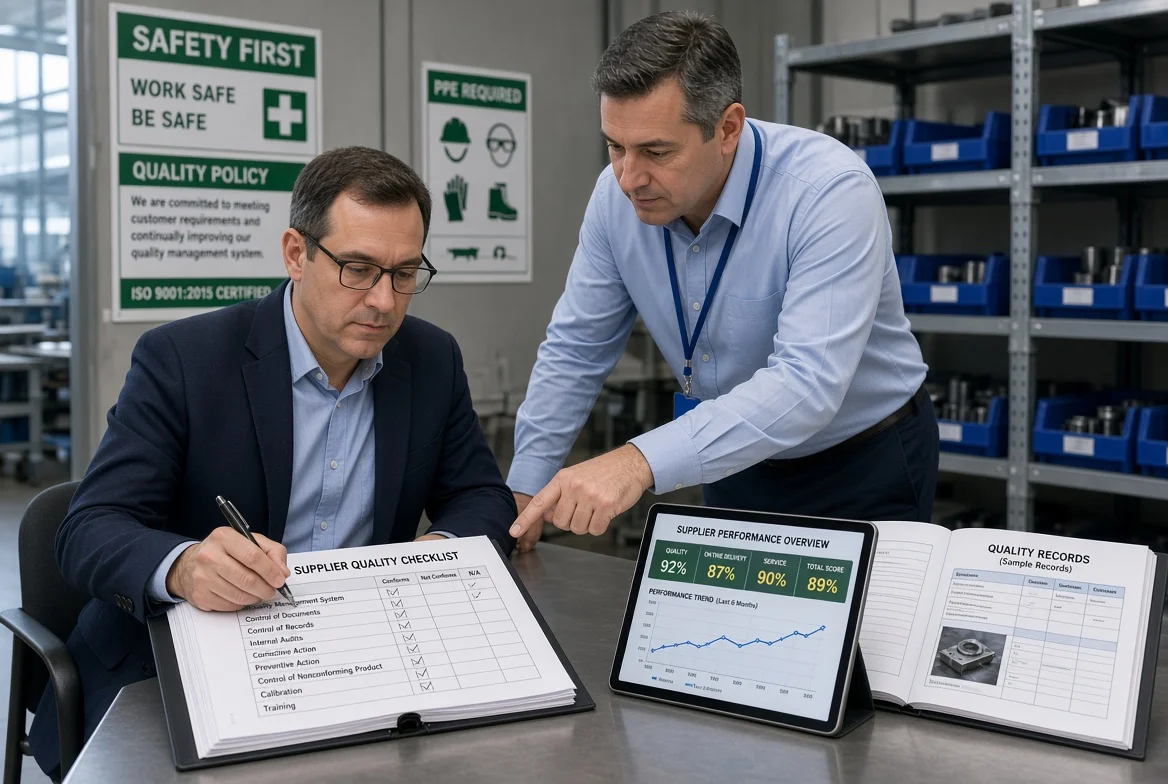
📷 Supporting Image Placement
When to Use a Supplier Evaluation
If a full audit is not appropriate (or would be disproportionate) then a structured evaluation may be the most appropriate initial or continuing assessment.
The initial screening and selection of suppliers.First screening and supplier selection.
Evaluation is useful in supplier search and RFQ phase to narrow down the options, eliminate obvious mismatches, and select prospects to be shortlisted for deeper investment. This helps to prevent wasted audit resources on suppliers who do not meet minimum capability or commercial assessment.
Ongoing Performance Monitoring
When suppliers are active, periodic assessments of their performance, through defect rates, on-time delivery, responsiveness, and corrective-action closure, keep the picture up-to-date. Patterns in the data can help to identify when a more thorough audit is needed.
These are considered to be low to medium risk suppliers and standard products.
Standard components and lower risk categories require a documented evaluation and basic performance tracking typically. Unless there are specific concerns, full system audits bring in extra costs but not proportionate reductions in risk.
When to Use a Supplier Audit
Audits are warranted if there is a high cost of failure, or high need for formal assurance.
High Risk, Critical or Regulated Products
For safety-critical parts, medical or automotive components, regulated consumer goods or parts with high warranty or liability exposure, formal audits are often warranted. The aim of verification is to confirm that the supplier's systems are able to meet the strict requirements continuously.
Significant Quality or Compliance concerns
Often triggers include major defects, customer complaints, recalls, regulatory findings or repeated nonconformities. An audit in these situations is more about root cause analysis and confirmation of effective and sustained corrective actions.
Identify strategic suppliers and establish long term partnerships.
Periodic/staged audits give greater transparency in systems and facilitate collaborative improvements where the business relies on one critical supplier. These audits are not simply compliance checks; they are part of a relationship with a supplier to develop it.
How Supplier Audits and Evaluations Work Together
The two tools complement each other in a mature supplier-management approach. The practical pattern is evaluation first for screening and monitoring, with audits applied selectively when risk, criticality, or incidents require deeper assurance.
Evaluation First, Audit When Needed
Broad evaluations keep the supplier base under review at manageable cost. Audits are then deployed for high-risk categories, critical qualification stages, or problem resolution. This balances efficiency with control.
Using Audit Findings in Evaluations
Nonconformities, corrective-action status, and demonstrated system strengths from audits feed directly into supplier scorecards and risk ratings. Over time they become part of the ongoing evaluation picture.
Building a Risk-Based Supplier Management Framework
Effective teams document which suppliers receive evaluations only, which require periodic audits, and what events trigger an unplanned audit. Clear criteria—product risk, spend, criticality, compliance needs, performance history—make the framework consistent and explainable to both internal stakeholders and suppliers.
Practical Guidance for Procurement Teams
Turning the distinction into daily practice requires a few concrete steps.
Define Clear Criteria for Audits and Evaluations
Document the rules: which suppliers need formal audits, which need only structured evaluations, review frequency, and trigger events. Base the rules on product risk, annual spend, business criticality, regulatory exposure, and historical performance. Publish the criteria inside the supplier-management procedure so decisions stay consistent.
Train Buyers and Auditors Appropriately
Most evaluations can be performed by trained buyers or category managers using internal scorecards and data. Formal audits against standards such as ISO 9001 or industry schemes usually require additional auditor training or external specialists. Invest in that capability for the categories that carry the highest risk.
Communicate Expectations to Suppliers
Tell suppliers in advance when they can expect an evaluation versus an audit, what each process covers, and how findings will be used. Framing both as tools for mutual improvement rather than pure policing reduces resistance and improves cooperation when issues surface.
A clear understanding of supplier audit vs supplier evaluation lets procurement teams match the depth of scrutiny to actual risk. Evaluations keep the broader supplier base visible and manageable. Audits deliver the formal, evidence-based assurance needed for critical or troubled suppliers. Used together inside a documented, risk-based framework, they reduce both wasted effort and unaddressed exposure.