
Evaluating before cooperation supplier manufacturing capacity, that is to say, whether the supplier's equipment, processes, technical skills, quality systems and capacity can continuously produce your products with "experience" is only a superficial evaluation. The risk-based approach is applied in capability assessment. A low value standard item may only require light technical review, factory review, sample review and trial production is not required for a high value, regulated, or production critical item.
This is often seen as a ‘one size fits all' checklist or as an automatic full technical audit by the buyer. In fact, the depth should be commensurate with product risk, order value, customisation and the impact on the supply chain. This is to minimize capability mismatch, quality failure, delivery failures, and hidden costs before the issuance of the purchase order.
Start With Clear Product and Technical Requirements
Without that knowledge of your product and technical requirements a proper assessment of a supplier's manufacturing capabilities is not possible. The result of vague specs is irrelevant evaluations, non-comparable quotes, arguments when starting cooperation. The better the baseline, the more helpful each subsequent check will be.
Explain what Product Specifications and Performance Needs are
Explain the characteristics of products, sketches, size, material, tolerances, colour/finish, technical performance, reference samples, packaging, labelling, testing requirements and applicable certifications. These usually involve drawings, material specifications, tolerances, surface finishes, threads, inspection specifications, and volume, among others. These are details that make the difference in what capabilities are important.
Identify Critical-to-Quality Characteristics
Not all of the features are equal in weight. Define quality and functional tests, material properties, safety requirements, and/or regulatory requirements that are critical to performance and function. These characteristics will make the assessment focus and help teams not get bogged down in detail.
Convert Requirements to Capability criteria.
Researching the required processes (CNC Maching, injection moulding, assembly, etc), precision of equipment, inspection process, material handling, testing capability, capacity, etc. -- turn product needs into capability questions. This change from a nebulous “can you make this?” to specific “do you have this capability?” questions can be answered with evidence.
1. Review Production Equipment and Technical Fit
The starting point of any supplier capability assessment is the production equipment and technical fit. Ensure the supplier possesses the equipment, tools and know-how for the product in question.
Ensure that the correct equipment is used to meet the requirements of the product.
Check the supplier's equipment against your needs: machine types and sizes, precision, automation, tooling, and special processes like heat treat or plating. When it comes to precision metal part work, check CNC accuracy, spindle condition, tool control and fixture design as well as the ability to maintain tolerances, time after time.
Choose appropriate materials and components for project requirements. Identify equipment condition and maintenance.
The presence of equipment is not enough. Look at cleanliness, age, maintenance records, calibration and the availability of spare parts. Older machines that are well maintained are suitable, poorly maintained new machines are risky. Request copies of maintenance history and any problems experienced in the recent past.
Critically assess Technical Skills and Engineering Support
Evaluate operator training, process engineers, quality engineers and process changes, tooling changes and improvements. Inquire about staff turnover, training programmes, and technical issues and how they are escalated and resolved.

2. Assess Production Process and Process Controls
There is no guarantee of results with equipment. The supplier has the ability to produce a consistent and repeatable output, which is a function of the production process and process controls.
Draw the Production Flow
Lead through the process: from the receiving and storage of raw materials to cutting or machining, assembly, finishing, inspection, packaging, and warehousing. Check for logical layout, little back-tracking, clearly designated work-in-progress zones, and separation of conforming and nonconforming products.
Identify KPC and Critical Steps
State setup checks, 1st article check, in-process checks, final checks, and any special controls for critical dimensions or functions. Inquire about how the supplier keeps errors from occurring at important stages of the process and what would occur if a process went out of control.
Review Work Instructions and Standardization
Review work instructions, standard operating procedures and visual aids at work stations. Variation is minimized when instructions are clear and up-to-date. The risk of missing or outdated instructions exists with complex products and custom products.
3. Evaluate Quality Systems and Inspection Capability
Some of the best factors of manufacturing reliability are quality systems and inspection capability. Evaluate supplier's defect prevention, nonconforming product detection and quality control.
Incoming Material Control
Inquire: How do they get materials if they are not from their suppliers? Supplier approval, material certificates, visual checks, sampling and testing, storage? Even if the manufacturing process is solid, weak material control will cause the product to vary between batches.
In-Process and Final Inspection
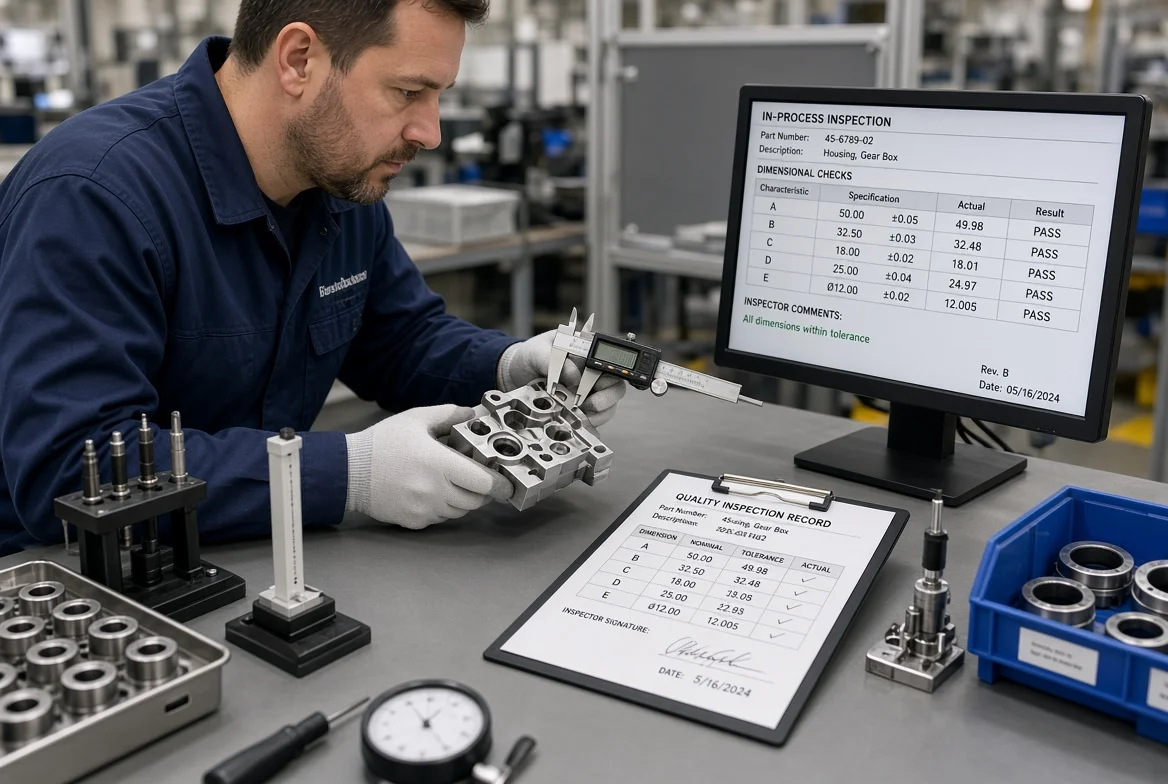
Review of inspection points, inspection frequency, records, acceptance criteria and handling of non-conforming products. Ask to view sample inspection reports and compare these to your needs.
Corrective Action and Continuous Improvement (CA & CI)
Review the process of defect and customer complaint management: root cause analysis, corrective action, and corrective preventive actions, and monitoring of recurring defect and complaint issues. A supplier which learns from problems is more reliable than a supplier who states that they have never had any.
4. Verify Capacity, Lead Time, and Production Planning
Capacity and planning will also influence the ability of the supplier to provide the quantity and timing needed, particularly for time sensitive or seasonal demands.
Measure the available capacity and utilization
Check lines/machines, shifts, current utilisation, order backlog, and capacity to accommodate volume changes. Supplier utilisation close to 100% can be affected by unpredictable peaks or rush orders.
Do a Production Planning and Scheduling Review.
Inquire about the process for reviewing orders, planning materials, allocating capacity, and notifying customers of delays. Pay attention to signs of realistic planning, not promising outcomes.
Verify Lead-Time Claims
Verify quoted lead times with production history or reference customers. Question how capacity is divided, if rush orders are possible, and what happens if materials, equipment or capacity of labour changes.
5. Check Technical Documentation and Engineering Capability
Often neglected, but very important, technical documentation and engineering support for custom or evolving products.
Drawing and Specification Interpretation
Evaluate the supplier's knowledge and interpretation of drawings, tolerances, surface finish, material grade, geometric dimensions and significant notes. Watch to see if they pose meaningful questions for clarification in the RFQ process and if they assume things that are not true.
Engineering Change Management
Discuss engineering change control: revision control, communication, timing of changes, impact on existing inventory. Inadequate change management results in inconsistent production and rework.
Tooling, Fixtures, and Process Engineering
Evaluate the design, maintenance, ownership and capability of tools and fixtures for product variants and changes. Establish ownership of buyer-specific tools, and the consequences if the relationship is terminated.
6. Validate Capabilities Through Samples and Trial Production
Claims become measurable evidence through samples and trial production, particularly if you are a new supplier, looking for custom products or manufacturing internationally.
Score for Samples on Written Acceptance Criteria
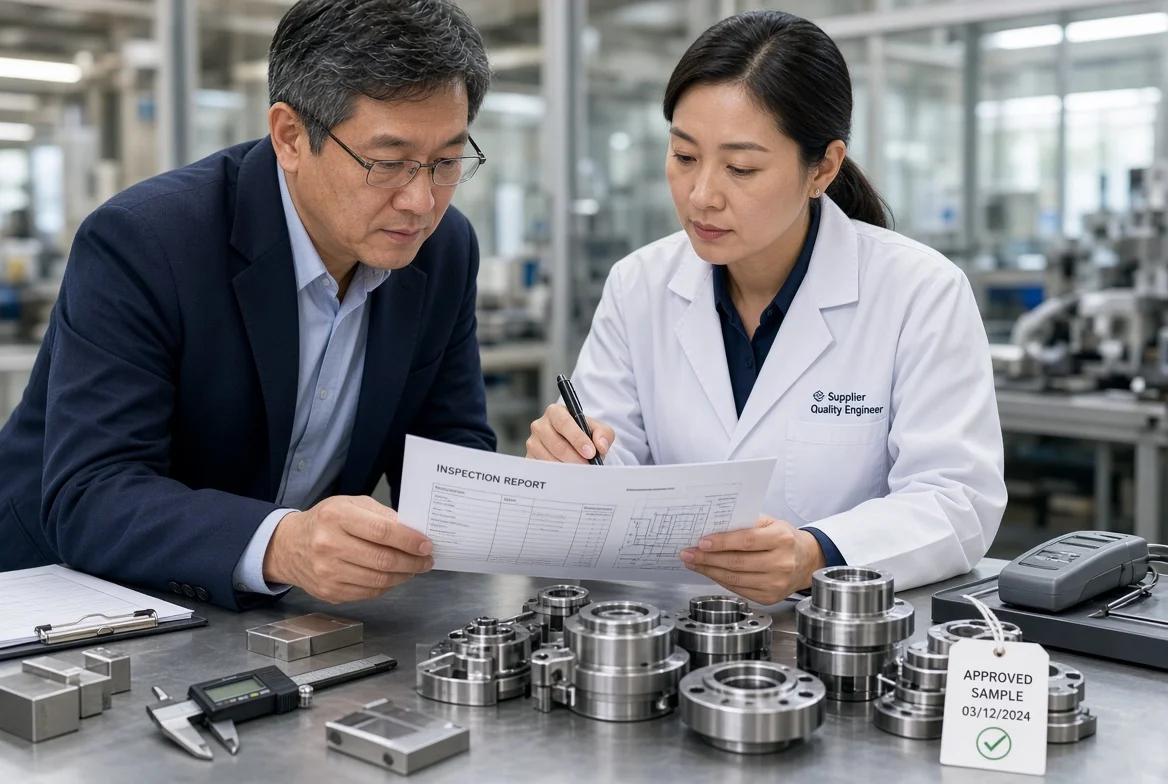
Compare samples to defined requirements (material, dimensions, fit, function, performance, appearance, packaging, labelling, test results) and NOT just by sight. Record the evaluation and make the appropriate changes to the next sample or production run.
Verify if the Sample is a Mass Production
Inquire about the procedure for creating the sample. Did any production tools have to be used? Did the normal production materials and processes have been used? Will the same process be applicable at scale? Ask for a pre-production or pilot run, if the risk is appropriate.
The process of designing a controlled trial, conducting it, and tracking trial performance.
Real performance testing is done through a trial order: Order acknowledgement, communication, timing, quality consistency, packaging, documentation, and problem response. Anticipate acceptance criteria and make a go/no-go decision prior to volume growth during the trial.
7. Assess Communication, Responsiveness, and Problem-Solving
The quality of communication can make the difference between whether technical ability can be delivered smoothly or not.
Clear, consistent and technical understanding.
Review supplier contacts to see if they offer comprehensive and technically appropriate responses, and will be candid about their limits. A supplier that will ask some good questions will be more reliable than one who rushes to answer with blanket promises. Speed of response is not a good indicator.
Problem Communication and Escalation
Note the supplier's methods of reporting delays, quality problems or changes. Reliable partners will notify buyers promptly, suggest solutions, and escalate as necessary. Try this behavior in the evaluation phase, using technical and commercial questions in detail.
Positive attitude towards investing in capability improvement
Rate readiness for process improvement, equipment investment, quality improvement or training. The willingness is more important than the current picture of capability in longer-term relationships.
8. Consider Risk Factors and Strategic Fit
The final layer is to see if the supplier is a good partner beyond a purely technical perspective.
Geographic, Operational, and Supply-Chain Risks.
Evaluate political, regulatory, exposure, capacity, quality history, raw-material and single-source dependency. In cases of critical items, dual sourcing or inventory buffers might be considered.
Strategic Alignment and Long-Term Potential
Think about the supplier's capacity, culture and growth plans in relation to your volume trajectory, product complexity and compliance requirements. Not all suppliers have to be long-term, but critical suppliers should be assessed in the context of a long-term relationship.
How to Use This Assessment in Real Sourcing Projects
Scale Assessment Depth to Product Risk
Use the framework proportionately. Low risk purchase could require only a capability check and trial order. If it is a custom, high value, overseas, or production-critical item, then it should be reviewed further and tested in the factory, or even have a backup source.
Complete a simple capability scorecard
Create a light-weight scorecard of all the factors mentioned and attach relative weightage based on the product and risk profile. A simple high/medium/low rating for each section ensures greater consistency and objectivity when comparing suppliers.
Document findings and use them for decision making
Document lists of equipment, process observations, evidence of inspection, sample results and risk notes. These records can be used to facilitate internal approval, for reviews at a later stage, and for continuous monitoring. Rather than using capability assessment as a one-off gate, consider it a continuous process.
FAQ
How far to go with a manufacturing capability assessment?
The depth should correspond to the risk, customisation, value and impact on the supply chain of the product. Lighter technical and process review of low-risk, standard items and more thorough review of high-risk or custom items.
What is the difference between a capability claim and a verified manufacturing capability?
In presentations and websites, claims are displayed. Verified capability is proven by the condition of the equipment, process controls, inspection records, representative samples and actual production performance.
Is it possible for an older supplier to have the capability?
Yes, provided the equipment is properly maintained, calibrated and appropriate for the tolerances and volumes to be achieved. Age is not the only factor in condition and process control.
Why is it that sometimes samples do not predict mass-production quality?
Samples can be prepared using special techniques, special materials, or an atypical method. Always ensure the sample process corresponds to the desired production process.
What are the best strategies for buyers to take if the supplier has a good technical score but a low communication score?
Consider using communication as a capability risk. An absence of timely reporting and a failure to resolve problems effectively can compromise technical strength. Record the gap and determine if it is an acceptable gap for the project.
When should a factory visit or audit by a third party be required?
If the risk of a product, order size, regulatory standards or geographical location requires a more in-depth assessment than can be provided via the Internet. Conduct visits or audits in a step-wise fashion and not routinely for all suppliers.