
Once you have placed the first order for a new supplier, it's too late. After this PO, you will be paying cash, your factory will have a delivery slot and your production plan will be based on a factory that you have not yet proven at volume. The verification step between a promising supplier quote and commitment is a structured supplier evaluation process, known as a new supplier evaluation checklist. It requires a team to validate the legal identity, equipment control, process control, capacity, quality evidence, compliance, and commercial terms before funds flow.
It's not just about the quality of the sample and the competitiveness of the price. Samples are frequently produced using special materials, special overtime and special production methods. Those results are taken as a starting point and not as proof that the same result will occur in serial production by professional teams.
Business Verification and Legal Documentation
Business verification is the basis for any first order decision. Any subsequent technical checks ride on shaky ground if the legal entity is incorrect, if the bank account is misnomered, or if the paperwork is incomplete.
Business Registration and Legal Entity Verification
Request the current business registration certificate and tax registration to check for manufacturing / export licenses in that country. Confirm legal name, registered address and structure of ownership with quotations and invoices and website. Determine if you are operating a manufacturer or trading company that calls itself a factory. A team that subsequently misses this step may find out that the “factory” doesn't have any manufacturing resources and is merely a capacity broker.
Infrastructure for payment security and bank account verification.
Details of payment need to be in accordance with the legal entity. Ask for bank letters or screenshots of the account that include the account name and match the registration documents. If the account is from a different company, individual or an unknown intermediary, consider it to be a stop condition until the account's structure is explained in writing. Record the conditions for releasing the balance of the funds pending the transfer, payment terms, and percentages.
Contract-related Definitions and NDAs, Legal Agreements.
A first PO should never be sent without a supply agreement, quality agreement and NDA, if drawings or formulations are being sent. These documents establish liabilities, IP rights, change control etc. and what happens if quality or delivery fails. When a dispute begins, verbal assurances go away. Written conditions eliminate the dispute over the payment of scrap, the ownership of tooling and late deliveries.

Technical Capability and Production Readiness
Technical capability is answering a simple question, will this supplier have the ability to use the equipment, tooling, and process they will employ to produce your part?
Equipment Verification and Production Capability is a special focus on equipment to verify its capabilities and suitability for production.
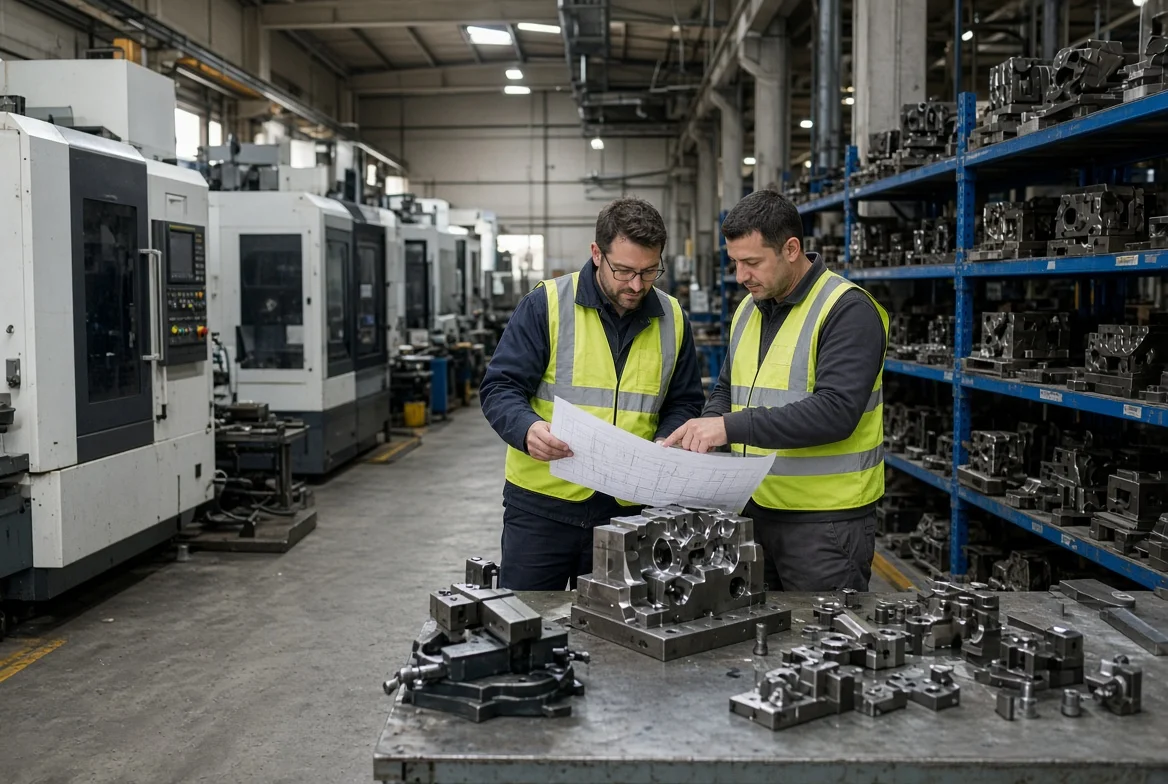
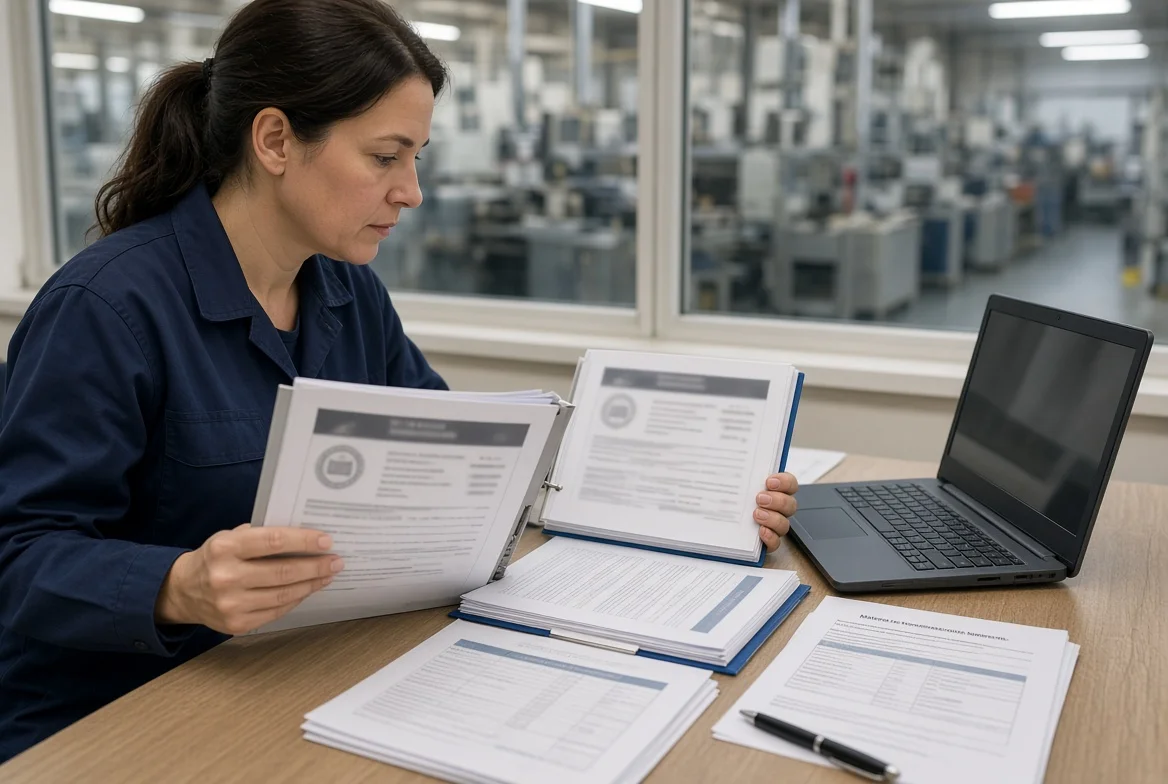
Ask to be provided with a list including make, model, age and capacity of the equipment used in the processes that are relevant to your part. Get photographs or videos of the particular machines, molds, fixtures and test equipment to be used for the job. Have the supplier demonstrate the lathes, bar feeders and inspection tools they will use to maintain your tolerances. If the critical machine is already fully loaded, or if the mold that they presented is another customers' mold, the quote is not production ready.
Samples are used for the development and validation of the process.
Only approve the sample once you know the process of its creation. Verify material certificates, process routing, tooling identity, and inspection records of this sample lot. It's common to see teams end up with an article that looks nice but required "extras" in the way of a different resin, finishing, or tool that is not going to be used in high volumes. Have a process validation plan or a limited pilot run prior to the first production PO if the part is critical.
Engineering Support and Technical Documentation
If custom or changing products, inquire who owns the drawings, process sheets and engineering changes. They're not a supplier with in-house engineers, DFM feedback and controlled document revision, and they're not a different partner. Late responses to ECO, and unrecorded changes on the shop floor, are the signs of weak engineering support.
Quality Management and Process Control Verification
Quality systems determine if the first order will be a lottery or consistent. Certificates are useful but not a substitute for evidence of the management of work.
Management System and Certifications.Quality Management System and Certifications.
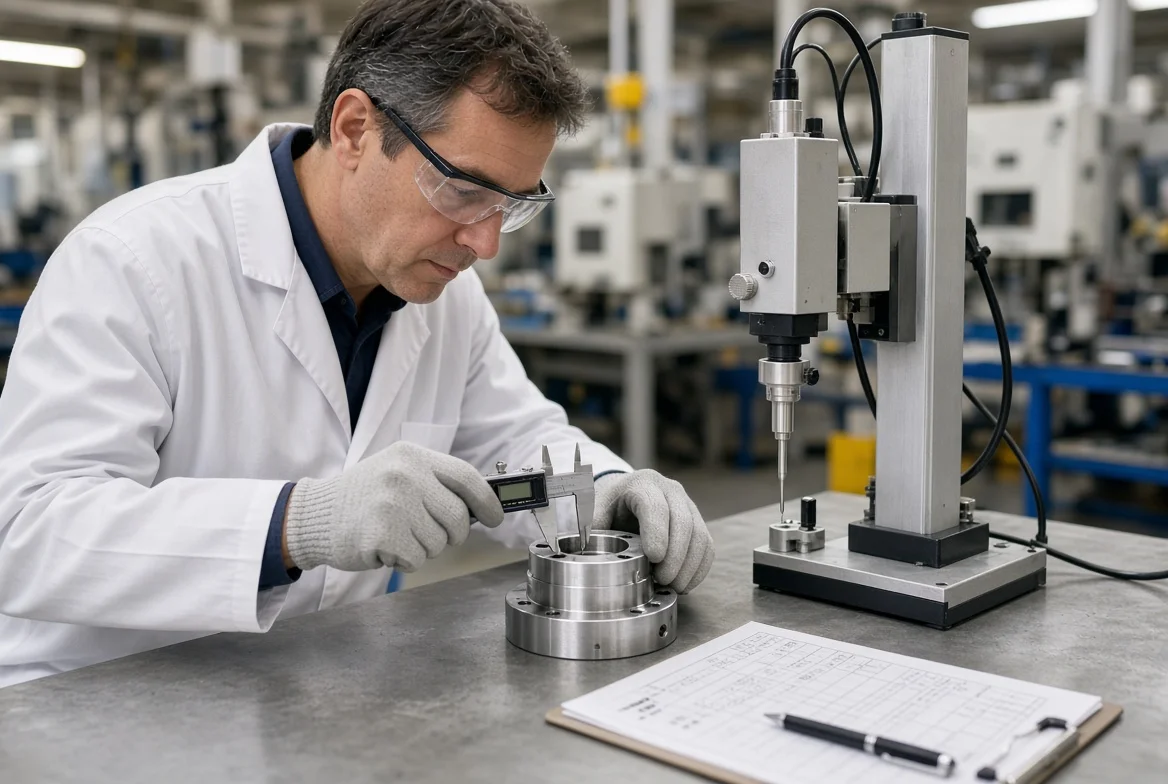
Check quality manual, latest internal audit and ISO 9001 or industry certificate. Then ask how those procedures apply to your product; who is going to inspect what, when, and why? There is no assurance or certificate that material is being checked on the wall and that line is stopped when a dimension moves.
Incoming Material Control and Traceability
Inquire about the method used for identification, inspection and tracing purchased materials to finished lots. Inspection records, approved-vendor lists and quarantine of nonconforming materials. If the supplier does not provide any batch tracing from resin or steel heat to finished shipment, then a failure in the field at a later date will be difficult to manage.
In-Process Controls and Final Inspection
Take a stroll through the process map and identify inspection points. Confirm gauges, test methods, sample sizes and what to do if the result is outside of specification. Hidden process variation will be sent out at the end of the line with a factory that only inspects at the end. Request to view recent first article, in process and outgoing inspection records for an equivalent product.
Quality Agreement and Acceptance Criteria
Sign quality agreement prior to the PO. Establish defect classes, AQL or other acceptance levels, level of inspection, methods of measurement, and corrective action time. If not, it's a discussion about “acceptable.”
Capacity Verification and Delivery Commitment
Having the proper equipment and still not being at your appointment, because the equipment is already engaged, is a common problem for a factory.
Current Capacity and Available Capacity Confirmation, This shows how many slots are currently occupied and how many are available.
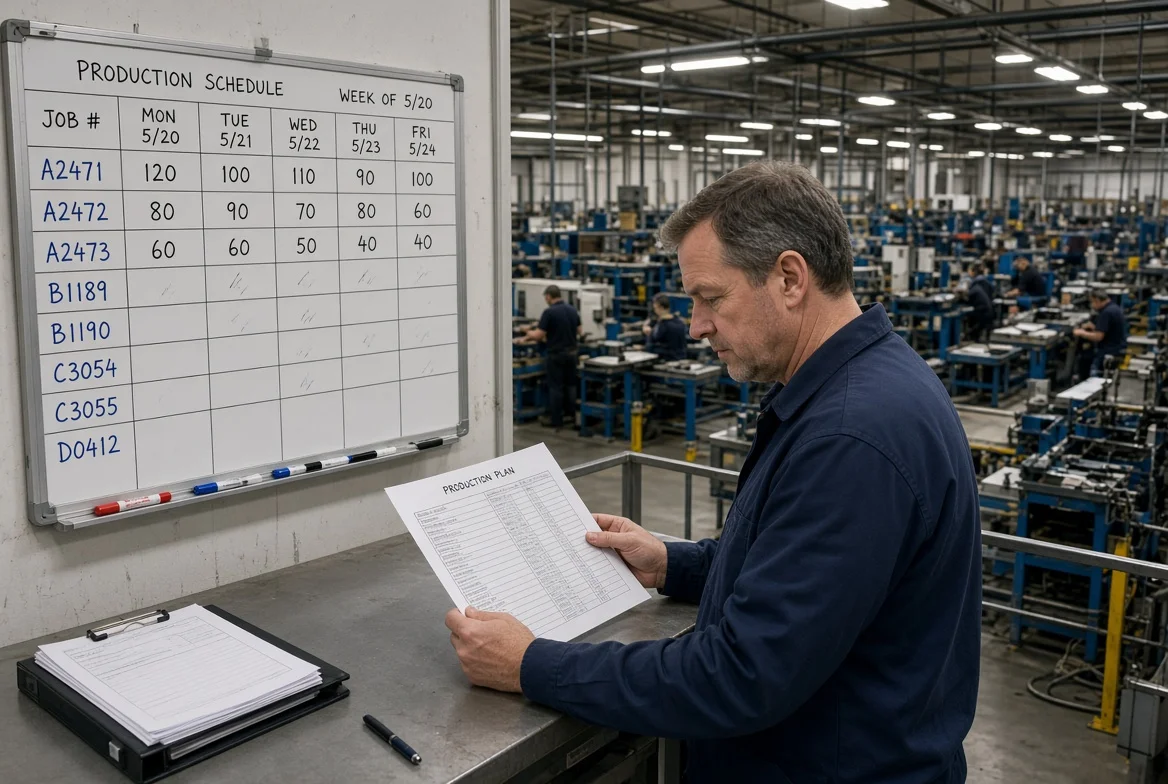
Inquire about actual utilization, shift pattern, labor count on the lines involved and the order backlog for your production time. After the PO, a team that only considers the nameplate capacity may find that the supplier has already sold the available hours to two larger customers. Verify capacity in writing for the week(s) requested.
Production Planning and Delivery Commitment Validation
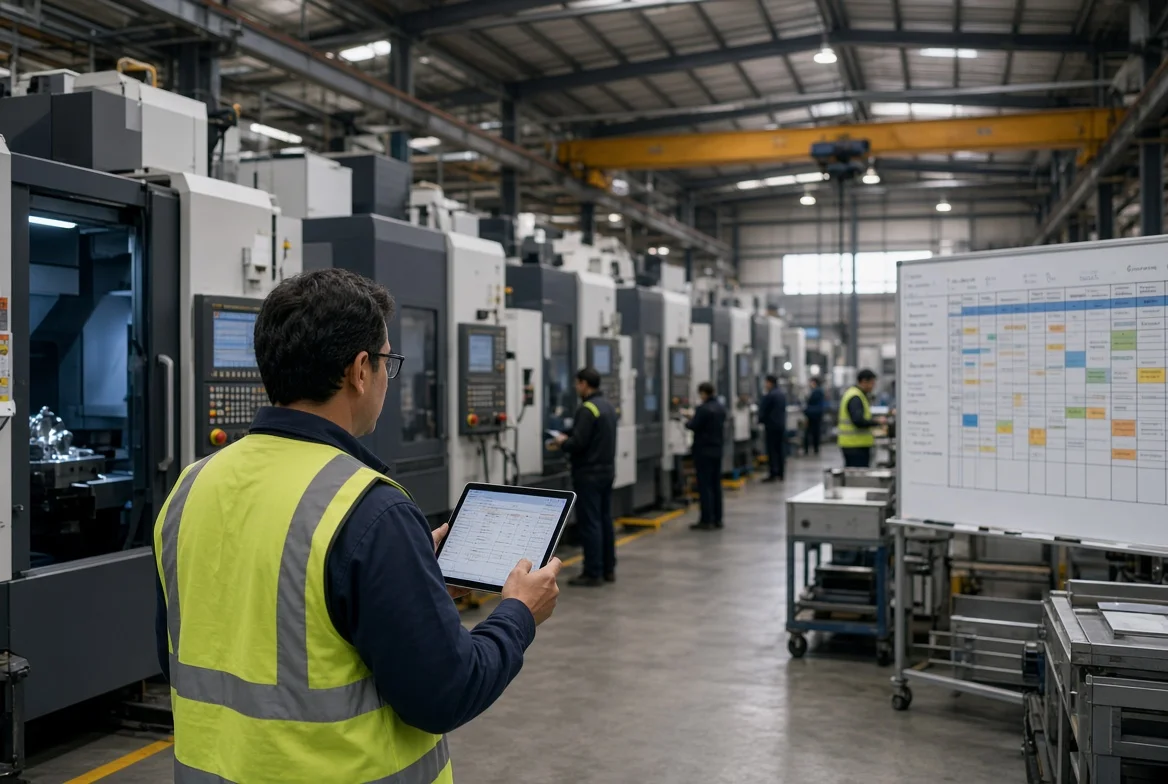
Examine how the supplier schedules are reviewed: weekly plan, priority freeze times, priority changes. A realistic delivery date is created from actual load and not on a salesperson's promise. Have them demonstrate how your order will look in the existing plan.
Packaging, Shipping, and Export Readiness
Export documents, packing and freight coordination are issues that are not an afterthought for overseas suppliers. This is the same effect as a late production date—there is a disruption when there is an incomplete commercial invoice or incorrect HS codes or packing lists are late. Set confirmation of the preparation of documents, who books the freight and what packing specification will protect the goods.
Cost Verification and Commercial Terms
This is only beneficial if the price is low, when it also covers all the necessary items.
Quotation Accuracy and Cost Breakdown Review
Break down the quote into line items: material, processes, secondary operations, testing, packaging, documentation and freight. It's not uncommon for teams to discover that a really low ball was not going to include leak testing, PPAP style documentation, or packing for export. Request an itemized cost estimate to find out where the money is going and what other things will cost more down the road.
Payment Terms and Financial Arrangements
Analyze the timing of the deposit and the time needed to balance, as well as the letter-of-credit or open account specifications, with cash-flow risk. The higher unit price may be accompanied by better terms of payment, which can be more economical than the low price, which requires a large deposit to an unproven supplier.
MOQ, Tooling Costs, and Cost Exclusions
Document MOQ, Tooling Amortization, Mould Ownership, and any item excluded. If the price of the piece is low, but along with it comes a high MOQ, or a large tooling bill, then the "saving" can be null and void. Check ownership of tools after payment and what will occur if the work is moved later.
Compliance, Regulatory, and Risk Verification
Evidence of compliance is not a luxury, it is a necessity for regulated products, safety parts or highly demanding customer markets.
We verify product compliance and certification.We verify product compliance and certification.
Don't take a logo for a brochure as proof. Ask for test reports, material declarations and certificates that are exactly the part and standard you indicated. Verify dates of reports, lab identification and test construction versus production construction.
Environmental and Ethical Compliance
If your customer needs a RoHS/REACH/conflict-minerals statement or a social-compliance audit, obtain that information prior to the first PO. When a plating chemistry is limited and not discovered until it reaches customs or a recall discussion is necessary, a situation could become frustrating.
Conducting risk analysis and business continuity in the supply chain.
Identify important sub-suppliers, single-source materials and geographical concentration. Inquire as to what the supplier would do if a critical machine broke down or a raw material mill were late. All suppliers that provide documentation of backup capacity and inventory policy are safer choices to partner with if a part cannot be missed from the line.

Technical Capability and Production Readiness
Technical capability verification addresses the following question: “Will this supplier be able to do this part of this process using this equipment?” That isn't answered by the photos on websites or a sample box.
This section assesses the equipment and its capabilities.
Ask for an equipment list, including models, quantity, and age. Compared to the right CNC envelope, press tonnage, injection machines, SMT lines, welding cells and test benches. Request photos or a video walk-through of the actual machines that will be handling your job, and not the show room cell. The maintenance record on critical tools and calibration status indicate if the capability is maintained or claimed.
There is a possibility that a buyer can verify the supplier has the right 4 axis machines and CMM. The first order risk is evident if only the CMM is located in another building or the mold of a very similar part is worn and not planned to be refurbished. The depth of such a check should be based on the product criticality. A simple packaging item is not as demanding as a safety item in terms of interrogating the equipment.
Learn how to manage the sample approval and production process validation.
Sample needs to be approved. It isn't enough. Verify that the sample is produced using the same materials, tools, fixtures, operators and process steps that will be employed in mass production. Request process flow, process steps and material lot for the sample. If the sample was hand finished or a prototype tool was used to make it, or it was specially purchased, record this in the file and treat it as 'production' as it is not proven.
A common failure: Great samples made by a great deal of supervision that cannot be maintained by the production cell at volume, resulting in a first lot that is not dimension and finish. Even if your part is critical, be sure to include a process validation step on your pre-PO supplier evaluation checklist, and even a brief package if applicable, like PPAP.
Engineering Support and Technical Documentation.
Engineering support is a part of capability for OEM, ODM or any custom product. Are they able to read your drawing, ask questions, suggest tolerances to process and create process sheets, FAI reports and controlled revisions? Once the first change order comes in, one supplier that does nothing more than repeat the term ‘no problem' is a weak partner.
While no engineering support can substitute for a factory audit, it is a practical filter. The easier teams are to qualify and correct, the easier they can document the process.

Quality Management and Process Control Verification
The decision on the first lot depends on the quality systems. Before you place your first PO you should have evidence of how the factory controls incoming material, the process and the outgoing product.
Business Improvement and Business Certifications
Examine the quality manual, key procedures, certificates (e.g., ISO 9001). A system is evidenced by certificates. They do NOT indicate that the system is used for your part. Discuss with the team the outcome of the last customer audit, the main nonconformances identified and how they were closed. If feasible, walk the floor and check if travelers, inspection records and calibration stickers match the documented process.
There is no incoming inspection record, no MRB area and no calibrated gauges so a certificate on the wall is a paper system. Consider risk: Regulated parts or high reliability parts should receive more scrutiny than low risk commodities.
This refers to the incoming materials and traceability.
Inquire about their own vendors, lot inspections, traceability of material, and tracking of batches through production by the supplier. If you have metals, plastics, electronics, or food contact parts, you need a lot of identification on the coil or resin to the finished part.
Practical test – ask for a recent incoming inspection record and a traceability example for a similar part. If they can't demonstrate how a bad resin lot would be contained, your first order may be subjected to a material switch, one you will never see on the COC.
In Process Control and Final Inspection
Using the process of map inspection. What are the in-process checks carried out for this? At final inspection what is checked? Equipment used, what do you do with nonconforming products? Identify defined (oxymoronic) hold points at steps that constitute your risk: critical dimensions, welding, coating thickness, electrical test, cleanliness.
One party identified a supplier who had a clean final inspection bench and didn't have a lot of in-process checks on a tight tolerance assembly. Defects could only be discovered when the product is manufactured. It is not a reason to “watch the first shipment closely” it is a reason to delay the first order until control points are added.
Quality Agreement and Acceptance Criteria
Pre-sign PO and then sign the quality agreement. Explain the concept of defect classes, AQL or other acceptance criteria, inspection level, measurement methods and corrective-action clock. If left to a later email you'll find yourself having to debate on “acceptable” scratches and delayed 8Ds by the time the goods are shipped.
A signed quality agreement does not take the place of incoming inspection of the first lots. It does eliminate ambivalence when you have to reject or sort.

Capacity Verification and Delivery Commitment
Even if your date has an able and already-capacity factory, it will still not show up. Capacity verification is not based on nameplate machine numbers, it is based on hours in your window.
Current Capacity and Available Capacity Confirmation
Request current utilisation, shift pattern, staffing on the process you need and the order book for the time you require. There is no second customer who already reserved nights and weekends as seen in the machine photos. Identify the slowest machine (not the easiest) for seasonal or limited processes – (plating, molding, or SMT).
Two significant accounts once booked for finishing on the line for six weeks a buyer found that the CNC count was adequate. The first PO would have been in WIP. The availability of the capacity should be verified in writing, and not on a salesperson's word.
To verify production planning and delivery commitments.
Consider their planning process: weekly scheduling, days when they can freeze the schedule, how they deal with rush orders, and who can commit dates. A realistic first order promise is based on material lead-time plus process time plus a buffer for first article problems. If the promised date does not take material lead time and/or does not take into account first-piece approval, it is not a production date, but a sales date.
Explain what will occur if two customers use the same cell. The answer will inform you on how your initial order will be handled if there is a slip up.
Packaging, Shipping and Export Readiness.
A product that fails to get off the dock on time is still late! Check export packaging and labelling, who prepares commercial invoice, packing list, COO and any licenses. Incomplete or late documents are a constant source of delay with customs when the product is acceptable but is supplied by an overseas supplier.
Check the document dry run in the factory before the first PO if the factory has not shipped to your market. It's cheaper than having a container just sitting at the port.
Cost Verification and Commercial Terms
The unit price quoted is only 1 line. Cost Verification: This verifies that the number is complete, accurate and remains true after adding the items that the RFQ actually called for.
Ensures the accuracy of quotations and provides a list of the costs.Checks quotation accuracy and lists the cost.
Line by Line quotation against the RFQ: Material grade, Process, Testing, Documentation, Packaging, Tooling amortization, Special process. If you are not going to be provided an open book on the first purchase, request a breakdown of costs that includes material, process and overhead costs.
If the price is low, but does not include salt-spray or PPAP or export packing, then it is not a low price. This is an incomplete quote. Mark all the exclusions before comparing suppliers.
Terms of payment and financial arrangements.
Risk of changing deposit, progress payments and credit terms. A big deposit, no sample, no tooling control is a bad deal for a new supplier. First orders are frequently subject to a smaller trial order, a limited deposit or payment against inspection. That's the time when it is better to go with the first-order one, which offers a slightly higher unit price and safer terms.
Ensure both the sender and the receiver of the wire are the same as the ones listed on the invoice. This loop will return to legal entity and bank verification.
When calculating the Model Order Quantity, the Tooling Costs and Cost Exclusions apply.
The unit price is often negated by MOQ (minimum order quantity), mold or fixture costs and the exclusion of extras. Verify ownership of tools, when will they be paid for, where they will be stored, and what will happen if the tool is moved. Establish whether MOQ is a policy for the factory or a negotiating point for a first purchase.
A real-life example: A low bidder does not cover incoming material certificates, 100% electrical test, and branded cartons. Once those are counted, they're not the least expensive. The first supplier that you buy your products from should be on the same comparison sheet.
Compliance, Regulatory, and Risk Verification
Compliance does not come after the PO as a certificate folder. It is a gate for regulated products, safety parts or customers who have strict material rules.
Ensuring product compliance and certification verification.
Match your product to the standards that are relevant to your market and your customer: safety marks, material constraints, food contact specifications, EMC, flammability and/or industry specification. Don't take a supplier declaration for granted. Request test reports from a competent lab, material declarations and proof of tested construction that matches the production construction.
A certificate based on a different model or for a different material does not apply to the first shipment. When reports are unordered, the first order waits.
Ensuring environmental and ethical compliance.
If your customers need RoHS, REACH, conflict minerals reporting or social-compliance requirements, include it in the pre-purchase order file. Inquire about restricted substance control by the supplier at their own vendors. First purchase in a regulated channel requires a verbal “we are RoHS” plus the actual thing!
This check should be proportional to the number of items. A non-regulated industrial bracket doesn't require the same chemical file as a consumer electronic enclosure.
Love these guys, their work on Supply Chain Risk and Business Continuity has been invaluable.
Where does the critical sub process of plating, heat treating, specialty resin, single source chip fit in? Geographic concentration, single shift key equipment, no backup for a bottleneck is a first order risk, not a later SRM topic. A straightforward continuity plan, a dual-source for a critical process or buffer on long-lead material are all things that allow suppliers to be more easily trusted with a critical first PO.
You're not seeking a flawless risk register. You are wondering if the factory has considered what will happen if the week of your parts is the week the factory's coater is out of commission.
Communication, Responsiveness, and Onboarding Readiness
First Order will generate questions, prompting clarifications, and at least one surprise. The way the supplier communicates during the evaluation reflects their conduct under the pressure.
Communication Quality & Language Capability
Test the working language for technical subjects – not just sales greetings. Do they know how to describe a process change, a tolerance issue, or a failed dimension for you to use in writing? Any slow, unclear or continually misinterpreted responses during RFQ are a red flag for poor first article loops.
Put a bilingual engineer or a clear communication protocol in place before the PO, otherwise days will be lost for every clarification in the factory which can only sell English.
The ability to respond to situations and solve problems.
Perform the response time to usual questions and importantly, to difficult ones. Some suppliers respond to quotations within two hours, and remain silent when asked for a capacity calendar or a failed-sample analysis. Typically, that trend persists following the order.
A good guideline: include 1 detailed technical question and 1 document request with a time limit. It's not about how quickly you reply, it's about how well.
Establishing an onboarding procedure and integrating systems.
Question them about how they set up new customers: item setup, labeling, format of ASN / packing list, quality contacts and who is responsible for the first-article package? For ERP item codes, barcode labels or any specific inspection report format, verify they can provide these on the first shipment.
If there is a clearly defined path for suppliers to onboard then it's less likely to be a surprise when it comes time for a first purchase order. Any supplier that is not prepared for each new customer will be unprepared for you.
This is also where you link the pre-PO document to your broader supplier approval process: factory audit report, sample review and onboarding. Gaps should not be ignored by a first PO.

Final Takeaway: Complete This New Supplier Evaluation Checklist Before First Orders
It is hard to relax the first purchase order. The new supplier evaluation checklist is a gate, NOT a form to be completed after the PO is created. Check the legal entity and the bank, the equipment and the sample – the quality controls going through that will be doing the same at volume, the capacity you have available and whether this is really free, the total commercial cost, the compliance evidence, and the people who will be on the phone when the first lot is late.
Having a good sample and a low quote is not sufficient. Do not order unless there is a critical gap that is present, or do a paid pilot, or walk away. That is not recklessness, it's just common sense.
To continue with the larger methodology around this pre-PO work, please read the Supplier Evaluation Processes, Evaluation Criteria, Qualification and Selection, Factory Audits, Sample Evaluation, and Supplier Onboarding information that is provided by B2B Source Desk. Fill out the file first. Next, submit your order. sample evaluation, and supplier onboarding. Complete the file first. Then place the order.