
OEM manufacturing strategic procurement strategies are not just about getting the lowest unit price and receive the quotes. Original equipment manufacturing involves a long process with the customer and the factory, from design freeze to tooling, to pilot runs, to ramp up, and multi-year supply. The aim is to gain capacity; maintain quality; manage overall cost; and maintain the relationship without issues when volumes fluctuate or designs evolve. This article describes how seasoned procurement teams go about ensuring those outcomes are more predictable.
Understanding Strategic Procurement in an OEM Setting
In the OEM business, the supplier isn't merely a finished parts seller. They frequently have important tooling, process knowledge and impact on material selection and lead time. The strategic procurement perspective thus sees the relationship as a system rather than an exchange. Buyers are interested in TC0, capacity reservation, IP protection and succession planning as opposed to quoting the lowest per-piece price.
The distinction becomes apparent in no time at all. A transactional approach might get a cheap first order, but turn out that the factory can't scale it, who owns the tools is not clear, or quality issues take a week or two to resolve, etc. A strategic approach looks forward for those risks, and establishes arrangements – contracts, dual-sourcing, joint reviews – to deal with the risk before it becomes an issue that slows production.

Core Strategic Approaches That Deliver Results
Long-term partnership models
Many of the successful OEM programs are not based entirely on competitive bidding annually, but rather on preferred-supplier or strategic-partner status. The buyer agrees to volume or longer contracts in return for faster capacity availability, favorable payment terms for tooling and earlier feedback on process improvements. Where both parties have clear cost models and conduct regular business reviews, these arrangements are best suited.
Using two or more suppliers for a product.
Single sourcing for a critical part means that if there is a problem with that part, it affects an entire factory. Instead of opting to avoid a second source for high impact parts, strategic teams take the risk of selecting a second source for high impact parts, even when it incurs a small price premium. The second source can operate at a lower volume until the new order is placed, and the qualification work and tooling can be done before the order is placed. This method is particularly effective for longer lead times or parts that require particular processes.
The cost of ownership approach.
The Unit Price is one line. The following are all costs to include in the evaluation: Tooling amortization, packaging costs, freight, quality failure costs, inventory carrying cost, and cost of engineering changes. Those who make a conscientious total cost comparison between various offers make long-lasting choices and are spared unpleasant shocks after the first shipment.
Early supplier involvement
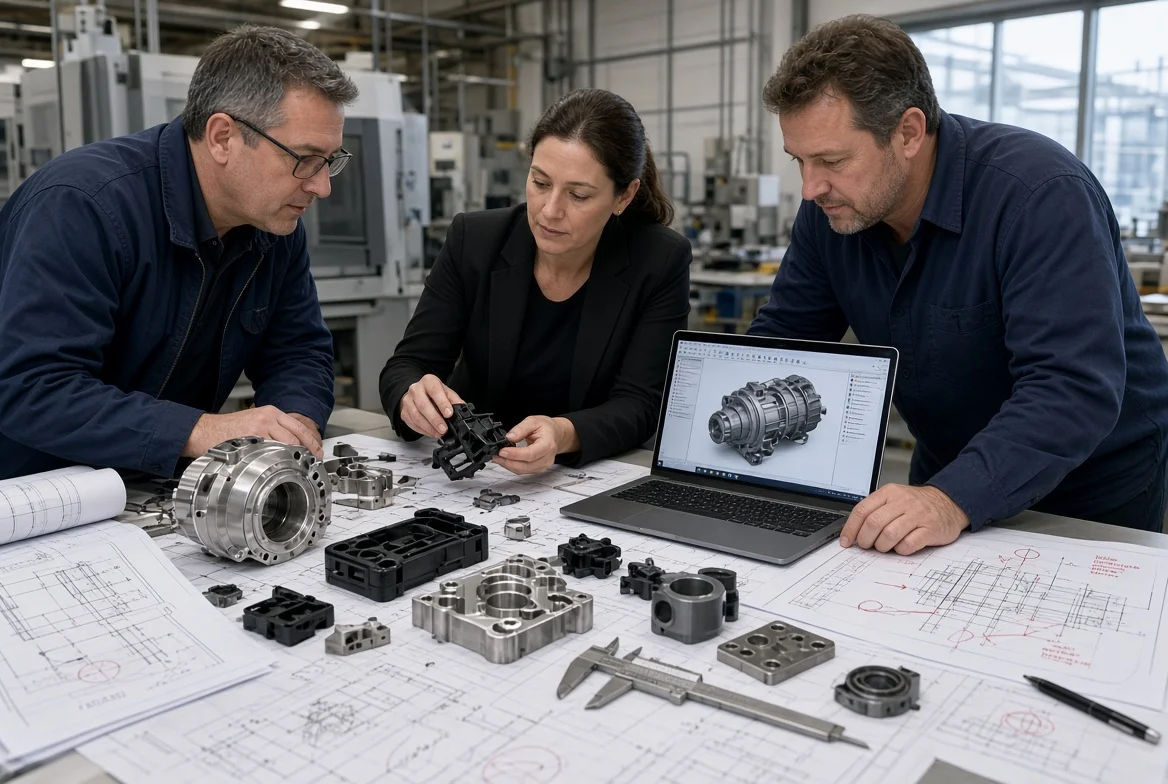
Involving manufacturing partner in design reviews prior to drawings frozen limits engineering changes and tooling reworks. The internal team may not have identified manufacturability concerns such as tight tolerances, materials that are unavailable, or assembly processes that might increase costs, but these are areas that the factory can access. Early engagement, with decision rights and confidentiality agreements, transforms the supplier from a “late-stage” executor to a “design partner.”
Aligning Procurement with the Full Product Lifecycle
The role of OEM procurement in the stages evolves.
At the concept and design stage the focus is on their technical ability and their interest in investing in the development. As a transition from the prototype step to tooling and pilot production, there is a greater focus on the control of the schedule, first article inspection, and ownership of the molds/ fixtures. Once volume production begins, the emphasis moves to capacity planning, quality stability, and continuous cost improvement. Towards the end of a product's life cycle, discussion is about last time purchases, the disposal of tools, and orderly exit terms.
By aligning teams' procurement processes with these stages, teams prevent the same approach to all RFQs. They spend more on engineering and quality resources earlier and more resources on performance monitoring and joint cost-reduction projects later.
Managing the Main Risks in OEM Relationships
Several risks appear repeatedly in OEM programs:
- Tooling ownership and transfer rights remain ambiguous.
- Capacity is promised but not formally reserved.
- Quality systems look solid on paper but lack real process control.
- Design changes create endless cost and schedule disputes.
- The supplier’s financial health or key-person dependency is never examined.
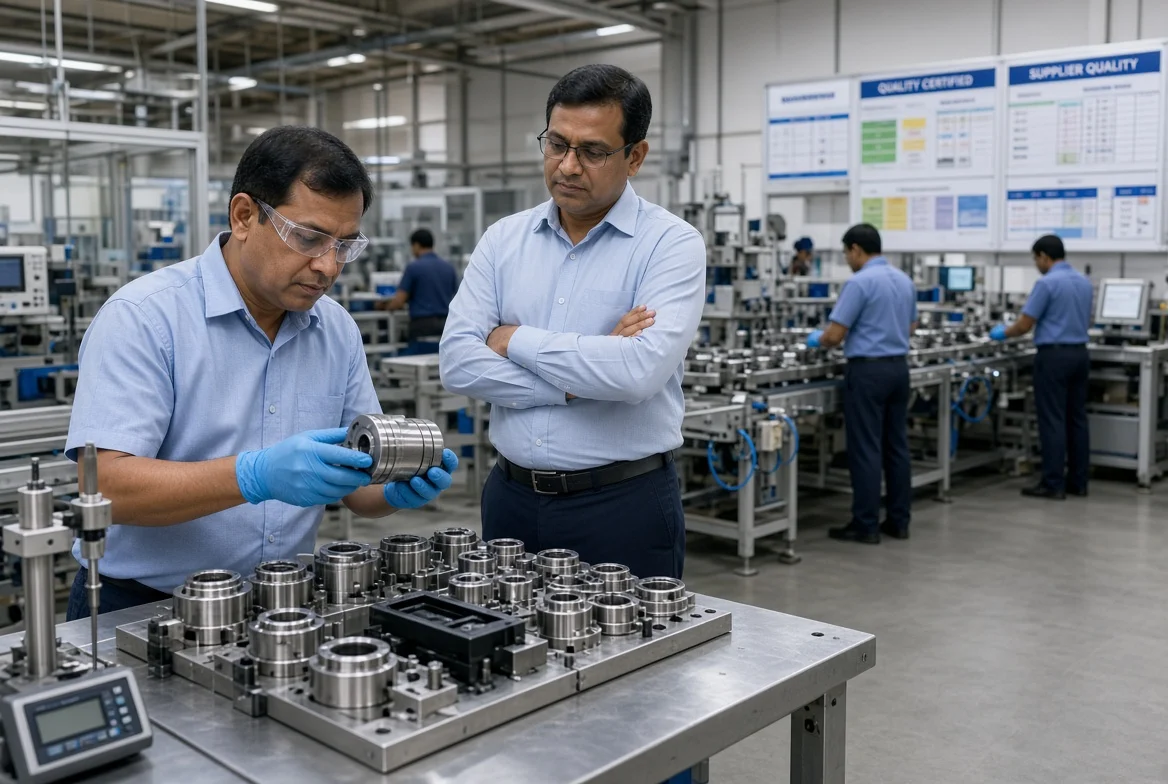
Practical mitigation includes written tooling agreements that specify ownership and transfer conditions, capacity reservation clauses with measurable penalties, joint process audits rather than simple document reviews, and formal change-control procedures that both sides sign. Periodic financial health checks and second-source readiness complete the picture.
Measuring Whether the Approach Is Working
Useful KPIs stay simple and tied to business outcomes:
- On-time delivery performance against the agreed schedule
- First-pass yield or defect rates at incoming inspection and in the buyer’s production
- Number of engineering change notices that require cost or schedule impact
- Actual total cost versus original target, including tooling amortization
- Lead-time stability for both standard and expedited orders
- Joint cost-reduction savings realized each year
Review these metrics in quarterly business reviews rather than burying them in monthly reports that no one reads. When a metric drifts, the conversation moves immediately to root cause and corrective action instead of waiting for the next contract negotiation.
A Practical Framework to Start Applying These Approaches
- Map every critical part to its current supplier model and risk level.
- Decide which parts justify dual sourcing or preferred-partner status.
- Require a total-cost model on every significant RFQ, not only unit price.
- Build early-supplier-involvement gates into the product development process.
- Put tooling ownership, capacity, and change control into the contract language before any money is spent.
- Agree on a short list of KPIs and review them on a fixed cadence with the supplier’s management team.
These steps do not require a large new bureaucracy. They simply force the same discipline that experienced buyers already apply to high-value programs onto the rest of the OEM spend.

The essence of strategic procurement in OEM manufacturing is to minimize uncertainty. Partnering models, dual sourcing, total-cost thinking, early involvement, lifecycle alignment and disciplined risk and performance management all provide the buyer with improved visibility and leverage throughout the partnership. When used properly, they transform the process of supplier selection into a system that ensures the cost and continuity of supply.