
Delays in production are seldom initiated on the shop floor. They frequently start too early, when procurement does not integrate bill of materials requirements, production timetables, inventory levels, supplier lead times, quality approvals, and logistics into a seamless process. Procurement planning for manufacturing is the systematic approach of ensuring that the right materials, in the right amount, from a capable supplier are available for use in production on the date specified. If not, a customer order after it goes to the production line could leave the line waiting for an emergency freight or alternative part.
Imagine a standard manufacturing situation – a long lead customised component is ordered from the ERP system with an outdated lead time from the supplier. As production moves forward, inspection-time is forgotten and the supplier's capacity is never reconfirmed. The material is late or is not released because of quality considerations. Labor waits, machines are idle, customer delivery slips and high shipping costs take the margin. Many teams believe that supplier delays are the biggest cause of delays. In truth, incorrect BOMs, late internal requests, ambivalent specifications, changes in demand, incomplete inventory information, and procurement decisions well after the deadline – all of these occur just as frequently.
What Is Procurement Planning for Manufacturing?
Manufacturing procurement planning is the process of identifying the materials and the services required, quantity, time, supplier, quality, commercial terms and contingency protection. It's not just about placing purchase orders. It is to make materials available, inspected, approved and released for production as scheduled.
Procurement Planning vs Production Planning
Production planning establishes what to produce in the factory and when. Planning procurement helps to identify how the external materials, components, services and capacity required to support that plan are to be secured. Once production is committed to a specific date for an assembly run, procurement will follow the back flow principle to verify BOM quantities, supplier lead times, inspection needs, logistics, inventory, and on the floor material availability date.
The difference between procurement planning and inventory planning is that:
Inventory planning determines the desired levels of inventory, reorder points, safety stock, and material availability. Procurement planning translates these targets into supplier orders, deliveries and procurement activities. The information in inventory is only valuable when used in conjunction with the open purchase orders, materials in-transit, future consumption and quality-hold stock.
Material Availability Date is More Important than Ship Date
The “ship date” a supplier gives does not necessarily mean that materials are ready for production. Days or weeks are required for transport time, customs clearance, receiving, quantity verification, incoming inspection, testing, documentation review, sorting and internal release. The procurement for an imported part must be done from the production date that the part is needed on the production floor, not the date it leaves the supplier's dock.

Why Manufacturing Procurement Planning Fails
A large number of production delays that are related to materials are caused by a few common weaknesses in planning. Each one has a specific factory consequence that is costly to fix after it has occurred.
Unaccurate BOM and Item-Master Data
Wrong quantities, outdated parts or components, duplicate parts codes, incorrect UOMs, missing lead times, or outdated supplier information creates the wrong purchasing needs. If a BOM revision does not appear in procurement information, they end up ordering the wrong materials or even a critical component is not ordered at all. When the line is ready to run, production finds out about the gap.
Supplier lead times that are not realistic or outdated.
The capacity planning, availability of raw materials, seasonality, equipment status, labor, order volume, holidays and logistics conditions affect supplier lead time. Plans that are based on old ERP defaults or quotations from the past are not going to work. Any specific quantity and delivery window will need to be confirmed through current lead time prior to locking the plan.
Production Plan is sent to procurement too late
Delayed communication from sales, production, engineering or planning in this way means you have not given procurement sufficient time to compare suppliers, negotiate terms, qualify alternatives, or arrange logistics. The purchasing team is not always a planning team but sometimes becomes a recovery team in a new-product launch or in an urgent customer order, since the required time to order would have passed by by the time the purchase order is placed.
The inventory, and the visibility of open orders, is incomplete.
False shortages or hidden shortages are caused by inaccurate stock records, lack of allocations, delayed receiving, duplicate purchase orders and missing in-transit information. That which is on-hand, that which has been allocated, that which is open, that which is in-transit, that which is expected to be consumed and that which is in quality-hold must all be reconciled before placing a new order.
This is not a timeline with Quality Approval.
Materials are seldom ready to use as soon as they are delivered. Extra time for incoming inspection, testing, documentation review, sorting, rework and approval, particularly technical or custom materials. If production is scheduled for the arrival date, and the production has not been released then the line stops even if the shipment is physically present on the site.
Capacity is assumed not confirmed from suppliers.
The historical performance or nominal capacity does not imply availability in the present production window. The demand is always high, new customers require the machine, machine down time, staffing shortages, and material shortages all limit what a supplier can actually do. Before finalizing the plan, it is required that production slots are confirmed, raw-materials are ready, and the subcontractors are depended on, and dates for real deliveries are confirmed.

Key Inputs for Manufacturing Procurement Planning
The inputs to the procurement plan will influence the quality of the plan. Every input has an impact on quantity or time, on supplier selection or on risk controls.
Creating production planning and customer requirements.
Procurement timing and quantity is determined by confirmed customer orders, production schedule, forecast demand, product launches and delivery commitments. Strong demand from the firms drives firm supplier pledges. When there is uncertainty about the demand, more flexible arrangements are needed and inventory exposure must be carefully managed.
Bill of Materials and Engineering Requirements
The plan shall be prepared with the appropriate BOM revision, material specification, drawing, tolerance, performance requirement, packaging, and quality documentation. Engineering-change control is critical; approved changes should be sent to suppliers prior to the production of the changed item.
In stock, open orders and material status.
Before ordering, the current stock on hand, allocated stock, open purchase orders, in-transit materials, quality-hold stock and expected receipts must be reviewed. Available material might already be reserved for another order or be held for inspection.
Supplier Lead Time, MOQ and Capacity.
The entire schedule is determined by supplier production lead time, MOQ, batch size, capacity, material availability, tooling status and order-confirmation time. The quoted lead time is not applicable to the specific quantity, specification and lead time.
Quality, Inspection and Release Requirements
These items should be part of the plan from the beginning, including incoming inspection, tests, certificates, first-article approval, documentation and release to production. The timeframe for inspecting a custom part, an electronic, a package, a regulated product or a production critical material varies.
Logistics, Customs and Receiving Time
The actual date of material availability is determined by the shipping method, export documentation, transit, customs clearance, delivery to destination, receiving, and warehouse processing. For international procurement planning, the whole door-to-production timeline is used, not just the time spent in the factory.
How to Build a Manufacturing Procurement Plan Step by Step
A practical procurement planning process works for annual plans, projects, product launches or individual production orders in manufacturing. The following sequence maintains focus on availability of material instead of order placement.
Step 1: Properly verify the manufacturing requirement
Before supplier contact: confirm the product, quantity, production date, requirement of customer, BOM revision, technical specifications, quality criteria, packaging and documentation. Immediate risk is posed by incomplete internal requests like “buy the same item as last time”, which imply revision, quantity, timing and application are not confirmed.
Step 2: The final step involves calculating the Net Material Requirements.
Determine order quantities based on Gross BOM Order, current inventory, allocated stock, open orders, in-transit materials, scrap and yield factors, safety stock, MOQ and expected demand changes. The logic is consistent, although the actual numbers might differ based on the material and process.
Step 3: Reverse Calculation from the Production Date
To get the order date, deduct the supplier production time, raw-material preparation, tooling, sample approval, inspection, shipping, customs, receiving and internal release time. In cases of imported parts with long lead times, add a realistic buffer for the uncertain milestones.
Step 4: Establish Supplier Capability and Current Capacity
Verify availability of the product, quantity, material, tooling and delivery date. Get production slot, readiness of raw materials, status of tooling, lead time, quality capability, and shipment date confirmed in writing. Some initial indicators include delayed order acknowledgment, unclear production dates, or fluctuations in material availability.
Step 5: Select the Procurement and Sourcing Method
Depending on urgency, risk, value, technical complexity, supplier availability and qualification, select an approved supplier, competitive RFQ, blanket order, scheduled release, framework agreement, dual source, emergency purchase, or supplier-development action.
Step 6: Create the Procurement Schedule and Risk Plan
Record RFQ/quotation, technical approval, supplier selection, PO placement, production, inspection, shipment, customs, receiving, and production release. Include a risk plan that addresses late supplier confirmation, capacity shortfall, quality rejection, logistics delay, material shortage, engineering change and actions otherwise.
Step 7: Approve Plan and Assign Owners
Assign ownership and approval for the plan for procurement, planning, production, engineering, quality, finance, logistics, warehouse and supplier contacts. Record escalation criteria and who will determine if expediting, substitution, reallocation/scheduling or backup supplier is needed.
Step 8: Track Milestones and Revise the Plan
Follow order acknowledgement, material readiness, production progress, inspection, shipment, customs, receiving and release to production following the issuance of the PO. Take any milestones that fall off to an escalation as soon as they fall off – not when the production date is in jeopardy.
Step 9: Reading through Real Results
Analyze planned vs. actual lead time, cost, quality, supplier performance, inventory, logistics and production impact upon receipt of material. Update lead-time, supplier risk ratings, safety stock, planning assumptions, and future procurement plans in the review.

How to Prevent Supplier-Related Production Delays
Actions taken by suppliers with regards to the order itself are more effective in minimizing late deliveries and supply interruptions than general assessment of supplier performance.
Verify the capacity for the Current Order.
The supplier must verify their capacity on the product, quantity, material, tooling and delivery period. Capacity can change in an instant due to peak demand, several production lines, subcontracting, raw-material shortages, or moving to mass production from prototypes.
Make sure to share your forecasts without causing confusion.
Forecasts can be shared to assist suppliers with capacity and materials planning, but buyers should keep in mind that there are non-binding forecasts, planned quantities, scheduled releases, and firm orders. Record assumptions for forecasts and communicate to suppliers if there is a significant change in demand.
Follow the Supplier Milestones and Early-Warning Signals
Order confirmation, raw materials prepared, production started, first article completed, mid production inspection, final inspection, packing and shipment are some examples of milestone tracking. Late submissions, changes in the schedule without explanation, loss of samples, substitutions in materials, incomplete documents, re-request for extensions are all indications of increasing risk.
Documented Qualified Backup Sources.
A backup supplier is warranted when the component is critical, it has a long lead time, is unique, or has a limited market. All of the above must be planned beforehand; qualification time, testing, tooling, specification consistency, realistic volume allocation, and capability maintenance.
Predicting and avoiding material and quality delays.
The material may arrive on the original ship date and still be found to be incorrect, incomplete, or nonconforming and prevent production.
Track changes and revisions to BOMs.
Modifications to materials, dimensions, designs or specifications shall be approved and communicated in advance to suppliers for the production of the modified item. Reordering the old revision following the engineering change causes unusable inventory and lost production schedule.
Instead of waiting for samples and first articles to be approved, do so early.
The pilot order and/or the prototype testing and production samples should be taken prior to the first-article approval and/or the material is required during production. The process of sample approval is closely connected to other activities such as tooling, supplier production, quality documentation and delivery risk.
Be sure to define Incoming Inspection in advance.
Quality teams should be familiar with what to check for, documents to be checked, tolerances, and time requirements for materials release. Plans and escalation for critical materials are agreed beforehand, and there is no ambiguity when the shipment arrives.
Prepare for rejection, sorting and replacement.
The procurement plan should cover the steps to take if goods are rejected on inspection. Time is required for containment, sorting, rework, replacement production, expedited shipment, supplier corrective action and schedule recovery. The answer should be in proportion to the severity, quantity, production damage, and customer needs.
How to Prevent Material and Quality Delays
A material that arrives on the original ship date can still stop production if it is incorrect, incomplete, or nonconforming.
Control Engineering Changes and BOM Revisions
Changes to materials, dimensions, designs, or specifications must be approved and communicated before suppliers produce the revised item. Ordering the old revision after an engineering change creates unusable inventory and a missed production schedule.
Approve Samples and First Articles Early
First-article approval, prototype testing, and production samples should be completed before the full order is committed or before production requires the material. Sample approval, tooling, supplier production, quality documentation, and delivery risk are tightly linked.
Define Incoming Inspection in Advance
Quality teams need to know what to inspect, which documents to verify, what tolerances apply, and how quickly materials must be released. Pre-agreed inspection plans and escalation procedures for critical materials remove ambiguity when the shipment arrives.
Plan for Rejection, Sorting, and Replacement
The procurement plan must account for what happens if goods fail inspection. Containment, sorting, rework, replacement production, expedited shipment, supplier corrective action, and schedule recovery all take time. The response should match severity, quantity, production impact, and customer requirements.
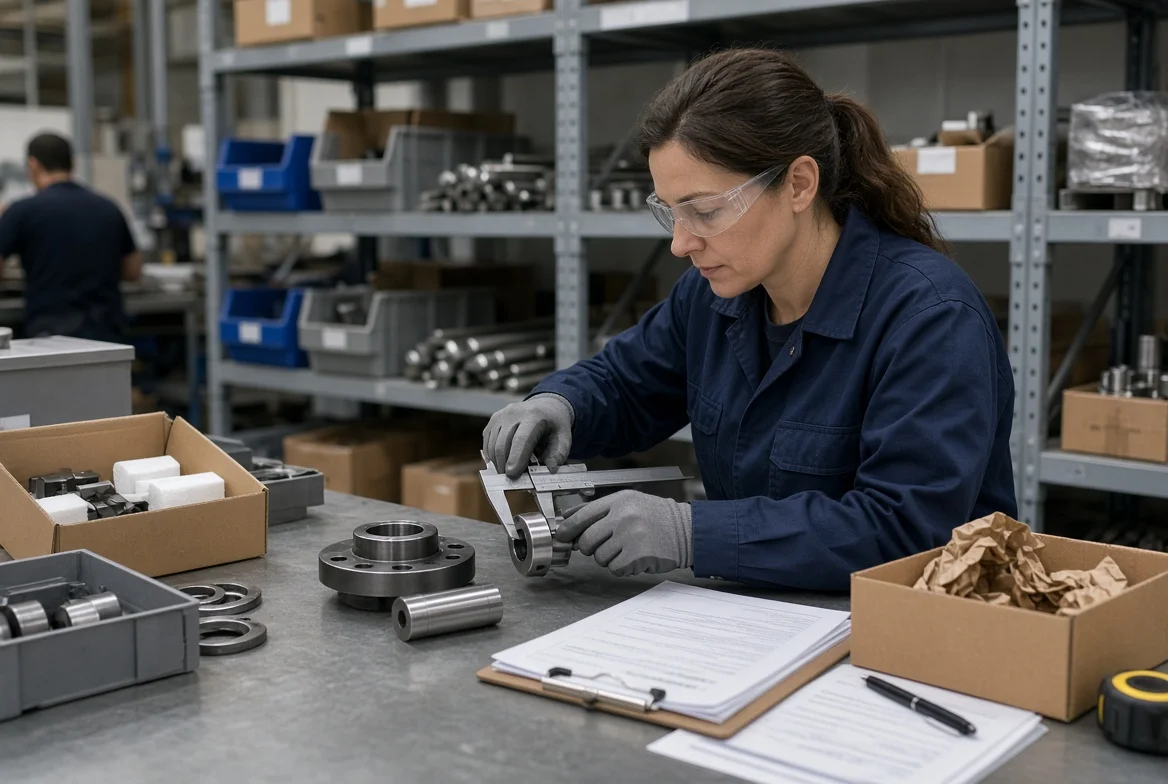
How to Plan Inventory and Logistics for Delay Prevention
Production-delay risk can be mitigated or exacerbated by inventory and logistics decisions. The intention is protection with minimum cash, storage and obsolescence costs.
Set Safety Stock Based on Risk
The safety stock should consider the variability of demand, supplier reliability, replenishment lead time, risk of transport, criticality of material in production and the cost of a production stoppage. There is one blanket rule when working with all the materials—excess in some, shortage in others almost always follows from one fixed rule.
Handle MOQ & Batch-Size Constraints
High MOQ and batch size demands require a decision between the risk of running out of stock and keeping a larger buffer of stock. If the constraint is structural, then some of the practical tools can be scheduled releases, blanket orders, supplier-held stock, demand consolidation, MOQ negotiation, and alternative suppliers.
Record Inspection and Receiving in the Timeline
Materials are not ready to produce when obtained. Time is needed for receiving, quantity checks, packaging checks, testing, document review, quarantine, and release. Frequently, schedules which assume that new material will be received on the same day as it is used are going to fail because the quality processes are going to be longer than anticipated.
If you are considering the risks involved in production, choose Logistics Based on Production Risk.
The appropriate mode of transport for delivery (ocean, air, rail, courier, or multimodal) should be decided based on the urgency of delivery, value of the product, size of the shipment, consequences of product shortage, and available inventory. Emergency freight is an indicator of a short-term problem, or a weakness in your supplier's performance.
Make Customs and shipping documents in advance.
The commercial invoice, packing list, certificate, labels, classifications, permits and other documents are related to customs clearance and delivery as well. Specificities of the trade lane and the product should be verified by qualified logistics or customs experts.
The KPIs for manufacturing procurement are outlined below.The following are the KPIs for manufacturing procurement.
Manufacturing Procurement Planning KPIs
The availability of materials and schedule performance.
The percentage of materials available by the specified production date, planning vs actual delivery, lead-time variance, adherence to schedule, and the number of times materials were late indicate whether plans assumed and supplier commitments are realistic.
Supplier and Delivery Performance
On-time delivery, order-confirmation time, capacity confirmation, shipment reliability, documentation accuracy and supplier response time provide supplier-management information and decision support for early warning.
Quality and Release Performance
Delivery performance must be measured in conjunction with other parameters, such as incoming defect rate, inspection cycle time, first-article approval, quarantine duration, rejection rate, corrective-action closure, and material release by the required date.
Key inventory and emergency-purchase metrics are displayed.
Stockouts, excess inventory, inventory aging, emergency purchases, premium freight, shortage frequency, MOQ-related exposure, and safety-stock performance indicate if planning is optimized with a focus on production protection as well as cash and inventory efficiency.
The accuracy of forecasts and planning.Forecasting and planning accuracy.
Forecast accuracy, scheduling variances, BOM revision variances, purchase order variances, supplier lead-time variances, and unplanned demand changes are all indicators that planning assumptions are broken over and over again. While it is not the responsibility of procurement to be blamed for every change of forecast, the organisation must measure the areas of reoccurring failures.
Common Procurement Planning Mistakes That Cause Production Delays
Each of the following error and its remediation action is clear, specific, and practical.
Using a BOM or Specification that is outdated
Unusable inventory, supplier confusion, rework and missed production dates are all caused by outdated revisions. Prevents the problem through revision control, engineering approval, supplier acknowledgment prior to the release of the purchase order.
Using Supplier Lead Time Without Validation
The historical lead time or ERP defaults are not always up-to-date with the capacity, order quantity, raw materials, holidays or transport. Verify the lead time for the order and adjust the planning records once the actual performance is known.
Planning to the Shipment Date instead of the Production-Ready Date.
Must contain 'Transit', 'Customs', 'Receiving', 'Inspection', 'Testing', 'Release'. Imported material is considered as having arrived “on time” when it is received on the ship date, but may not be available for the production run.
Open Orders and In-Transit Materials are ignored.
Poor visibility results in multiple sales, overstocking, or inaccurate stock status reports. Before placing new orders, review inventory status, open purchase orders, in-transit shipments, quality hold, or planned consumption.
As a result, it is assumed that, once the schedule is fixed, quality can be checked.It is therefore assumed that, after the fixed schedule, quality can be checked.
All incoming inspection, testing and approval must be obtained prior to commitment of production dates. Specify inspection needs up front and schedule release time accordingly.
Delaying until after a delay until it is certain
Late escalation takes away recovery options. There are still some options to consider, such as expediting, supplier re-allocation, alternative freight, schedule adjustment, backup sourcing and communication with the customer, if there are early signals. There is flexibility as a result of milestone reviews and clear escalation thresholds.
Summary Guidance – Plan Materials Backward From Production
Manufacturing procurement planning begins with accurate requirements, ties closely to production schedule and MOQ, verifies supplier capacity and lead times, incorporates inspection and logistics, maintains inventory and MOQ, logs milestones, and takes proactive measures for contingencies in case of shortages. Only the material availability date on the production floor (and not the supplier's ship date) is relevant.
One possible first action step is to choose one production critical material, calculate the full time from ordering through to release for production, compare this time with the current plan, determine if there are missing buffers and/or controls, assign the owners, and update the planning data after each procurement cycle. Better results will be achieved if procurement planning is treated as an ongoing control activity instead of a single list of orders.