
B2B Source Desk
Global Sourcing & Procurement Insights - Page 2
Latest intelligence
Practical guides for better sourcing decisions

RFQ vs RFP vs RFI: Understanding Different Procurement Request Methods
This guide helps purchasing managers, sourcing professionals, importers, product developers, and business buyers choose the right way to approach suppliers. It compares RFI, RFP, and RFQ by purpose, timing, supplier response, evaluation criteria, and manufacturing use cases, so buyers request information, proposals, or prices only when the scope is ready.
Read More
Procurement Planning for Manufacturing: How to Avoid Production Delays
This guide helps manufacturing procurement managers, production planners, operations leaders, sourcing teams, and plant managers prevent production delays caused by material shortages, late suppliers, and planning gaps. It covers BOM and MRP accuracy, lead-time validation, supplier capacity, quality approval, inventory, logistics, and step-by-step procurement planning to keep materials ready when production needs them.
Read More
How to Find Overseas Suppliers for International Manufacturing
Importers, product businesses, procurement teams, and sourcing managers learn a structured method to find overseas suppliers for international manufacturing. The guide covers requirement definition, multi-channel search, screening, capability verification, quotation comparison, samples, trial orders, and ongoing risk management so buyers reduce quality and delivery surprises.
Read More
Procurement Strategy vs Procurement Process: Understanding the Difference
This guide is for business owners, procurement managers, sourcing teams, operations leaders, and manufacturing buyers who confuse strategy with process. It explains the difference between long-term purchasing direction and day-to-day execution, and shows how both layers should work together so RFQs, approvals, and purchase orders support cost, quality, and supply risk.
Read More
Step-by-Step Supplier Evaluation Procedure for Professional Buyers
This guide gives procurement managers, sourcing specialists and professional buyers a clear, repeatable supplier evaluation procedure. It walks through seven practical steps—from defining requirements and screening candidates to technical assessment, capacity review, risk checks and final approval—so teams can evaluate capability, quality, delivery and commercial fit before placing significant orders.
Read More
How to Create an RFQ for Manufacturers: A Complete Guide for Buyers
This guide is for buyers sourcing custom products, OEM goods, industrial components, assemblies, or manufacturing services. It shows how to prepare a quote-ready RFQ covering specifications, quantity, quality, packaging, delivery, tooling, and commercial terms so manufacturers quote the same scope and buyers can compare offers without hidden assumptions.
Read More
Procurement Strategy Framework: Key Components Every Business Should Know
This guide explains a procurement strategy framework for procurement managers, sourcing teams, business owners, and manufacturing buyers. It shows how to organize business goals, spend categories, supplier selection, sourcing methods, commercial terms, quality, risk, and performance into one structure. The framework helps teams move from reactive buying to coordinated purchasing decisions.
Read More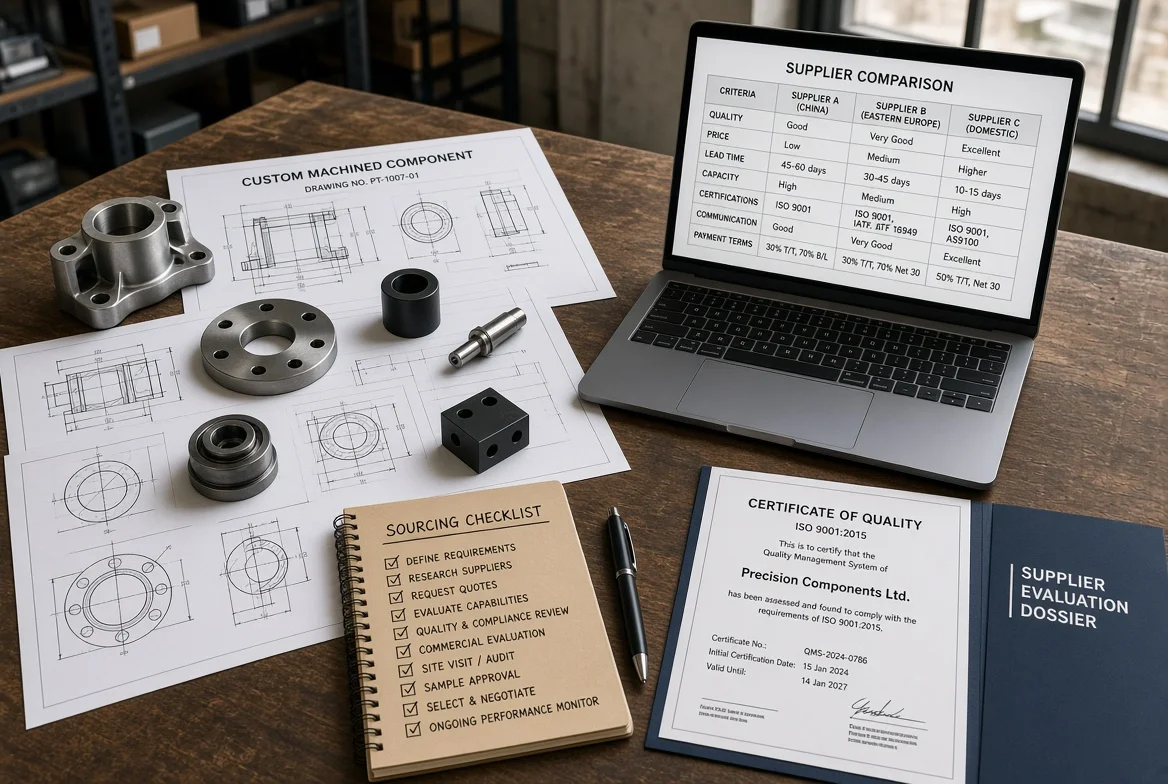
What Is Supplier Sourcing? A Complete Guide for B2B Buyers
Procurement managers, importers, and product teams get a clear, practical explanation of supplier sourcing—from defining requirements and finding suppliers to evaluation, selection, and ongoing performance management. This guide helps B2B buyers move beyond price-only decisions and build more reliable supply relationships.
Read More
Unit Price vs Total Cost: How to Evaluate Supplier Offers Correctly
This guide helps procurement teams, purchasing managers, importers, product developers, and business buyers evaluate supplier offers beyond invoice price. It shows how to compare unit price with landed cost and total cost, covering tooling, freight, duties, inventory, quality, payment terms, delivery, failure exposure, and supplier risk so the lowest quoted price is not mistaken for the lowest-cost outcome.
Read More