
Sourcing techniques like sourcing websites, trade shows, and sourcing networks are useful for creating a longlist of potential suppliers but aren't enough on their own to determine reliability or capability to produce. A successful supplier search begins with well-defined product requirements, capability criteria, and a strategy to screen, verify and test the supplier after an initial contact. You're not meant to stop after the first nice profile or booth, but you're meant to find relevant suppliers efficiently to move into the proper evaluation.
Many buyers think that one channel is sufficient or that a good online ranking or a great trade-show appearance means that a product is quality. Each approach has its merits and obvious drawbacks. These can be paired with structured follow-ups to avoid irrelevant results, misaligned supplier types, and wasted time.
Define Requirements Before Choosing a Search Method
Until the buyer recognizes their product, volume, quality and commercial requirements, they will not be able to choose the supplier search method. Vague description, anything goes regardless of the channel. Plan what you will need to determine which searches you will make: product type, materials, manufacturing, price range, order volume, lead time, certification, and any non-negotiable requirements.
Identify and convert product needs into search words.
Convert needs to terms that can be searched and are based on capability. Don't use words like "manufacturer" or "supplier. Prefer phrases like “custom injection molding supplier,” “precision CNC machining factory,” “food-grade packaging manufacturer,” or “OEM electronics assembler.”
When looking for a custom metal bracket, a person should not look for the word “metal parts manufacturer” but rather “CNC machining supplier metal bracket”. Certain key words remove the factories and trading companies that seem to match, but on the surface.
Determine acceptable supplier types.
Before you start looking for manufacturers, determine if you will be using them, trading companies, OEM/ODM factories, contract manufacturers, or sourcing agents. Every model will have its own use, but it's important to know what to look for. Some of the channels bring to the surface more trading companies, others expose more direct factories. If you're willing to consider more than one model or plan, coordinate your search strategy accordingly.
Set Geographic and Capability Constraints
Where product type, logistics, compliance or existing supply-chain footprint dictate, narrow the search by country, region, or industrial cluster. Some areas focus on electronics, textiles, machinery parts or plastics. Use geography as a filter not a quality assurance. Even if your supplier is within a recognized cluster, they may not have the process, capacity or controls your product requires.
Online Platforms and Search Engines for Supplier Discovery
One of the most popular supplier search methods is through online platforms and search engines. They allow buyers to create a longlist in no time, access some basic details of the company, and even find candidates for further screening. Rankings, badges and "shinnyed" catalogues assist in prioritising contacts, but are not a substitute for capability checks, samples or trial orders.
B2B Marketplaces around the world and at the regional level.
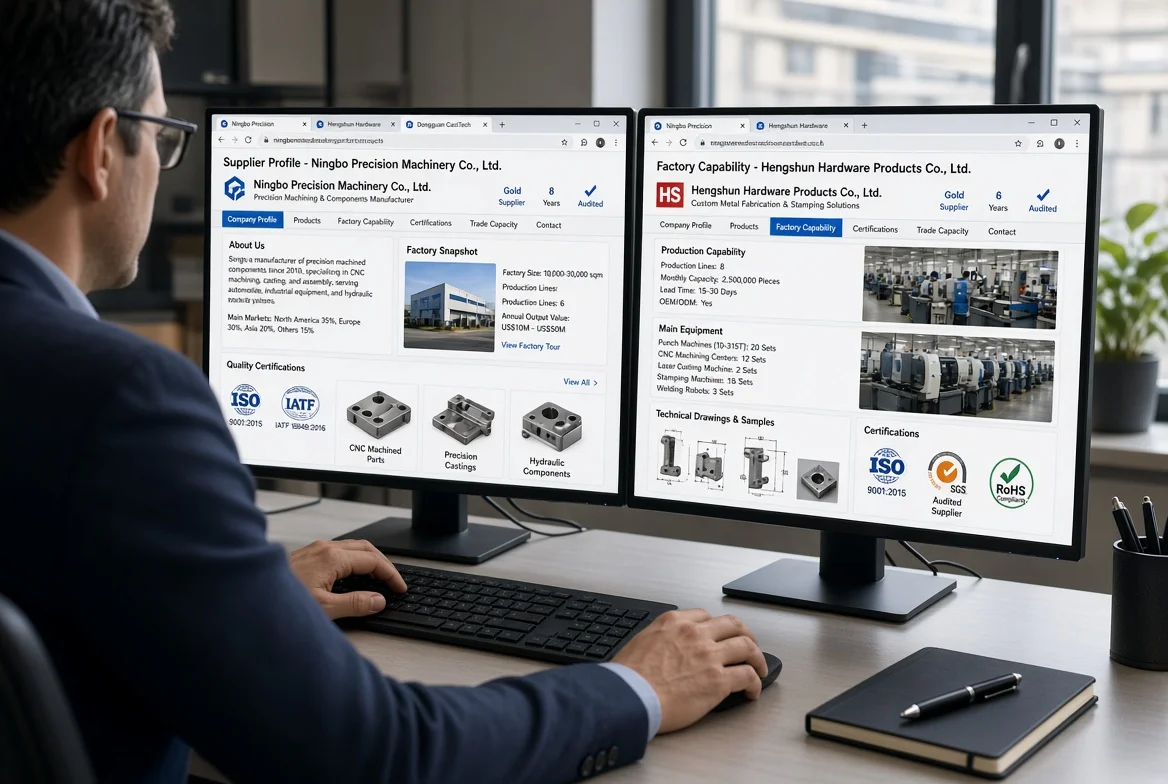
Searching is possible in global and regional markets based on product, material, process, certification and location. Results are narrowed by filter options such as supplier type, main markets, production capacity and years in business. It usually includes product catalogs, the company's profile, verified badge, response-time indicator, and transaction history (if applicable). Utilize these signals to determine who to call first and then progress into more in-depth questions.
Search engines and industry directories.
Search engines and industry specific directories frequently uncover suppliers which are not so active on main marketplaces. Add the word “manufacturer” or “factory” to the product terms, and include process or material language; search for technical pages, process descriptions, and case studies instead of product lists. Capability based searches uncover speciality factories which pure marketplace browsing may miss.
Check Online Supplier Profiles
When checking profiles, pay attention to the focussed product type, manufacturing methods, pictures of equipment and/or facilities, quality controls, certifications, primary markets, and contact information that is consistent with a company's identity. Take statements like “high quality” and “competitive price” with a grain of salt, and use polished marketing language or stock images as stepping-stones. The profile can be used to create improved questions, not as conclusive evidence.
Trade Shows and Industry Events as Sourcing Channels
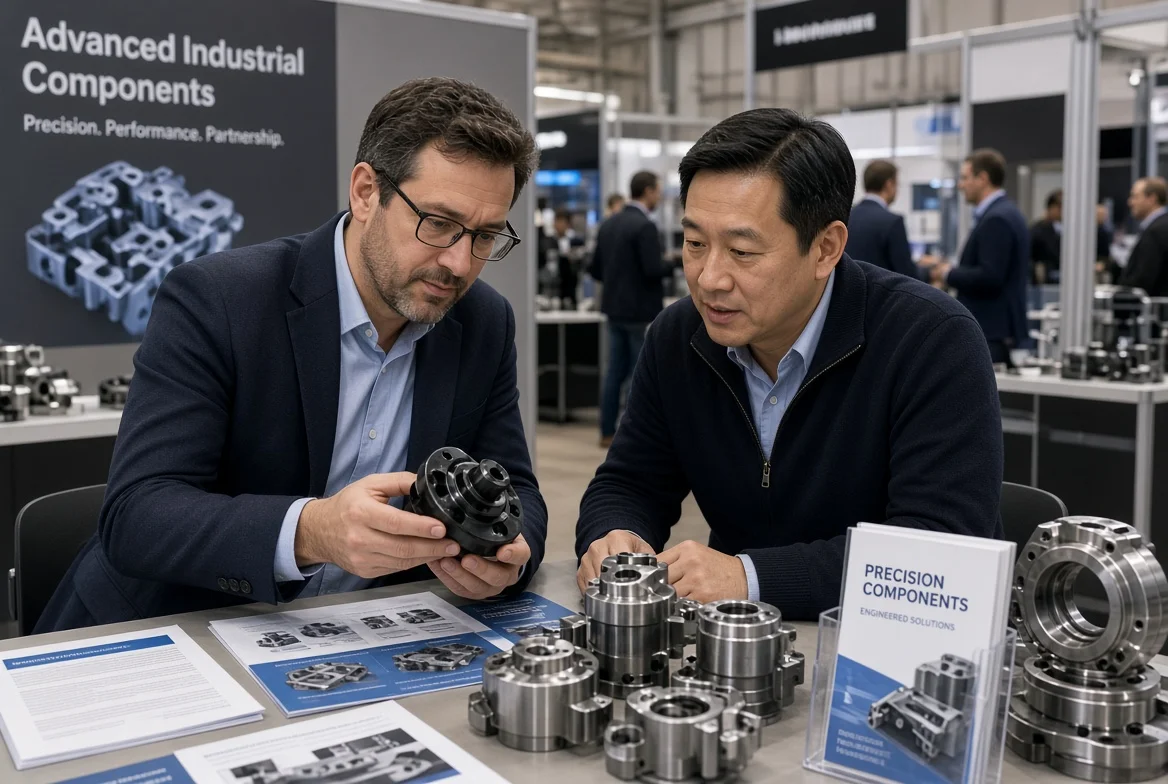
A trade show or industry event provides a buyer with the opportunity to get a first-hand look at the product, ask technical questions directly of a supplier, and compare several suppliers within a limited time frame. They are particularly helpful for new product development, custom work, and categories in which the feel, finish or functional demonstration of the material is important. Having a booth does not mean having production capacity or long-term reliability.
Picking the correct trade shows for your product
Choose events relevant to your product category, industry and supplier type. This could be anything from electronics and components shows, to packaging and printing exhibitions, machinery and industrial equipment fairs, consumer-goods expos or textile and apparel trade shows. Look at exhibitor lists ahead of time and identify key suppliers - visit by product not just by size or "bling".
The use of a trade show effectively
Considerate product requirements. Inquire about the manufacturing process and capacity, ask for samples and/or technical documents (where applicable), take notes/photos (where permitted), and gather accurate contact information. Don't make hasty decisions based on a show. The show is a discovery and initial screening environment and not a final qualification step.
Follow Up After the Trade Show
Most of the value is created through structured follow-up. Prioritize contacts by relevance and initial impression and pass promising suppliers over to formal screening. Bring up specific conversation, get updated quotes, ask questions about technical things talked about at the booth, and ask for further proof like factory photos, test reports, or reference customers as needed.
Sourcing Networks, Referrals, and Professional Contacts
Sourcing networks, referrals and contacts enable buyers to find niche suppliers, reduce time used to research for suppliers, and get real-world feedback from individuals with experience working with the supplier. These channels are still good initial points but not a final approval. Independent screening, capability review, commercial comparison and product validation remain valid.
Industry Associations and Professional Networks.Industry Associations and Professional Networks.
Buyers are directed to relevant suppliers by industry associations, professional groups, engineering networks and sector communities. An association for buyers of packaging products can exist, as can a forum for electronics buyers or a network of buyers in industrial equipment. These chasers generally bring out the suppliers, which are not so aggressive in online marketing.
Referrals from existing Supply Chain Partners
Request references from current suppliers, logistics partners, tooling suppliers, raw material suppliers, inspection companies and industry consultants. Qualified leads can be generated by partners who have similar products or processes. Always consider any referral a candidate still to be verified for your particular needs, quality standards and commercial terms.
Sourcing Agents and Third-Party Networks.
Some buyers look for suppliers with the support of a sourcing agent, buying office, or third party network which can identify and pre-screen the supplier. This approach is useful where local market knowledge, language skills and/or time is limited. Explain the role, incentives, and accountability of the agent. The responsibility of final supplier selection, requirement definition and risk management are the buyer's.
Combining Search Methods to Build a Qualified Longlist
It is best for most buyers to utilize more than one method of supplier search. The online platforms offer a breadth of options, trade shows give you the chance to inspect in-person and speak to suppliers, and networks bring up specialized or less visible suppliers. Create a straightforward plan aligned with the product's complexity, budget, timeframe and risk profile.
A quick search strategy for identifying multiple channels.
To make a first longlist, begin on the web sites and search engines. Attend trade shows or industry events to narrow down and evaluate potential candidates. Use networks and referrals to complement and/or identify niche suppliers. Note down where the contact came from, initial evidence and follow-up needed. Records help to make the comparison easier at a later date and ensure that promising leads do not fly out the window.
Making sure not to avoid Over-Reliance on One Channel
If one method is heavily used, there are gaps. Specialized factories might not be detected in online-only searches. There are geographic restrictions with trade show only efforts. Referral only strategies can decrease competitive pressures and transparency. Mixing channels is not about doing more for the sake of more, but is about building a more rounded, comprehensive longlist prior to screening.
The pathway from Search to Screening: What happens next
With the longlist in place, you then enter the next phase – structured screening – verify supplier identity and business model, pose capability-revealing questions, evaluate the communication and compare initial commercial terms. Search creates options. Screening, verification, quotation comparison and sample evaluation make those options qualified candidates ready for trial orders.
Common Pitfalls in Supplier Search and How to Avoid Them
Some errors can cost time, potentially give false confidence or poor supplier fit. Common and easily correctable when identified.
A lack of clear requirements and search criteria for products.
If they don't specify what they're looking for, they won't find what they are looking for, they won't get comparable quotes and it's a waste of outreach. The contact lists are populated with suppliers who are unable to fulfil the actual needs due to the wide search. Spend some time at the beginning to establish product specifications, desired price, volumes, and items that must be met.
The use of Search Results as Proof of Capability
Rankings, platform badges, big booths or slick websites don't necessarily indicate manufacturing capacity, quality control, or delivery. These signals are used to prioritize contacts. They never are a substitute for verification. Search is about creating candidates, not making decisions.
Supplier Type & Business Model Ignored
When the contact concentrates only on photos of the product and the price, without giving an idea about whether the contact is a manufacturer, trading company, OEM/ODM factory or agent, there are mismatches in expectation of price, lead time, customization and accountability. Take the direct response from the following: Who makes the product? Where is it made? Who is responsible for quality and timely delivery?
Lack of Documentation and Follow-up.
When people gather a lot of contacts without taking note of the essential information – or without transferring it to a structured process – it results in chaos and missed opportunities. Just keep a simple tracking sheet (supplier, contact, search channel, product focus, initial impressions, next steps).
Final Guidance – Use Search Methods to Create Options, Not Decisions
Supplier search methods are in place to draw up a qualified longlist, not to make supplier decisions. While each of these platforms adds its own value, none of them can replace the process of structured screening, capability verification, quotation comparison, sample evaluation, and controlled trial orders. Align the mix of channels to the complexity of the product, budget, timeframe and risk appetite. Never enter the evaluation stage without a robust collection of relevant candidates; don't rely on one method of search to do the searching for you.
Frequently Asked Questions
What are some of the best ways B2B buyers find suppliers?
The three basic methods are online platforms and search engines, trade shows and industry events, and professional sourcing networks and referrals. Most buyers' best results come from using a mix of them, not one channel solely.
What's the best way to utilize online supplier platforms without wasting time?
Always prioritize clear product and capability requirements, process and material keywords, make use of available filters and view rankings or badges as prioritization signals only. Quickly transition from a profile review to capability questions.
Can trade shows be considered an appropriate method for suppliers to find?
Yes, certainly if it is a custom product, new development or a category where the physical product, the feel of the material and the direct conversation with technical experts is very important. It's all about the structured preparation, the strategy of booth visits and the follow up work afterwards.
Do I have to be referred to by current partners?
Although highly relevant and valuable, referrals should be subjected to their own screening against your specific requirements, quality and commercial terms. They cut search time, but not verification.
What is a good number of suppliers to have on a first longlist?
Typically there are 8-15 relevant candidates in a practical longlist prior to deep screening. It is more important to have a high quality or a fit than to have a lot. Document source, initial evidence and next steps for each contact.
Now I have found my potential supplier(s) . What should I do?
Sort contacts by channel and relevance, check business-model and basic capability fit, and pass on the best contacts to structured screening and quotation comparison.
If I am familiar with the industry, is one search sufficient?
For even veteran shoppers, a variety of channels are beneficial. Single channel dependence can run the risk of not having access to specialized suppliers, geographic restrictions or lack of competition. A balanced approach results in a more robust longlist for the verification phase that ensues.