
The first thing that you need to define when you start working with a new supplier is whether they are a real manufacturer or a trading company. The distinction between manufacturers and trading companies is important because it establishes distinct realities with respect to price structure, customization flexibility, quality accountability, communication, and control of production and delivery.
Either can be appropriate, based on product, volume, and risk and supply-chain strategies. Ownership of their own lines often provides a closer control of the technical aspects of custom or regulated parts. A trading company can make multi-SKU orders and logistics easier. It is not an issue of proclaiming one model superior to the other in the practical task. To check who exactly is the supplier and to see who is in charge of production, inspection and problem solving, so that your expectations are aligned with the right person.
Why the Manufacturer vs Trading Company Distinction Matters
You'll see the difference in everyday decisions. Whether the company that you are talking to owns the production process or coordinates the process, price, technical changes, defect handling, and long term supply risk will vary.
Price Structure and Cost Transparency The price structure includes a breakdown of costs.
The direct product costs are typically determined by the manufacturer. Trading companies charge a coordination, financing, quality management or logistics margin. That margin is not necessarily a bad sign. A trading company with expertise could be able to secure better rates at the factory because of volume, or it may be able to arrange shipping in a way that a factory is not able. The key is transparency – know what part of the quoted price is production cost, what is the trading margin and what is testing or packing or freight, etc. If it doesn't break it down, it creates inaccurate price comparisons and unexpected cost increases later on.
Customization and Technical Control – these are the features that make your website stand out.
With custom metal components, complex assemblies, or products that require process changes, direct customer engagement with the manufacturer can lead to a faster feedback loop. Ignore the intermediate layer and directly ask the people who own the tooling, machining, heat treatment or molding about technical questions. There are some trading companies that have a strong technical team and close factory connections and can deal with customization effectively. The label is secondary! The question is, who decides and who does the actualisation of the production change?
Quality Responsibility and Accountability.
If the defect does occur, the recovery route will be determined by the process owner. A manufacturer typically has production and quality teams that you can easily go to. For a trading company, it is important to establish that they have procedures and authority in place to monitor the factories, take action and returns. Helpful questions are: Who is involved in incoming material inspection? Who endorses the changes in the process? Who is liable if the product doesn't perform? With clear answers, it is less likely that the answers will not be resolved later.
Role of Communication, Coordination, and Supply Chain
Buyers often use trading companies as a liaison between them and several factories, particularly when they want to order a variety of product types in a single transaction. Manufacturers are more limited with respect to the process and capacity. Match the model with the need. Direct contact with the factory can often be a good idea for a single, high dollar custom part. A wide variety of typical products could make use of a trading business that does the sourcing and shipping.
Initial Signals That Can Hint at Supplier Type
The first indications of this are in the supplier's Internet presence, product mix, language, and documentation. These signals do not constitute evidence. They just assist you in identifying where to dig deeper.
Product Range and Specialisation
Manufacturers are usually very close to their process, materials and equipment. A plastic injection moulding plant is likely to exhibit plastic parts. A CNC shop specializes in metalwork that is made by CNC. Trading companies frequently will have a wider spread in unrelated categories – electronics, home goods, machinery, textiles – without providing details of the process or equipment. Breadth does not mean they are disqualified, but rather should raise a question as to who actually creates each item.
The company name, description and language.
Hints can be given by names and self-descriptions. Words like “factory,” “manufacturing,” “industrial” or specific process words (molding, machining, assembly) indicate a manufacturer. Words like “trading,” “import & export,” “supply chain,” or “global sourcing” have a leaning towards a trading company. Use these as guidelines only. There are some factories with generic names. Some of the trading companies use factory-like branding. Compare with another piece of evidence.
The depth of the website content and technical aspects.
Manufacturer locations tend to provide process descriptions, equipment lists, photos of the facilities, quality-control information, material specifications, and case studies. The trading company's locations tend to focus on product catalogues, markets covered, sourcing and logistics. Another good indicator, but not a final one, is depth of technical content. tics. Depth of technical content is another useful signal, not a final verdict.
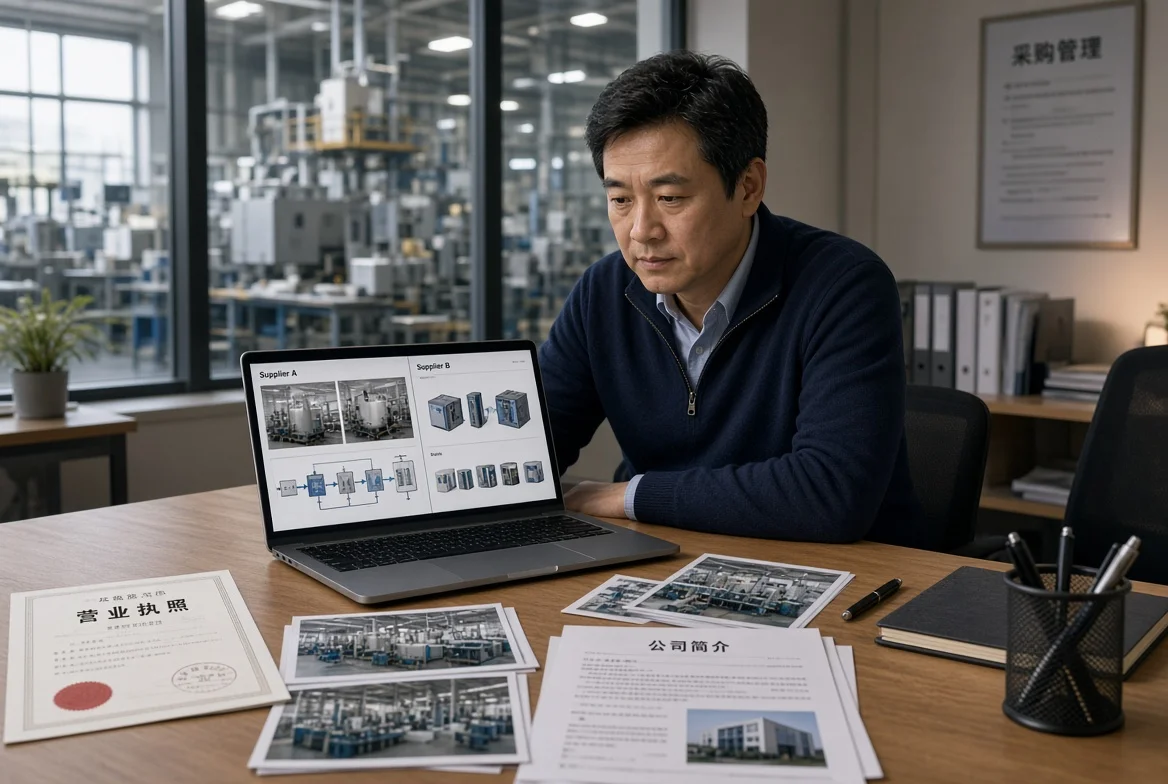
Document and Registration Checks to Verify Supplier Identity
For more complex orders, custom products, regulated items and for long-term partnerships, step up from signals to documents and third party records. The level of verification should be commensurate with risk. Lighter review for a low value standard item. There are formal checks to be carried out on a critical component.
A to Z of Business License and Registration Information
Ask for a business license or registration. Verify the registered name of the company, type of entity (whether it is a limited liability company, sole proprietorship, partnership, or corporation), registered address, and business activities. The scope is in many jurisdictions an indication of whether the company is as a manufacturer or as a trading company or both. Check the license information with the website, email domain, bank account name and contract. Any inconsistencies should be clarified prior to a deposit or sample commitment.
Production-related documents such as Factory certificates are available.
For example, manufacturers are often in possession of certificates, such as ISO quality management certificates, industry-specific certificates, environmental certificates or product certificates for their production process. These are usually on a list including the factory address and certified activities. In isolation, certificates do not demonstrate capability, but they can complement other evidence if the person and the certificate matches the supplier and the product/service you are appraising.
Third-Party Databases and Verification Services
Export history, key markets, and previous activities can be observed through customs records, credit reports, inspection databases and verification service. Consider them integral to a whole picture, not the only source of information. Broach any issues with the supplier.
Capability Questions That Reveal Who Controls Production
The right questions come up in a flash, revealing who really is in charge of production, quality and delivery. The aim is understanding not the entrapment of the supplier.
Where and How the Product is Made?
Ask: What is the location of the factory? Do you have your own production facility? What's the name of the factory that makes this particular product? What is the name of the factory and its address? Who does production planning/quality control? Manufacturers typically can explain their own facility and process in a tangible manner. Partner factories and their coordination role are generally described by trading companies.
What Machinery and Process are Employed?
Ask: What machines do they use to make this product? Which is the primary mode of production? What operations are in-house and what are outsourced (molding, machining, heat treatment, plating and assembly)? How much can be produced of this item each month? Lists of equipment, information about processes and capacity figures can generally be supplied by the manufacturers. Trading companies may have to verify with partner factories and in addition often provide less detailed responses.
Who takes care of the quality inspection and problem resolution?
Ask: Who does the incoming material inspection? Who will do the in process inspection and the final inspection? What are the standards that are applied? Who is responsible for defects, returns and corrective action? Do you have any recent inspection records? There are good systems of quality in both models. The buyer must be aware of the name of the person who owns the inspection and the corrective-action process.
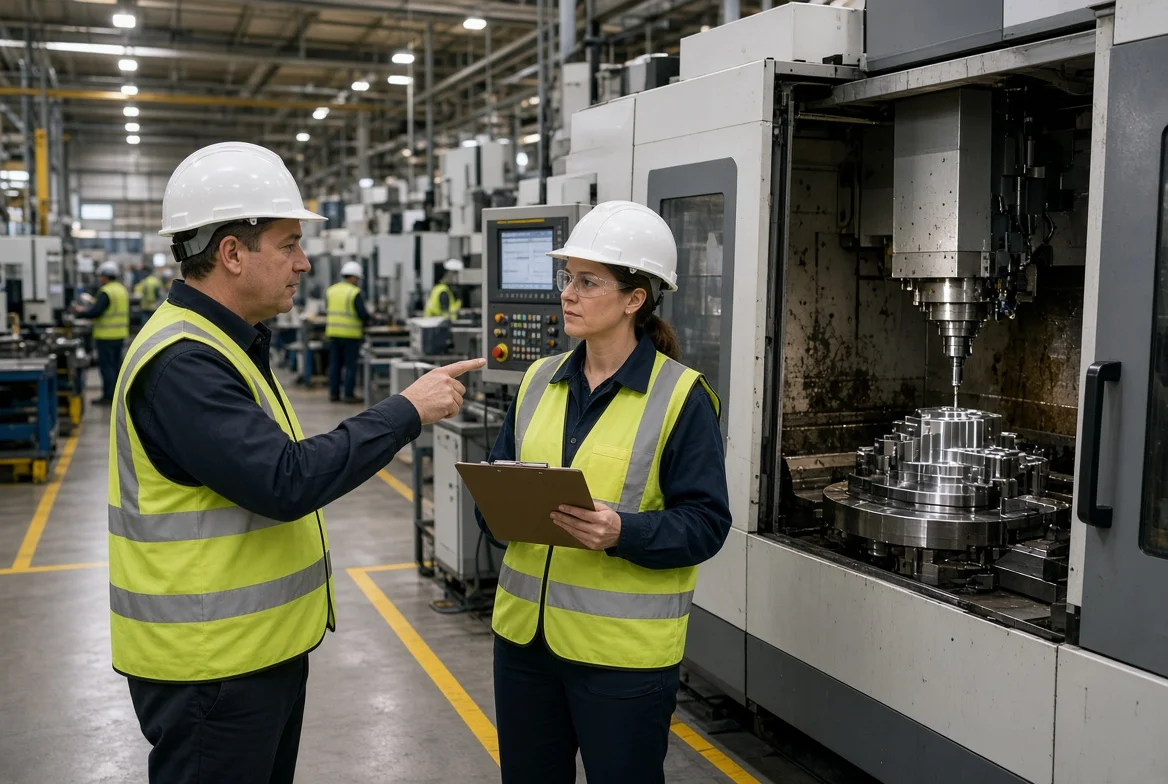
Site Visits, Audits, and Third-Party Verification
Physical or third party verification provides an increased level of confidence for higher-risk purchases, custom work or strategic suppliers.
When it pays to have a Factory Visit.
A factory visit is most beneficial on a high value order, on regulated products, critical components or on a longer term relationship. The cost and time for low value standard items may not be warranted. Take the visit to ensure production capability and quality systems, capacity and identity, not just to gather photographs.
Factory Audits and Checklists are structured.
Structured audits include evaluating equipment, process controls, quality systems, documentation and traceability. They can be undertaken by your own team or by third party auditors. Emphasize the following areas that are applicable to your product: tolerance control, material traceability, inspection methods, corrective-action processes, and production planning.
Third-Party Inspection and Verification Reports are generated to verify that the test scores are accurate.
On-site check by third party inspectors before shipment can be carried out on production status, product quality, packaging and documentation. These reports increase the level of assurance, especially for suppliers abroad. Use them as supporting evidence in conjunction with documents, questions, and performance history, and not a guarantee.
Red Flags and Inconsistencies to Watch For
There is a possible explanation for one of the inconsistencies. The risk level increases if there are repeated mismatches or if there is always vagueness.
Company Name & Addresses do not match.
Be aware of discrepancies between the name on the website, business license, bank account, contract and invoices. It is not uncommon to find separate addresses for “factory,” “office” and “registered company” but such relationships should be evident and demonstrated.
Fuzzy or ambiguous responses to production related questions
A supplier should be able to explain where and how the product is manufactured, who is in charge of the quality, and the consequences when there are quality issues. Production ownership or process control, which is often answered ambiguously or evasively, should be investigated further, as should be any other such circumstances.
Claims that are too vague for the product without explaining the process.
Often a trading or aggregator model is identified with claims to make a very broad spectrum of unrelated products, but with no stated detail on process, equipment, or capacity. This is not necessarily a bad thing, but it does need to be confirmed that the supplier is able to consistently offer the product that you need.
When Trading Companies Make Sense for Buyers
It is not a bad thing to have trading companies. They are suitable for some occasions.
Sourcing for multiple SKUs and Categories.
If you are looking for more than one product type, a trading company can group the orders from various factories into a single shipment and documents. This decreases the administrative burden and can have a positive impact on logistics coordination. Always check which factories are utilized and how quality control is carried out for each category.
Market access and local expertise.
Trading companies may possess local expertise, language support and existing relationships with factories. This is helpful to the buyer who is unfamiliar with a region or product line. Continue structured verification and performance monitoring, and treat them as partners.
Low-Complexity, Standard Products
A trading company can be an effective way of doing business for commodities that involve low quality risk. Emphasis continues to be on price, delivery, and rudimentary quality testing. Even so, make sure you know who to call in case of any issues.
Final Guidance – Verify Role, Not Just Label
The practical object is to check on the ground the true function of the supplier, his production control and his responsibility, and not to take it on trust that he is a manufacturer or a trading company. Use verification in line with risk. For routine purchases that are not of high value, basic purchase document and capability checks may be sufficient. For custom, high value or regulated products, it may be worth going through documents in greater detail, asking more capability questions, conducting a site visit, or utilizing a third party audit. When you match your actual needs to the supplier's offering, expectations are more aligned, and markups and responsibility are not hidden when problems come to light.
Frequently Asked Questions
How to know whether a supplier is a genuine manufacturer or trading company in a quick manner?
First, product range, website technical depth, the language of the company, and a couple of direct questions about the ownership of the factory, equipment, and quality responsibility. Check business license and production related documents if order value or risk warrants.
What documents do I want to request to confirm supplier identity?
Ask to see the business license or registration, any factory certificate (ISO or industry-specific), and any production related approvals. Check the legal name, address, and business scope on the website, email domain, bank information and contract.
Is it true that trading companies are always more expensive than factories?
Not necessarily. While trading companies also charge a margin for their services, they can realize better pricing at the factory level due to volumes or achieve reduction in total landed cost due to consolidation and logistics. Think in terms of the transparency of the cost: not whether a margin is there, but how much it costs.
When do you need to visit a factory?
For high-value, custom, regulated or long term strategic purchases, factory visits are the biggest value-add. They are not very cost-effective for items that have low standard costs. Conduct site visits to verify capability, capacity, quality systems and identity.
Is a trading company a viable long term partner?
Yes, if their model is suitable for you (multi-SKU consolidation, local expertise, standard products) and if you check their factory oversight, quality processes and over time performance. Reliability is not just about the label, it's about transparency and consistency.
What are the biggest risks of not verifying the supplier type?
Mismatched price, customization, lead time and defect expectations. When it is a supplier coordinating, you may think that you have direct production control, or you may miss good consolidation services if you are looking at a good trading company.
Avoid trading companies for custom or high-risk products?
Not automatically. In some cases custom work is managed well with good relationships with the factories and by having technical teams. But for high risk or high custom products, the direct manufacturer interaction typically results in better control and quicker technical resolution. Regardless, test the actual control.