
To find reliable manufacturers in China, you can use online platforms, search engines, trade shows, industry networks, referrals and existing supply chains. This China supplier sourcing guide helps international buyers find the right supplier to meet their product needs and helps them reduce sourcing risks with a systematic approach to supplier verification, instead of just listing or quotation. The location of suppliers is just the beginning. Before any buyer can view a factory as reliable, they must go through a longlist of potential suppliers in China to be screened, capability checked, quotation compared, samples evaluated, and controlled trial orders placed.
Just picking a platform or a specific province won't fix the issue on it's own. Before putting any significant amount of money into China manufacturing, buyers will want to assess actual production capacity, cost, lead time, quality risk, logistics, compliance, and communication quality.
Define Your Product and Sourcing Requirements Before Searching China Suppliers
The only way for buyers to find suitable China suppliers is to have a clear understanding of what they need. Ambiguous product descriptions leads to irrelevant search results, non-comparable quotations and unnecessary conflicts after order. A careful definition of the requirements is a practical sourcing safeguard of quoting and showing relevant capability.
Identify the Product, Material and Manufacturing Process
Write a product description, drawings, dimensions, material grade, tolerances, surface finish or color expectations, technical performance requirements, product photos or reference samples, packaging and labelling requirements, testing requirements, certifications etc. This usually involves providing drawings, material and tolerances, thread information, surface-finishes, inspection requirements, and volume requirements for a custom metal part. If China suppliers are not provided with complete information, they are unable to quote or make an accurate manufacture; lack of information in this stage almost always results in quality and delivery issues later.
Explain Order Volume, MOQ, Lead time and Delivery requirements
A commercial fit is integral to supplier reliability. State expected order volumes, forecast volumes, order frequency, minimum order volumes, lead time requirements, delivery addresses, packaging requirements, and whether or not the supplier is expected to deliver repeat and/or seasonal orders. A technically good factory may not be commercially good. A high MOQ can result in unsold inventory and a long or volatile lead time can cause problems in meeting customer delivery schedules.
Determine Non Negotiable Supplier Requirements
Make a distinction between essential and desirable features. Non-negotiables can be a specific manufacturing process, mandatory certification, export experience, quality documentation, maximum lead time or volume production support. If a supplier can't meet a requirement which is non-negotiable, then they should be removed from the shortlist despite an appealing price for the unit. This is a simple filter which prevents buyers from imposing a partner on a project that is not a good fit.
Where to Find China Suppliers for Manufacturing
Proof of reliability is not the starting point, it's supplier discovery. If necessary, use multiple channels since it can bring out different kinds of suppliers, different levels of product specialization. Don't rely on any one platform as the answer but select channels based on product, industry, technical complexity, and geography.
A search engine is an online tool that indexes and facilitates navigation of the web.
Look up the product, material, manufacturing process, application, industry, certification, and where. Capability-based searches are more effective than searching products by general words. This can be something like “custom cable assembly manufacturer in China” or “precision CNC machining supplier in China”, or “food-grade packaging manufacturer in China” or “injection molding supplier for engineering plastics in China.” Search rankings, paid ads, platform badges and catalogs, which are polished, are all able to help identify prospects, but none of them demonstrate real production capability or consistent performance.
Trade Shows, Industry Associations, and Professional Referrals
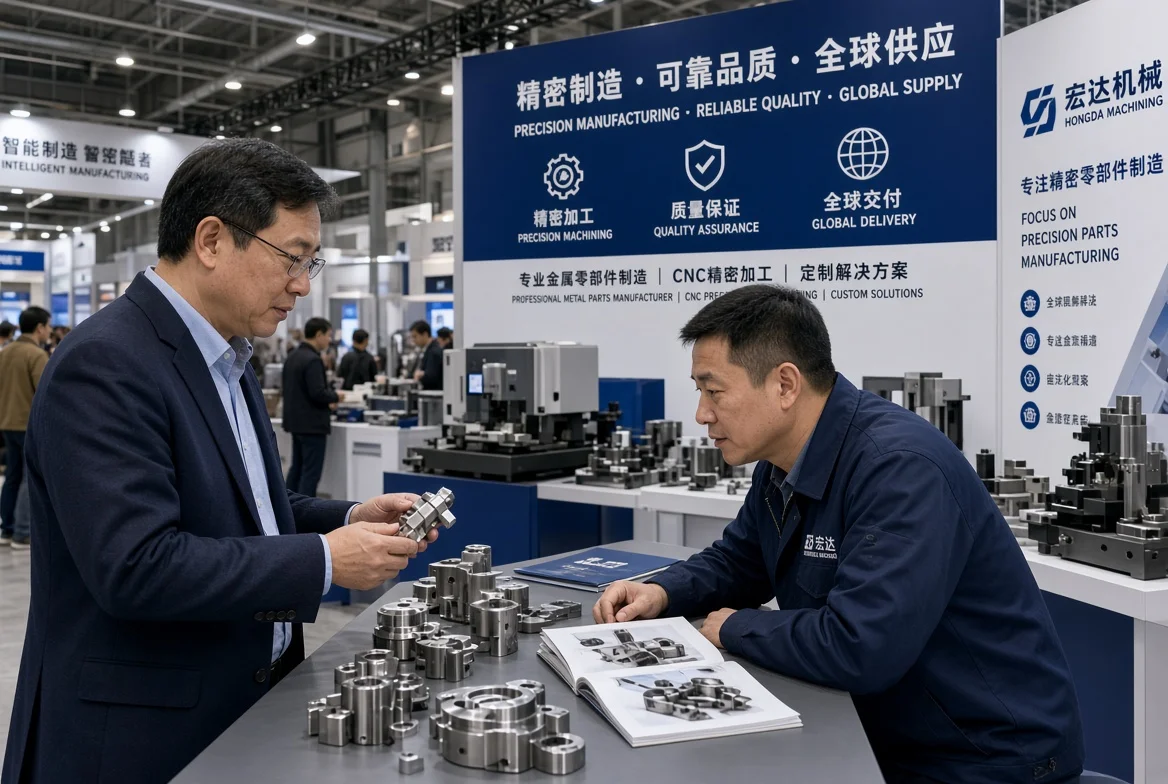
China suppliers still value trade shows, members of professional associations, supplier referrals, engineering networks, and supply-chain contacts. These routes allow buyers to view products firsthand, and ask questions directly to the factory, compare factories side by side, and get hands-on feedback from individuals who have used the supplier. Be clear about the product requirement, ask questions about the process capability and capacity, document the supplier information, request follow-up evidence, and consider a booth display as the starting point, not as evidence of control at the factory level.
In addition to the above, there are already Supply Networks and Related Manufacturers.
Candidates are also visible via other suppliers, logistics partners, tooling suppliers, inspection companies, industry consultants or customers who have the necessary experience. These are particularly valuable for niche industrial products or special processes. Referrals are still valuable 'first steps' only. Buyers are still required to conduct their own screening, capability review, commercial comparison and product validation.
Screen China Suppliers Before Sending Detailed RFQs
Screening is to save buyers' time for working with unsuitable suppliers in China. Always check the supplier's relevance, transparency, commercial viability and ability to satisfy basic requirements before asking for detailed quotations, samples, technical documents and/or factory audits. Screening is an effective first pass and not a complete audit.
Verify supplier identity, business model
Know the difference between a manufacturer, trading company, distributor, sourcing agent and contract manufacturer. Both models can function in the appropriate context, but the purchasing party needs to be aware of the party that is responsible for manufacturing, quality, pricing, communication and delivery. Pose direct questions: Where does the product originate? What factory does the production? Is the supplier the owner of the production facility? Which activities are subcontracted? Quality inspection is done by? Who takes the responsibility when quality problem occurs?
Ask Questions that Expose True Manufacturing Ability
Some good screening questions are: What production process will be used? Which equipment is relevant to this product? What is the typical material used? What sorts of tests are done? What is the normal production lead time? What is the capacity per month? What other products has the supplier already made? Trustworthy China suppliers will typically ask questions in return. A supplier who quotes a price without taking into account drawings, materials, tolerances, quality requirements, or order quantities, may not have a full grasp of the project.
Check Initial Communication Quality and Commercial Clarity
A good deal of times, the early communication will help to know whether a China supplier is likely to continue to be reliable even after the order is placed. Consider if responses are thorough, technically relevant, consistent, aware of limitations, and have supporting documents or specific explanations. The response speed is only a weak signal. A supplier that responds slightly delayed, but with a definitive technical response and an honest estimate is much more likely to be reliable than a supplier who responds immediately with vague promises.
Verify China Supplier Capability Before Making a Commitment
Before any substantial orders are placed, buyers are advised to seek confirmation of supplier's claims within the Chinese context, particularly for custom products, high-value products, regulated products, production-critical products and/or products manufactured abroad. The verification depth must correspond with the risk. If there is buyer-owned tooling, products that must be made for the buyer, or there is a critical production line, a formal qualification with or without a factory audit, third party inspection, or trial production may be necessary for a low value item.
Review Factory, Equipment, and Process Capability
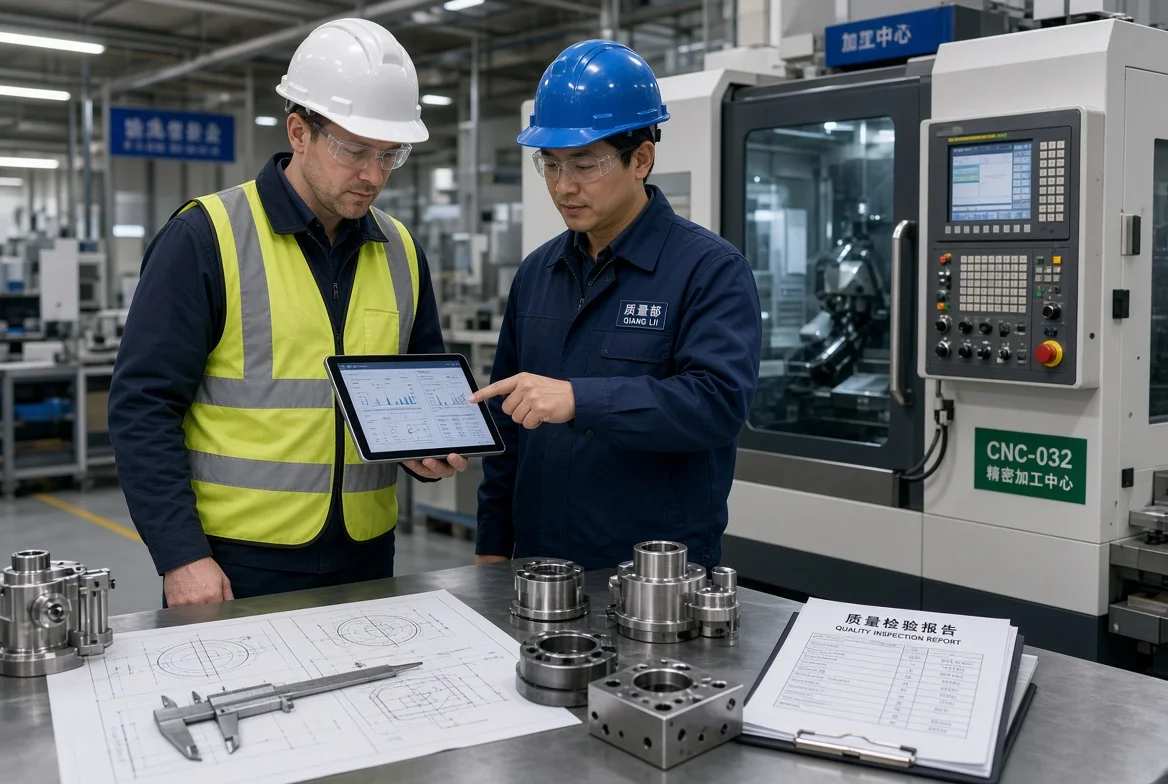
Ensure that the machinery, production process, skills of the workforce, engineering support, testing capacity and process controls are in place at the China supplier for the particular product. Even if the factory has the relevant equipment, if the required tolerances, material control, test methods, and production volume cannot be maintained, it is not enough. Even if the supplier has said that they can perform CNC machining, you should verify machine size, tolerance control, inspection equipment, traceability of materials, finishing method, and previous experience with similar parts.
Improve Quality Control and Documentation Practices
Inquire about the supplier's defect prevention, process for detecting nonconforming products, how they record inspection data, control of incoming materials, product revisions, process for corrective action, and traceability if necessary. A quality-management certificate may help, but is not equivalent to project specific verification. The question is whether the supplier's quality controls actually are commensurate with the product risk and market expectations.
Check capacity, lead time and supply continuity.
A reputed supplier in China should be able to help with the production of multiple orders. Review capacity availability, production planning, anticipated lead-time, sourcing of raw materials, equipment maintenance, order backlog, exposure to seasonal demand and capacity to accommodate volume changes. Leaded time can be quoted for ideal conditions and not the actual production conditions. Inquire about the process of allocation of capacity, if rush orders are possible, and what happens if materials, equipment or labour availability changes.
Review References, Past Performance and Relevant Experience
References are valuable when they are relevant to the product or market in which the buyer has experience. Do not just ask if a customer is satisfied; instead ask questions regarding the quality consistency, delivery performance, communication, responsiveness and corrective-action behavior. There is sometimes a restriction of sharing references due to confidentiality. In such instances, ask for anonymous case studies, production examples, inspection reports, export records as applicable or a controlled trial order.
Compare China Supplier Quotations Beyond Unit Price
Different scope, assumptions, materials, quality requirements, order quantities, packing and delivery conditions are supplied by China suppliers. Never take the price of two products with the same name for granted. Just comparing quotes can indicate reliability. A clear, comprehensive quotation typically reflects more business acumen than an ambiguous low quote, which reflects "low cost", "low scope" and/or "low delivery assumptions".
Before Price Comparison, Normalize Quotes
Check equivalent factors such as material grade, specification revision, quantity, MOQ, tooling, sample cost, testing, quality documentation, packing, labelling, Incoterms, freight assumptions, lead time, payment terms and warranties obligations. One supplier may be selling the unit at a cheaper price, excluding the testing and material used is not mentioned, and the other supplier may be providing the material, testing and export packing. The bottom quote may not be the best value or lowest risk.
Evaluate TCOs
Consider more than the unit price. The true landed cost is impinged by tooling, samples, freight, duties, inspection, defects, rework, warranties, additional inventory, payment terms, administration and late delivery. It's not about having a complex financial model, but just realising the China supplier price is to be judged in conjunction with the quality, delivery and operational risk.
Identify Quotation Red Flags
Red flags to look out for practically are if material details are not provided, if there is an unclear scope, if the fee is unusually low and no explanation is provided, if there is no lead time provided, if quality commitments are vague and not clearly understood, if MOQ requirements are inconsistent, if no details on the molding tools are provided, if there are changes in the pricing which are not explained, if the payment terms are not clearly specified, or if key technical requirements are not confirmed in writing. Don't automatically dismiss an incomplete quote, but ask for details. A good Chinese supplier will be able to clarify assumptions and adjust the quotation as they clarify requirements.
Use Samples and Trial Orders to Test China Supplier Reliability
Samples and trial orders are crucial validation instruments particularly for custom products, new suppliers from China, complex production or production in overseas countries. They enable the buyer to try out the gap between the supplier's promise and performance. A large production order shouldn't necessarily be the result of an approved sample. Verify that the sample represents the actual manufacturing process, normal materials, normal quality controls and normal production conditions.
Estimate the accuracy of samples by comparing them to written acceptance criteria.
Compare samples to given requirements, not just by "eye". This can include aspects such as material, size, fit, function, performance, look, packaging, labelling, test results, safety, and durability, depending on the product. Document the evaluation. In case of changes, make sure to communicate them clearly and make sure that the next sample or production run is done following the approved version.
Check if the Sample is Mass Production
A China supplier can come up with a high quality sample with hand selected materials, additional manpower, temporary tooling or a non-representative production process. Inquire about the process of making the sample and if the same process will be used in a large scale. Practical questions involve such things as, was the sample produced using production tooling? Have typical production materials been used? Was the sample subjected to testing? How will the product be inspected while making it? Does the supplier have a pre-production sample or pilot run prior to ordering?
You have the option to use a Controlled Trial Order.
Trial orders provide buyers with the opportunity to evaluate actual Chinese production capability: order confirmation, communication, production schedule, consistency of quality, packaging, documentation, shipping accuracy and supplier's response to problems. Establish acceptance criteria up front and what should be demonstrated before the order quantity is raised or the China supplier is accepted for long term purchasing.
Warning Signs That a China Supplier May Not Be Reliable
Buyers are protected by identifying patterns that warrant further investigation, delay in decision-making or elimination from the short list. If there is one inconsistency, it might be a coincidental or innocent one, but more than one, evasive answers, unrealistic promises, or a refusal to provide evidence should be taken seriously.
Unusually Low Prices or Unrealistic Lead Times.
If the quotation is extremely low, or the lead time is much shorter than usual for that supplier, ask some questions before approving. The supplier might have developed an efficient process, but the buyer must confirm material assumptions, quantity basis, capacity availability, testing scope, packing and delivery conditions. Things that seem too good to be true tend to be too costly when important details are omitted, costs are increased after making a deposit, or when production is not able to keep up with the proposed timetable.
Errors in the information provided in e-mails, documents, and phone calls.
Look for inconsistencies in the name of suppliers, where products are manufactured, product descriptions, terms of quotations, capacity statements, certifications, business address, or information from different sales representatives. Consistency is a control signal. Reliable China suppliers should resolve any ambiguities with concrete information instead of "promises" or "hopefully.
Inability to talk about production, quality or problem handling
China suppliers need to be able to talk about the manufacturing process, quality checks, inspection standards, capacity, sourcing of materials and how they deal with quality and delivery issues. If a supplier does not give you any operational detail, he or she may not be ready to become a professional B2B supplier. There's nothing wrong with legitimate confidentiality, but there's a question about whether the supplier can still provide sufficient evidence for the buyer to be able to make a considered risk decision.
Pressure to "Pay or Commit" prior to basic verification.
If a China supplier tries to rush you into a big order, a deposit, or an exclusive arrangement before the basic specification, commercial terms, samples and supplier capability are sure, be wary. Implement a risk based approval process. The greater the investment, exposure or customer impact, the more critical it becomes to do verification before any investments, commitments or money is spent.
Manage China Sourcing Risks Beyond Supplier Selection
The reliability of China suppliers is still measured after the first order. An overseas supplier might be great during the qualification process and then not be as great during production volume, schedule pressures, product changes, or increased customer demands. International sourcing is not a single sourcing decision that involves risk management but is a continuous process of risk management. Evaluate and apply objective information to determine if the relationship should be expanded, maintained, improved, or discontinued.
Monitor Quality, Delivery, Responsiveness
Track practical aspects like on-time delivery, incoming defects, customer returns, response time, correct action for defects, documentation accuracy, and quote to order. Maintain a proportional approach. There can be a few indicators that a small business keeps on a spreadsheet – for a larger procurement team, supplier scorecards and structured reviews may be used.
Access supplier problems as evidence for future decision making.
Late deliveries, recurrent defects, poor communication, inadequate corrective action should impact future sourcing decisions. Record the problems, ask for remedial action as needed and determine if the Chinese supplier is still acceptable for the risk level of this product. If there is one isolated problem, it does not mean that your instrument needs to be replaced. Determine if the supplier takes ownership, is root cause focused, is recurrence focused, and communicates professionally.
Add Quality Backup Suppliers to Critical China Purchases.
Evaluate products that are difficult to replace, critical to production, customer facing, regulated and/or require proprietary tooling or specialized processes for backup or dual sourcing. Not all categories will require dual sourcing. Having two China suppliers can add qualification effort and dilute leverage of volume, but also minimizes disruption if one supplier goes out of business.
Frequently Asked Questions About China Supplier Sourcing
How long is the usual time to search and qualify a reliable China manufacturer?
Normal products, the process can last for a few weeks. The screening, sampling and trial production usually takes a few months to qualify a supplier for custom or higher-risk products.
Should you work with a manufacturer or trading company in China?
Either model will do. The key is transparency – it should be known by the buyer who is responsible for production, quality and delivery. Many successful programs utilize trading companies with a good relationship with the factory and have good process control.
What is the biggest pitfall for international buyers to fall into when they are sourcing from China?
Assuming that a low price or an appealing Internet offer is proof of reliability. The most common series of errors that lead to quality and delivery issues later on is skipping structured requirement definition, capability verification, and a controlled order.
Should all China suppliers be subject to factory audits?
No. match degree of verification to risk. Low value standard items could require only document review and samples. The following are typically considered high-value, custom, regulated or production-critical products that usually warrant factory visits, third-party inspection or formal audits.
What to do if the price or lead time of a China supplier keeps changing?
Use multiple unexplained changes as a sign of reliability. Ask for written confirmation of any assumptions, record the pattern and determine if the supplier is still within your risk parameters before ordering more.
Are platform badges or “verified” status the only indicators I can use?
Platform badges and verification programs are good starting points, but are not substitutes for project-specific capability checks, sample evaluations, and performance tracking. Think of them as 1 of a number of inputs.
Final Guidance – China Suppliers Are Verified Before They Are Trusted
One quotation, one certificate, one platform badge, one successful sample is not a sufficient basis to select reliable China suppliers. They undergo a rigorous selection process which includes discipline requirements, a screening process, validation based on evidence, comparable quotations, controlled trial order, and continuous performance monitoring. Repeat the process proportionately. A straightforward supplier check and trial order may be all that is required for a routine purchase that poses little risk. Deeper qualification, inspection, factory evaluation or back sourcing may be needed for a custom manufacturing project, a high-value product or a production-critical component. The China supplier sourcing guide above provides a sequence that will be useful for global buyers to adjust to their product risk and commercial reality.