
A factory audit is a structured evaluation of a manufacturing facility’s production capabilities, quality systems, compliance practices, and operational reliability. B2B buyers use it to verify whether a supplier can consistently meet requirements before placing large orders or entering long-term contracts.
Procurement teams and importers often face the same risks: suppliers who overstate capacity, weak day-to-day quality controls, or compliance gaps that only surface after production starts. A factory audit turns those unknowns into clear evidence. It is not a formal exercise reserved for major brands. For most buyers it is a practical decision tool that shapes supplier qualification, order size, and contract terms.
Factory Audit Definition: A Practical Explanation for Buyers
A factory audit is a systematic review of a supplier’s manufacturing site. Auditors examine the physical plant, equipment, quality management practices, workforce conditions, and business reliability. The goal is not to inspect every finished product. The goal is to determine whether the factory has the systems, capacity, and discipline to deliver the buyer’s products to the required standard over time.
In global sourcing this distinction matters. Sales claims and glossy factory photos rarely reveal hidden constraints. An audit forces those constraints into the open so buyers can decide whether to proceed, adjust order volumes, or walk away.
How a Factory Audit Differs from Product Inspection
A factory audit looks at the supplier’s systems and capabilities. A product inspection checks specific goods or batches against agreed specifications.
Consider a simple example. During a factory audit an auditor verifies that the factory maintains calibrated measuring tools, follows documented in-process checks, and records nonconformances properly. During a product inspection the same auditor (or a different team) measures a sample of finished parts from a particular shipment to confirm they meet dimensional and functional requirements. One tool evaluates the factory’s ability to produce consistently; the other evaluates the actual output of a given production run. Most professional buyers use both.
Why Factory Audits Matter in B2B Sourcing
Unverified suppliers create three common problems: capacity shortfalls that delay shipments, quality systems that look good on paper but fail under volume, and compliance gaps that expose the buyer to reputational or regulatory risk. A manufacturing factory audit surfaces these issues early. It also gives procurement teams objective data for negotiating payment terms, setting inspection levels, or requiring corrective actions before the first mass-production order.
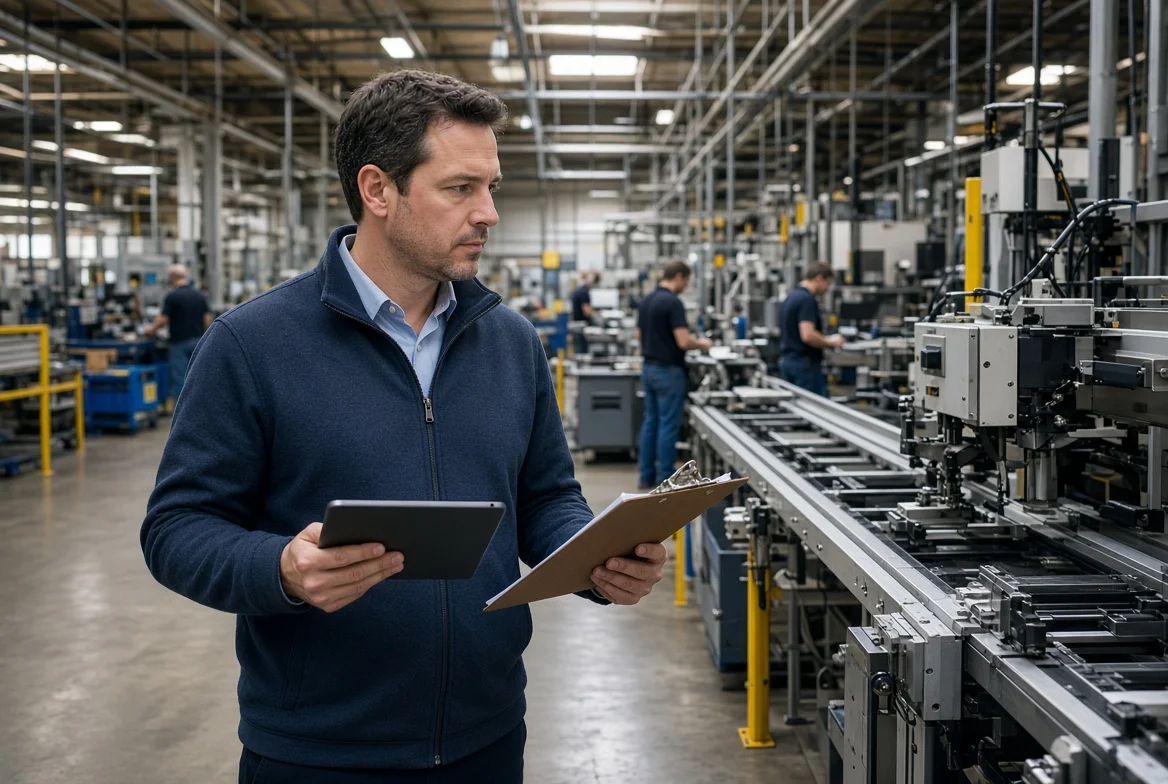
Core Objectives of a Manufacturing Factory Audit
Buyers commission factory audits for three practical reasons: confirming the factory can actually produce what it claims, verifying that quality is controlled systematically, and checking that the business itself does not introduce avoidable risk.
Verifying Manufacturing Capability and Capacity
Auditors assess whether the equipment, line layout, workforce skills, and production planning systems match the buyer’s volume and lead-time requirements. They look for bottlenecks, outdated machinery that cannot hold required tolerances, and evidence that the factory routinely exceeds its stated capacity. This check prevents the classic problem of a supplier accepting an order it cannot fulfill once production scales.
Assessing Quality Management Systems and Process Control
Certificates on the wall are less important than daily practice. Auditors review incoming material inspection, in-process controls, final inspection methods, calibration records, and how nonconformances are documented and closed. The question is simple: does the factory prevent defects as a routine, or does it rely on sorting after the fact?
Checking Compliance, Risk, and Business Reliability
Labor practices, health and safety conditions, environmental controls, and any industry-specific requirements (traceability, product safety standards, restricted substances) form part of most professional audits. Auditors also note signs of excessive subcontracting, unclear ownership, or financial stress that could disrupt supply. These findings protect the buyer from both legal exposure and sudden production stoppages.
Common Types of Factory Audits in Global Sourcing
Not every audit covers the same ground. Buyers select the scope according to the decision they need to make.
Supplier Capability Audit (Manufacturing Capacity and Equipment)
This audit focuses on machines, processes, and capacity. It is the standard choice when onboarding a new supplier, increasing order volume, or transferring production to a different site. The auditor confirms that the factory has the right tools and enough real capacity for the intended products.
Quality System Audit (Process Control and QA Practices)
Here the emphasis is on procedures, records, and corrective-action systems. Buyers with tight quality requirements or complex products use this type to verify that quality is managed systematically rather than left to individual operators.
Compliance and Social Responsibility Audit
These audits examine labor conditions, safety, environmental compliance, and ethical standards. Brands with published codes of conduct, retailers, and companies selling into regulated markets commonly require them. The findings often determine whether a factory can be listed as an approved supplier.
Pre-Production and Onboarding Audit
Before the first large order, many buyers run a combined capability, quality, and compliance review. This “first-time supplier” audit is the most common safeguard used by importers and mid-sized brands working with factories in Asia and other sourcing regions.
What Is Typically Checked During a Factory Audit
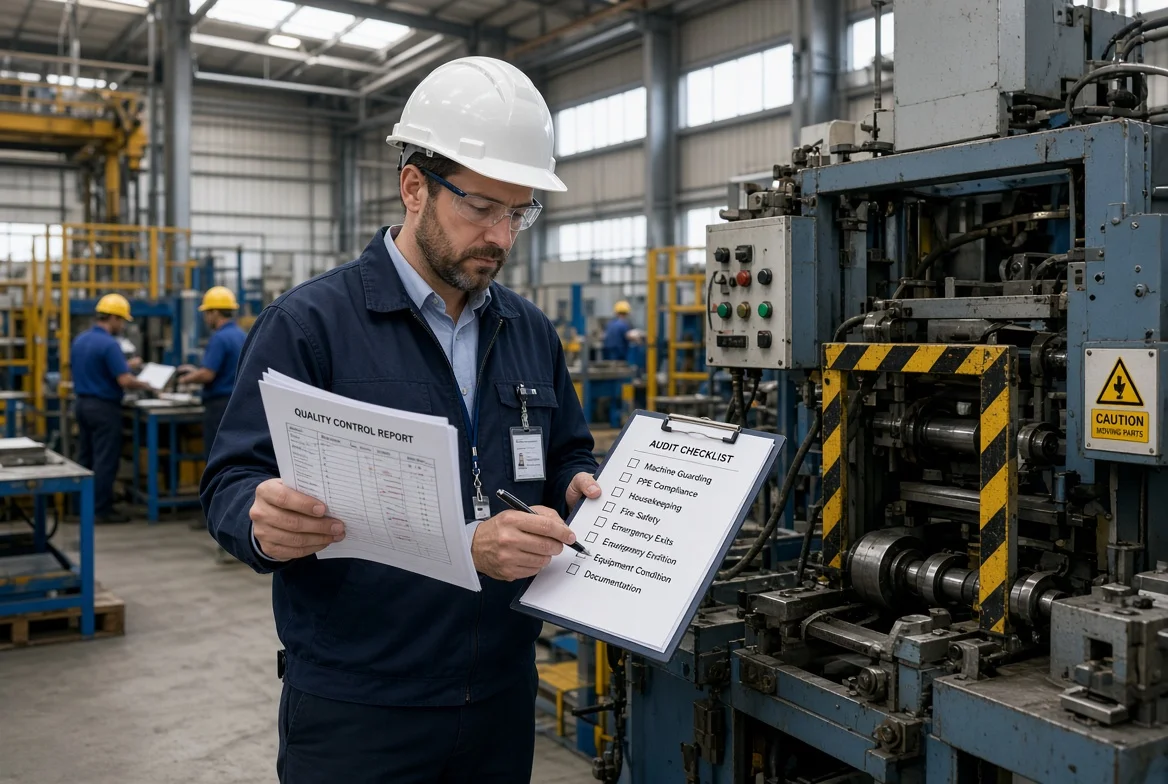
A typical audit walks through the factory in a structured sequence. The following areas appear in most professional scopes.
Facilities, Equipment, and Production Lines
Auditors examine plant layout, cleanliness, machine condition, maintenance records, and whether the equipment matches the processes claimed in the quotation. Outdated or poorly maintained machines, obvious bottleneck stations, and signs of unapproved subcontracting are common red flags.
Quality Controls, Documentation, and Traceability
Inspection records, work instructions, test reports, and material traceability systems are reviewed for completeness and consistency. The auditor checks whether records are actually used on the floor or exist only for show.
Workforce, Safety, and Working Conditions
Staffing levels, training evidence, PPE usage, safety signage, emergency exits, and general working conditions are observed. These factors indicate both compliance and the underlying management discipline of the factory.
Supply Chain, Subcontracting, and Raw Material Controls
Auditors ask where critical materials come from, how incoming suppliers are approved, and whether any production is subcontracted without disclosure. Hidden subcontracting and weak raw-material controls remain frequent sources of quality and delivery problems for B2B buyers.
Who Should Conduct a Factory Audit and When It’s Needed
The choice between internal and third-party audits depends on product complexity, geographic distance, and available expertise.
Internal Audits by Your Own Procurement or QA Team
Companies with strong technical staff and strategic suppliers sometimes run internal audits. The advantage is deep product knowledge and continuous relationship context. The disadvantages are time cost and the risk of internal bias.
Third-Party Audit Providers and Inspection Companies
Independent audit firms are widely used for first-time supplier verification, compliance-focused audits, and factories located far from the buyer’s base. They bring standardized methods and specialized expertise that many mid-sized buyers do not maintain in-house.
Key Triggers for Running a Factory Audit
Common triggers include onboarding a new supplier, preparing a large or long-term purchase order, responding to recurring quality issues, entering regulated markets, changing production sites, or meeting a retailer’s or customer’s audit requirements. When any of these situations arise, the cost of an audit is usually far lower than the cost of discovering problems after production has started.
How Factory Audits Fit Into the Overall Sourcing Process
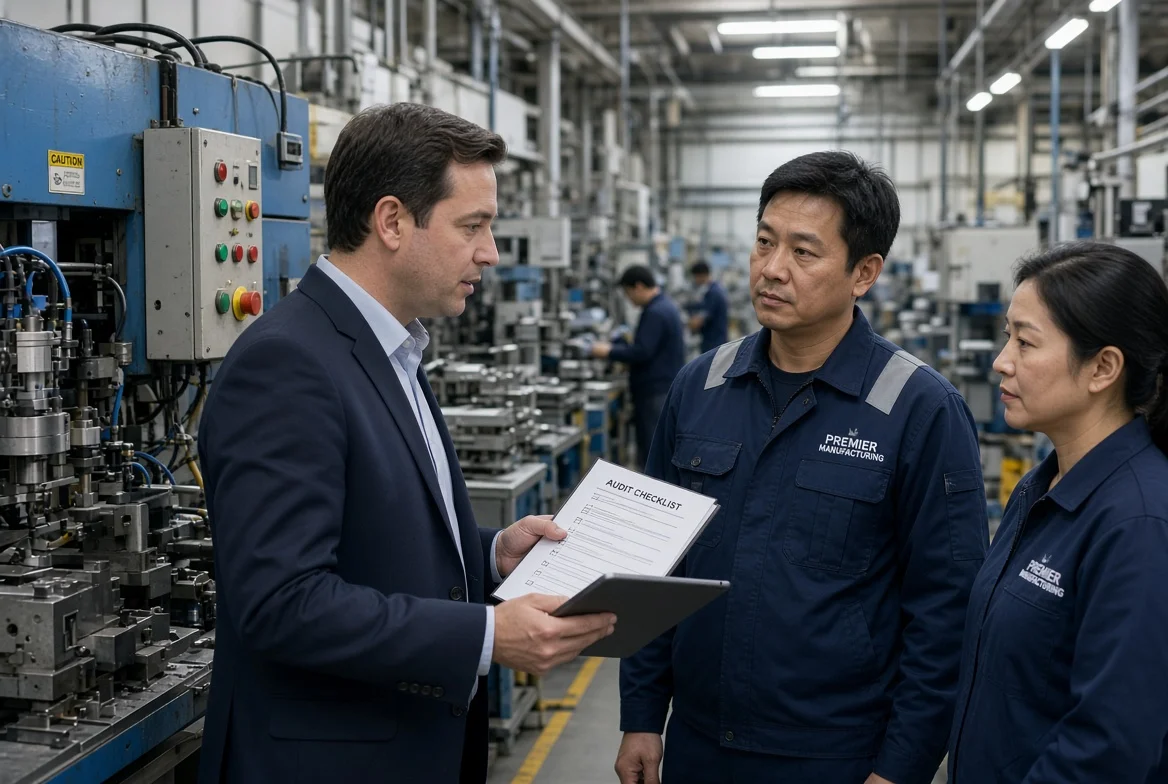
A factory audit is rarely the first or last step. It sits in the middle of a typical sourcing sequence.
From Supplier Shortlisting to Onboarding: Where Audits Come In
Most professional buyers follow a flow that runs roughly: market research and supplier identification → RFQ and initial screening → factory audit → sampling or trial order → mass production and ongoing monitoring. The audit normally occurs after basic commercial and technical screening but before the buyer commits significant volume or signs a long-term agreement.
How Audit Results Influence Supplier Decisions
Findings feed directly into go/no-go decisions, risk-mitigation plans, and contract language. A clean audit may allow larger first orders or more favorable payment terms. Significant findings usually trigger corrective-action requests, reduced order sizes, or outright rejection. In either case the audit report becomes a working document rather than a file that is never opened again.
Limitations of Factory Audits and How to Use Them Wisely
Factory audits reduce risk; they do not eliminate it.
What a Factory Audit Cannot Guarantee
An audit is a snapshot of a specific day or set of days. It cannot guarantee future performance, continuous compliance, or perfect execution under every production condition. A favorable report lowers risk but does not replace ongoing quality control, product inspections, and performance tracking.
Combining Audits with Inspections and Ongoing Monitoring
Experienced buyers treat the factory audit as one layer in a broader system. They combine system-level audits with pre-shipment or during-production inspections and monitor key performance indicators such as defect rates, on-time delivery, and communication responsiveness. Used this way, the audit becomes a foundation rather than a one-time event.
Key Takeaways for B2B Buyers
A factory audit is a structured evaluation of a supplier’s manufacturing site used by B2B buyers to verify capability, quality systems, compliance, and reliability before major commitments. It differs from product inspection: one assesses the factory’s systems, the other assesses specific goods. Common types include capability, quality-system, compliance, and pre-production audits. Typical checks cover facilities and equipment, quality documentation, workforce and safety, and supply-chain controls. Audits are most valuable during new-supplier onboarding, large-order planning, and risk events. Their results should guide concrete decisions on qualification, order size, and contract terms, while remaining one element within a wider program of inspections and ongoing monitoring. Treated this way, the factory audit becomes a practical tool for reducing sourcing risk rather than a formal exercise.