
There are several ways to find manufacturers and suppliers of new products, including online platforms, search engines, trade shows, industry associations, referrals, and supply chains. Finding names isn't the real work, finding the right discovery channels for your product, industry, development level, and needed manufacturing capability is. Discovery of suppliers is only the beginning. No supplier can be considered reliable until a useful longlist has been screened, capability is verified and quotations have been compared, samples have been evaluated, and controlled trial orders have been issued.
Many buyers think that one platform, one country, one keyword, is going to be enough to solve a search. That rarely works. Different search strategies work for a consumer-goods ODM factory, a custom metal fabricator, an electronics contract manufacturer and a packaging supplier. Searching by product requirements and capability is much better than searching by product name.
Start With Your Product Requirements Before Searching
If you don't know what you really need, you can't find the right suppliers. Ambiguous product descriptions cause irrelevant results, impossible comparisons and lost time for both parties. It will save time down the road to treat requirement definition as a practical search filter.
Determine what is the Product, Material, and Manufacturing Process
Describe the type of product, primary materials, primary components, manufacturing process, tolerances, surface finish and any special processes like overmoulding, coating, heat treatment etc. If the plastic housing is to be custom made, provide the plastic grade, thickness, critical dimensions, assembly technique and anticipated number per year. That information immediately helps to cut down the search to factories that already have the correct process and material.
Explain concepts of Target Volume, Budget and Development Stage
Provide estimates for target order quantities, volume, acceptable MOQ, rough budget range, and concept, prototype, pilot, and early production. Some suppliers specialise in low volume prototyping while other suppliers specialise in high volume commercial runs. Vertical integration and matching a supplier's natural operating range to your stage will avoid subsequent capacity or pricing mismatches.
Determine required skills and qualifications
Distinguish between must have and nice to have. Some examples of must-have items are certain equipment, testing capacity, material knowledge, industry experience, export capability, or certifications like ISO 9001, ISO 13485, IATF 16949, and product-specific compliance. Use these as search filters and early screening criteria so that you don't waste time with suppliers who can't meet basic technical and regulatory requirements.
Online Channels for Finding Manufacturers and Suppliers
Internet sources are useful when you are looking to create a starting point longlist for a product category or supply region in which you are not established. The idea is not to pick up all the listings but to search smartly by capability and use filters to minimize the noise.
Search Engines: Search with Capability Based Keywords
Using a combination of process, material, application, and industry words, along with the product name, is the most effective way to use a search engine. These are things like: custom cable assembly manufacturer, precision CNC machining supplier, injection molding factory of engineering plastics, OEM electronics manufacturer, or flexible packaging supplier for food. Rankings and paid ads are simply entry points and are not indicators of ability. Consider them as a starting point for further screening.
B2B Platforms and Supplier Marketplaces
B2B platforms are used to find numerous potential suppliers for consumer goods, parts, packaging and basic manufacturing services. Apply filtering criteria by supplier type, location, main products, certifications and export experience. Membership in a platform, or badges or “verification” marks, are helpful indicators but do not imply the ability to manufacture or reliability. Never rely on anyone to screen for you, ask for proof, and check out several choices.
Industry Directories and Specialised Databases
For technical or regulated products, industry-specific directories, trade-association membership directories, certification-body supplier databases, and sourcing platforms can yield suppliers that have the experience, equipment and compliance records. Verify if listed companies are really in your target market, making a similar product and has necessary process capability. Directory listing is not a final approval, it is a lead.
Offline Channels for Finding Manufacturers and Suppliers
For technical products and custom manufacturing, as well as higher value projects, offline channels are still of great value. Trade shows, industry events, professional networks and referrals can be great sources of suppliers that are not so easy to assess online.
Trade shows and industry exhibitions.
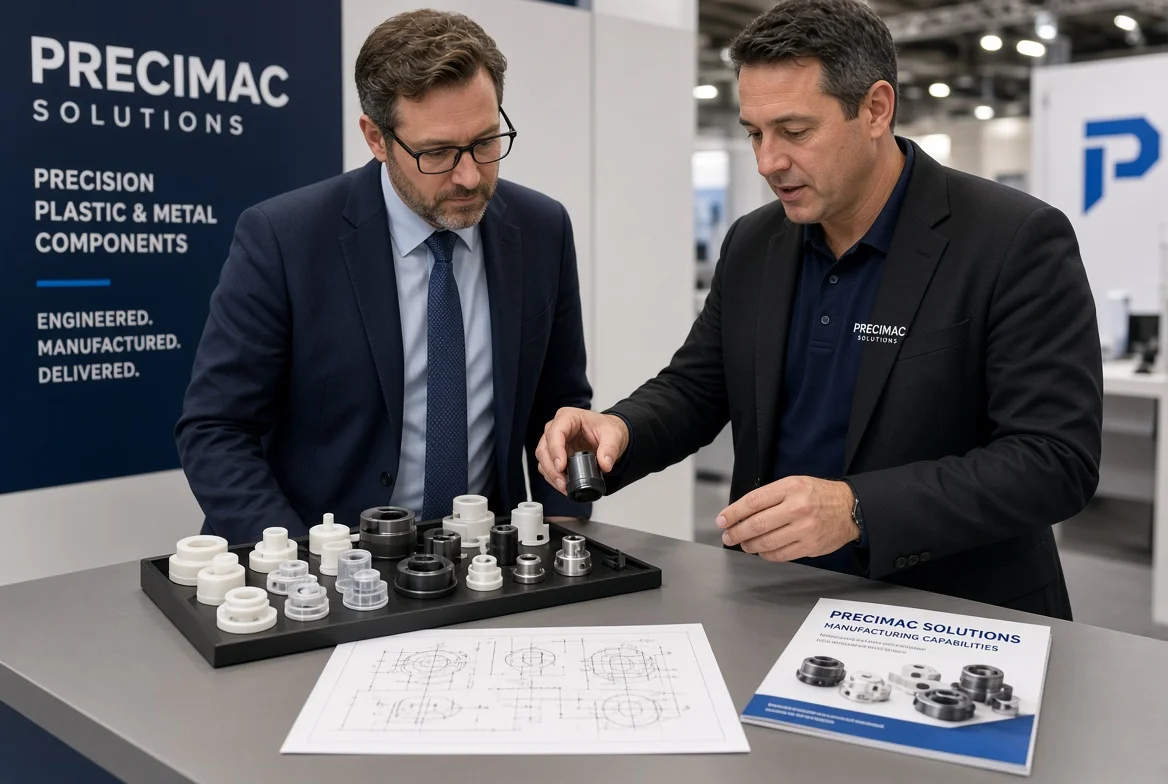
Trade shows and industry exhibitions provide the opportunity for buyers to meet with multiple suppliers in the same location, ask questions about technical requirements, view physical samples, and ask questions regarding quality, process, and capacity. Come with a concise product requirement summary, a desired volume range and a short list of important questions. Note the supplier information, follow-up documentation and don't assume a booth means a complete production capability.
Business Associations and Industry Networking Groups
Industry associations, professional organizations, engineering networks and local manufacturing clusters can be a source of leads for specialized suppliers or contract manufacturers that do not heavily utilize online marketing. Attending relevant events, online forums or professional groups will often lead to discussions about practical manufacturing issues, new technologies and supply-chain realities.
Referrals from existing contacts and supply chains.
Existing suppliers, logistics partners, tooling suppliers, raw-material suppliers, inspection companies, industry consultants or customers with relevant experience can be highly effective means of referral. These sources might suggest factories with prior experience in similar applications. Consider each referral as a starting point only. Perform your own screening, capability review, commercial comparison and product validation.
How to Search by Capability, Not Only by Product Name
Many buyers use only product keywords and they get a wide range of poor quality results. When looking for a custom or technical product, a search based on manufacturing capability, process, material or application will yield a more relevant longlist.
By Manufacturing Process and Equipment
For custom or technically complex items, use keywords like "CNC machining supplier for aluminum housings", "injection molding factory for medical-grade plastics", "sheet metal fabrication for enclosures", or "SMT assembly for PCBs. Process based searches can be used to find suppliers who are already familiar with the associated tolerances, materials and production limitations.
Use the Material and Application Expertise search.
Search for material and experience of use. These include such things as “silicone rubber molding for consumer products,” “stainless steel fabrication for food equipment,” “custom cable assemblies for industrial machines,” or “packaging supplier for cosmetics. When you search on an application you will find factories that are already selling similar products and have an understanding of the quality, compliance and performance requirements.
Strategically apply Location and Industry Filters
Options can be narrowed down by location and type of industry. Supply clusters and export centres tend to be regional in nature. Consider location to be one of the many factors. Not all suppliers in a defined region are able to perform equally well and not all products can be offered from a given country.
Build a Supplier Longlist Before Shortlisting
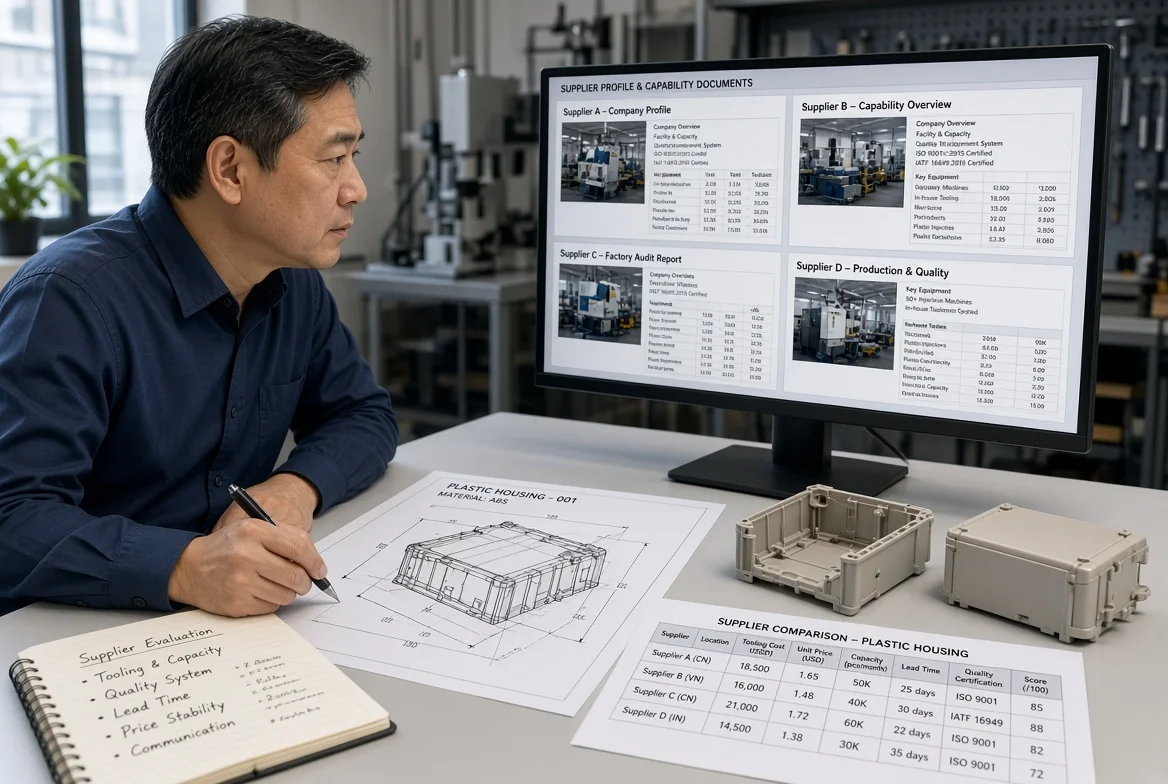
A longlist with structure provides competitive alternatives, makes capability/commercial comparison easier and decreases the risk of getting married to the first supplier that responds. Schedule discovery work to allow the longlist to be screened efficiently.
Document key supplier information with systematics.
Note down the name, address, type of supplier (manufacturer, trading company, distributor, agent), main products, claimed capabilities, appropriate certifications, contact details, communication quality, initial reaction and reasons for advancing or rejecting potential suppliers for each supplier. It's okay to use a simple spreadsheet or sourcing tracker. It's just for comparison – not bureaucracy.
Don't rely too heavily on one channel/supplier.
Use multiple platforms, search engines or referral sources to create the longlist. Various channels will bring up various suppliers. The wider the list, the more apparent the capability gaps and commercial mismatches, as well as the risk concentrations. Just because a supplier appears to be a strong option early on, continue to check other suppliers out before making a commitment.
Avoid comparing prices in a Longlist, compare capabilities.
When comparing, look at manufacturing capabilities, process expertise, quality systems, capacity, lead times, and industry experience in addition to the unit price, using the longlist. Only when you are sure that you are comparing apples with apples (supplier quoting scope and quality that are similar) will price comparison be useful. A well-structured longlist helps screening and RFQ, sample evaluation and trial orders to be efficient and less risky.

Common Mistakes When Looking for Manufacturers and Suppliers
Some patterns consistently generate sub-standard longlists, out-of-scope answers or waste time. Inconsistencies don't tend to change the course of a project, but they do cause a delay in the launch and an increase in sourcing risk.
When the Requirements are not clearly defined.
If no materials, dimensions, tolerances, quality expectations or required volume can be defined, the results of such a search are irrelevant, and quotations are not comparable. Without this information suppliers cannot feel out feasibility or give an accurate quote. Requirements definition is a time saver, not a delay!
The only Product Keywords you can use are generic ones.
Many search queries for product names are likely to produce lots of irrelevant search results, particularly if they are custom or technical products. Mix product terms with process, material, application and industry terms. “Plastic part manufacturer” is very general, while “injection molding supplier for engineering plastics” is much more revealing.
Receiving the Platform Badge as a credential of competency.
Platform badges, ‘verified' labels, or high search rankings are helpful discovery signals, but do not necessarily indicate manufacturing ability or reliability. Yet ask for process descriptions, equipment lists, quality documents, samples, or information on the factory. Signals online are guidelines and not definitive.
Creating a Longlist with No Screening
It is a waste of time later to create a longlist without any basic filters. Use simple factors like supplier type, pertinent product experience, minimum capability requirements, export experience and communication quality before investing in detailed RFQs and samples. Eliminate obviously poor suppliers early to maintain the efficiency of the evaluation and verification process.
Final Guidance – Use Multiple Channels and Search by Capability
There are a number of ways in which manufacturers and suppliers of new products can be identified, but the best way to do so is to use a clear product specification, capability search and a longlist with a structured approach. Combine online and offline channels. Look for processes and capabilities and not just product names. Don't be dependent on a single platform or supplier. The outcome should be a qualified longlist that flows quickly through screening, verification and product validation.