
Supplier Evaluation is the process of questioning or examining in detail to determine from the supplier's side if it can satisfy your technical, quality, delivery, commercial and compliance needs prior to committing volume to an overseas supplier. Distance, time zones, cultural differences, logistics complexity and regulatory exposure make it more expensive to get it wrong in Global Sourcing, so evaluation becomes a fundamental part of risk control rather than a formal process. Many teams still approach overseas suppliers as with domestic suppliers—price, a few samples or a sales presentation—and find out the difference when products are shipped or on the customer's shelf.
Supplier evaluation is used by international procurement teams to uncover capability limitations, communication issues, documentation deficiencies and supply continuity risks all before it's too late. It's not about more paperwork, it's about less quality escape, less missed sailings, less customs holds, and less last minute re-sourcing emergencies.
Why Global Sourcing Makes Supplier Evaluation More Important
There are more suppliers on the one end and more demanding clients on the other and thinner margins, one incorrect decision to make along the supply chain can have a greater impact and cost on the other side of the Atlantic than it would on the Atlantic. The things that come up in weak evaluation are recognisable failures like repeating quality escapes needing to ship expensive air freight of replacement parts, You are short of capacity when You are forecasting the need for it, or documentation errors that cause containers to remain at the port.
The risks of communication and coordination increase with distance and time zones.
Small misunderstandings build up rapidly when the factory is 8 or 12 hours away. While a supplier can make a good product, they may still experience delays due to missing export paperwork, incorrect packaging instructions and slow updates about what's happening after sailing. Clear and documented communication and realistic response times should be viewed as operational needs, not soft preferences when evaluating. Before first order, inquire about the supplier's approach to engineering changes, quality alerts, and shipment updates on a global basis.
Logistics, lead times and supply continuity is more difficult to manage
The quoted lead times tend to make various assumptions, including flawless ocean freight, availability of containers, and smooth customs clearance. In reality, incomplete commercial invoices, missing certificates of origin, etc. can be weeks. A manufacturer who is willing to take an initial order may not be able to handle your peak season quantity and/or not able to provide flexibility with their sub-supplier. Evaluation should be able to assess actual delivery reliability in the normal disruption scenario and not just the best case delivery schedule the sales person can present.
Requirements for compliance, regulatory and market access are different by region.
There are varying destination-market rules for safety, materials, labelling and environmental considerations. Self declaration or supplier certificate is not automatic compliance. Purchasers are advised to ensure that they check the testing reports, material traceability and the personal experience under the specific regulations that are relevant to their products. This is particularly important for items that come into contact with food, safety equipment, and items sold in high-quality markets.
Expectations are impacted by cultural and business-practice differences.
A “firm commitment” can be more flexible in terms of what is considered a firm commitment by the supplier. Some factories agree with the requirements to keep harmony, but later on the day struggle; others avoid bad news until later on the day, instead of getting them up front and escalating. Evaluation should focus not just on the technical ability, but also how the supplier documents agreements, escalates issues and closes corrective actions.

How Supplier Evaluation Reduces Global Sourcing Risks
Supplier evaluation transforms international sourcing from an ad hoc approach of price matching into a risk-managed approach. It enhances the reliability of RFQs, minimises the risk of choosing the right contractor, enhances commercial discussions and provides clear signals for development or re-sourcing.
To make International RFQ Comparisons More Reliable.
International quotations can be extremely difficult to understand. One supplier may offer to do the testing, custom packaging, final inspection or export documentation and the other may not. Evaluation requires a clear definition of materials, specifications, ownership of tooling, inspection requirements, Incoterms, and logistics responsibilities – in order to make “like-for-like” comparisons. If this doesn't happen, the cheapest unit price can result in the highest overall cost when the missing components become apparent.
Minimizing the danger of selecting the incorrect Overseas supplier
Limits in capacity, lack of process control, and slow response to problems can all be masked by price, relationship, or a slick sales pitch. Structured evaluation exposes those gaps prior to volume allocation. The supplier that appears to be solid in meetings may be weak with production planning or the discipline of corrective action when orders start to come in and communication needs to cross time zones.
Assisting in Contract and Commercial negotiations with overseas suppliers.
Evaluation results provide buyers with hard facts to establish realistic expectations for quality, delivery dates, inspection rights, warranties and performance. It is not the same as the contract itself; rather, it is a means of providing the buyer with a clearer picture of what he or she can expect and what is left to be covered by the contract.
Driving Smarter Supplier Development & Re-Sourcing Across Regions.
Results indicate whether to pursue a supplier or continue the relationship or start negotiations with another supplier. Coach an overseas factory that has good technical ability but poor delivery performance instead of replacing it immediately. Evaluation data helps to keep improvement efforts on track and avoids re-sourcing cycles.
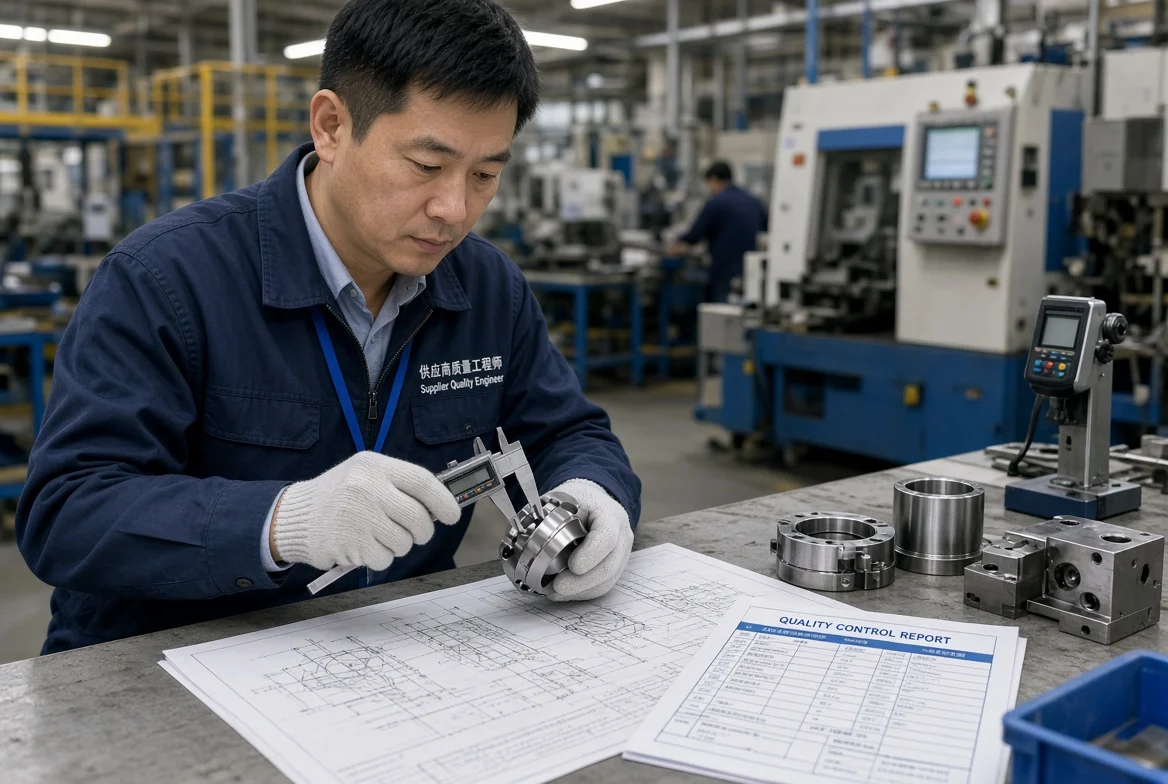
Key Risk Areas Where Supplier Evaluation Adds Value in Global Sourcing
The costs of supplier failure increase with distance and complexity of regulations. Evaluation is particularly useful in four common risk situations.
Adhering to Quality Consistency Across Borders and Production Runs
Mass production stability is not guaranteed by acceptable samples. Whether quality is consistent from run to run is a product of process controls, operator training, calibrated equipment and incoming material discipline. The process should be evaluated, and sample approval should not be the end of that.
Documentation and Customs & Regulatory Compliance for exports
Sometimes export documentation, certificates of origin or compliance documents are not completed or correct and can block a shipment even if the product is okay. Suppliers who have not had much export experience make repeated delays and add extra administrative costs. Evaluation should verify the discipline in documentation and a relevant market experience.
Logistics Coordination, Packaging, and Shipment Readiness
The overseas suppliers are responsible for booking containers, ocean-grade packing and arranging with forwarders. This poor performance results in late sailings, damage to goods or adds to air freight charges at the last moment. Packaging capability and logistics readiness should be included in evaluation scope.
Financial Stability, Business Continuity and Geographic Risk.
If the buyer relies solely on one factory in an area where disruptions can occur, has few sub-suppliers or is not able to have a backup, that can leave them vulnerable. Continuity planning and geographic risk factors deserve inclusion in the evaluation as well as current production capacity.
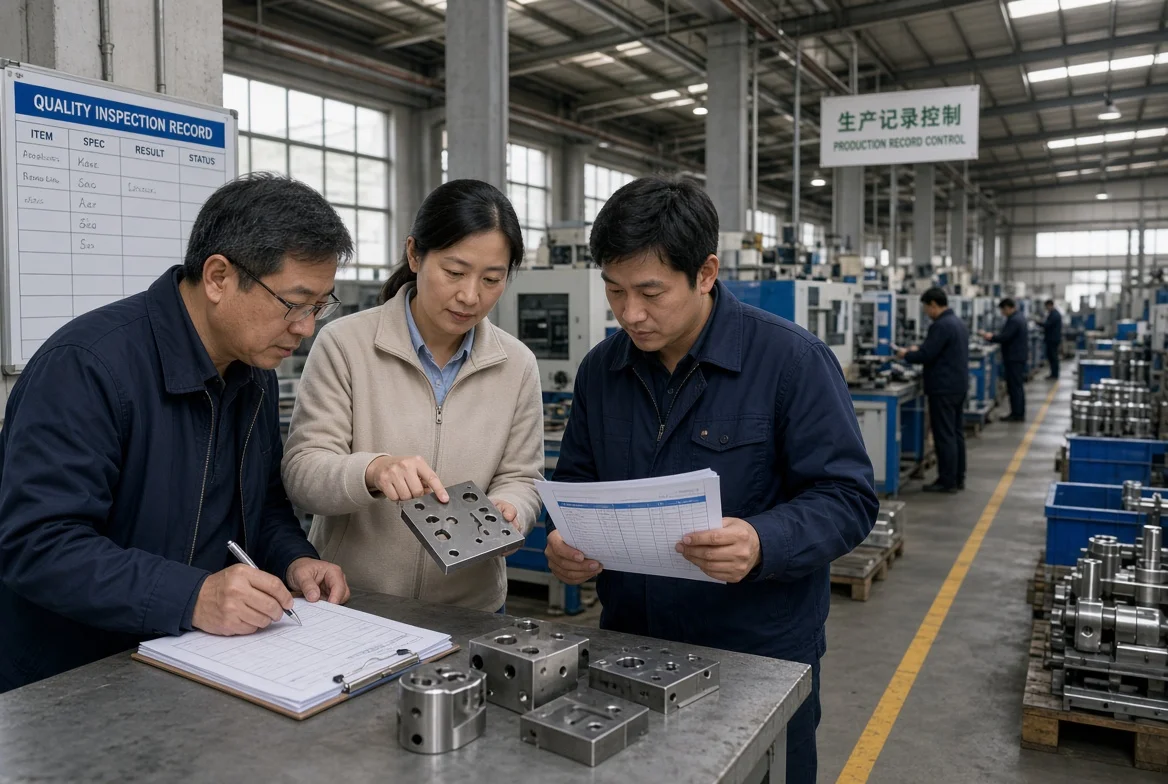
The Business Cost of Weak Supplier Evaluation in Global Sourcing
The price of not doing an evaluation or rushing it are in the form of quality, schedule, hidden logistics and reputation.
The cost of Quality Failures, Rework and Customer Returns Across Borders
A supplier with sample requirements that doesn't have process control may create repeat product defects when volume begins. Any unit price advantage is rapidly lost through rework, additional inspections, rejected containers, warranties and customer returns and it can have a detrimental impact on end customer trust.
Production Delays, Stock-Outs and Missed Launches as a result of international disruptions.
Production lines can be halted or product launch delayed due to capacity over-commitment or documentation inaccuracies. The effect extends beyond the product quality itself to sales forecasts, marketing campaigns and downstream operations.
The Key to Freight, Inspection and Administration of International Goods is Hidden Costs.
The quoted price for an air freight shipment doesn't usually include expedited air freight, extra 3rd party inspection, corrective-action travel, and administrative firefighting. These add up to the overall cost of ownership and are more often found to be lower for a slightly higher-priced overseas supplier that is reliable.
The consequences of Reputational Damage and Lost Customer Trust in Global Markets are severe.
Poor quality or delivery that happens repeatedly, due to a lack of an overseas supplier, can lead to a decrease in repeat orders and a negative brand image in the target market. Supplier evaluation is a kind of brand protection, it's also a form of procurement control.
For leading companies, supplier evaluation plays a pivotal role in ensuring global sourcing success.For leading companies, supplier evaluation can be a key component to the success of global sourcing.
Professional teams see the evaluation process as an integral component of their global sourcing strategy and not as a one-off barrier.
Embedding evaluation into the global sourcing process.
Findings help to direct sourcing allocation, development priorities and long-term regional sourcing decisions. Evaluation is not a standalone compliance activity, but rather is tied to cost, quality, continuity and market expansion.
How to use Data and Performance Measures with Suppliers Overseas.
Evaluation becomes an ongoing dialogue with scorecards monitoring on-time delivery, defect rates, order accuracy, responsiveness and corrective-action closure. Discussions and decisions around development, escalation or re-sourcing are based on data.
Correlation of Evaluation with Risk Management and Business Continuity in Global Supply Chains
Supplier criticality is determined before the supplier by evaluating their financial health, their capacity buffers, their exposure to sub-suppliers and their contingency plan. This will decrease the vulnerability to a single source along borders.
Ensure Continuous Improvement and Supplier Development in all regions
Evaluation uncovers joint opportunities for process control, lead-time reduction or packaging improvement. The goal in mind never changes — to minimize uncertainty before it turns into a quality issue, a supply disruption, or a customer issue.
Conclusion: Supplier Evaluation is a strategic ability that is required for global sourcing.
Supplier evaluation is a process of gathering evidence to decide if an overseas supplier can comply with certain needs and can continue to do so over the time. Professional buyers don't just consider the price. They look at technical fit, Quality systems, capacity, delivery reliability, commercial terms, compliance, communication and actual delivery following orders have been placed. Global sourcing is predictable and less costly when evaluated as a strategic capability instead of a checklist.
If you need more in-depth guidance on processes, check out related B2B Source Desk documents, including supplier evaluation processes, qualification, supplier selection, checklists, factory audit and performance review.