
Supplier Evaluation Explained: Why It Matters in Modern Procurement
Supplier evaluation is a systematic process undertaken by the buyer to decide if a supplier can consistently meet either quality or delivery, cost, compliance and continuity requirements prior to large quantities or long-term agreements. In today's procurement process it's a business risk decision and not a paperwork exercise. Weak evaluation regularly results in operational issues, hidden costs, delivery failures and quality escapes that turn into costly issues later in the day.
Many teams are still at the stage of collecting certificates, filling in questionnaires or ticking boxes as part of the supplier evaluation process. That's not the point. The actual reason is to minimize risk prior to the commitment of business volume, production schedules, customer orders and budgets to a supplier.
Why Supplier Evaluation Matters in Modern Procurement
Rising costs of getting supplier decisions wrong due to Global sourcing, shorter lead times, higher customer expectations, narrower margins and stricter compliance requirements. The procurement teams are now dealing with complex, multi-tier supply chains with one weak link that can disrupt production or even result in lost customer business. Supplier evaluation is now the practical solution for determining which of those risks are identified early.
Before Quality Failures Reach Your Customer.
The majority of quality issues from suppliers begin before the initial production order is placed. When purchasing a sample, buyers are likely to agree to a material consistency, dimensional tolerance, surface finish, colour accuracy and functional performance without checking if it can be obtained on repeated runs from the supplier. Process capability, incoming material control, inspection methods, equipment condition, operator training, and traceability practices are very common times when control is not exercised.
The typical scenario is this: An acceptable first sample is sent, the order is accepted because the price is right, and then when the order size drops up, the supplier starts providing inconsistent batches. The buyer is responsible for additional inspections, rework, returns and possible customer claims. The difference between controlled quality and repeated escapes is the evaluation of repeatable process capability and not just an approved sample.
Minimizing delivery, capacity and supply continuity risks
A quoted lead time does not indicate delivery reliability. The number on the quotation is not as important as actual available capacity, the current workload, security of raw materials, stability of the labour force, the condition of the equipment, seasonal demand fluctuations, and the ability to recover after a disruption.
For example a manufacturer who takes the first order for 5,000 units but is already operating close to his or her capacity. If the buyer's forecast is higher or it is peak season, the supplier fails to make the dates, has to use air freight, or simply cannot ship. It is essential for evaluating suppliers and directly safeguards production schedules and customer commitments, as this distinction between installed capacity and true available capacity determines the capacity available for production.
Instead of comparing the Unit Price, compare the Total Cost.
The unit price is just one component of the total cost of ownership. Evaluating suppliers results in buyers making comparisons based on the same commercial and technical terms, material specification, tooling, inspection and test scope, packaging and labelling, warranty terms, shipping responsibility, export documentation and defect liability.
This lower unit price can be lost as soon as there are higher reject rates, additional incoming inspection, expedited freight, delayed launches, etc. or customer returns. Companies that constantly review the total cost of ownership benefit from the fact that a higher performing supplier can result in a lower cost of ownership and much less operational friction.
Finding Suppliers that Need to be Cultivated Long Term
Supplier evaluation is much more than a screen to get rid of the unsuitable. It also helps to find factories and partners who can assist with volume growth, new product introduction, continuous quality improvement and stable supply. Long term reliable suppliers demonstrate realistic commitments; clear, transparent communication in the event of a problem; documented processes; timely reporting of risk and effective corrective action. Such characteristics only become apparent when evaluation isn't limited to the price and first sample performance.
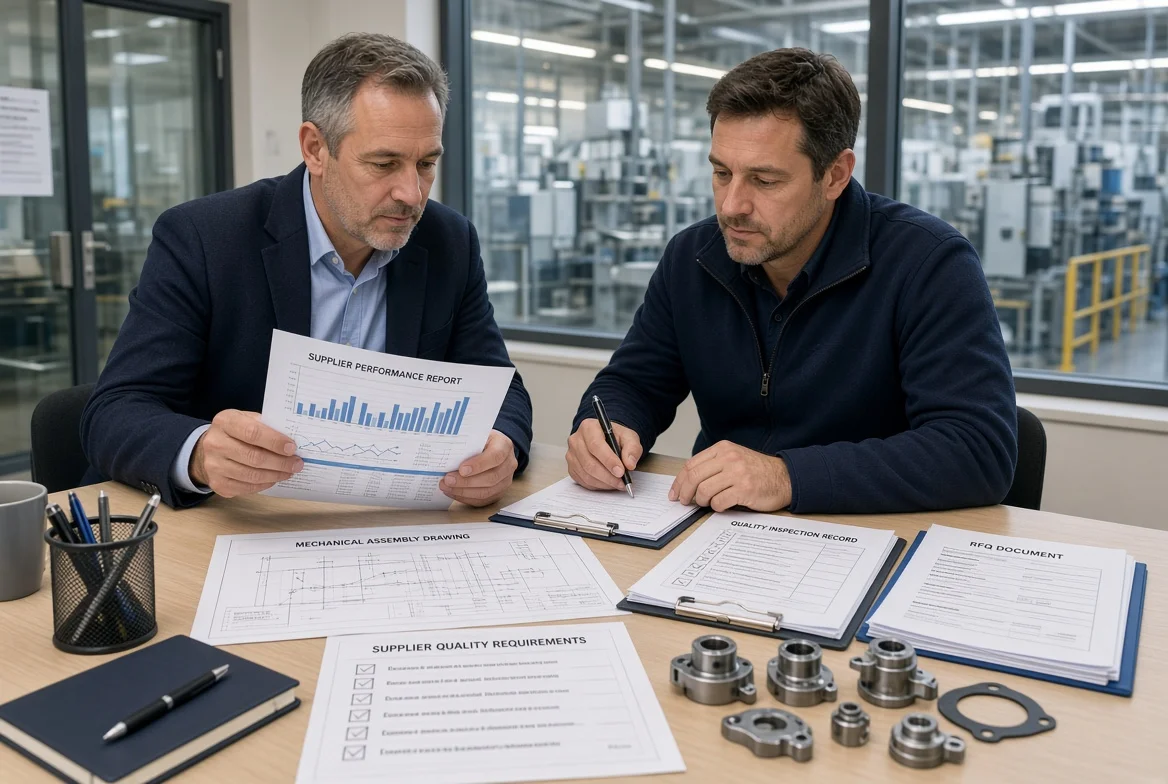
How Supplier Evaluation Supports Better Sourcing Decisions
Evaluation performed correctly is a decision-support tool to help with RFQ comparisons, to minimise risk of selection, enhance commercial negotiation and inform supplier development or re-sourcing decisions.
Increasing the reliability of the RFQ Comparisons.
Comparisons are only valid if the assumptions used are the same. A supplier may offer a lower unit price because they have not included testing, custom packaging, documentation of testing, final inspection or export handling. The other could contain all that's needed. Supplier evaluation explains these differences before the award is made, and buyers can compare like-for-like offers and not packages that have been only one or two parts completed.
Minimising risk of selecting the wrong supplier
Predicting performance by price, personal relationship or a sales presentation is an incorrect approach. Structured evaluation identifies capability gaps, capacity limitations, weaknesses in the quality system, compliance issues and communication issues before it is too late. A supplier who appears to be a good fit in a meeting but doesn't have the production planning expertise and corrective action process will generally show up during a proper evaluation and not after an order has been placed.
Supporting Contract/Corporate Negotiations
Evaluation results provide real-world substantiation to help buyers establish their quality expectations, delivery schedules, inspection standards, corrective-action requirements, warranties, and performance criteria. While contracts are still vital, negotiations become more concrete when both parties know what the supplier can truly do as opposed to what they think they can do.
Equipping Smarter Supplier Development and Re-Sourcing
Suppliers can demonstrate good technical skills but poor delivery performance, or good quality systems and a small capacity. Rather than re-start the entire sourcing process, buyers can concentrate on a particular weak area such as scheduling discipline, logistics coordination, documentation quality or process control for improvement. Gaps which are fundamental also support the identification of the evidence required to start controlled re-sourcing without jeopardising continuity of supply.
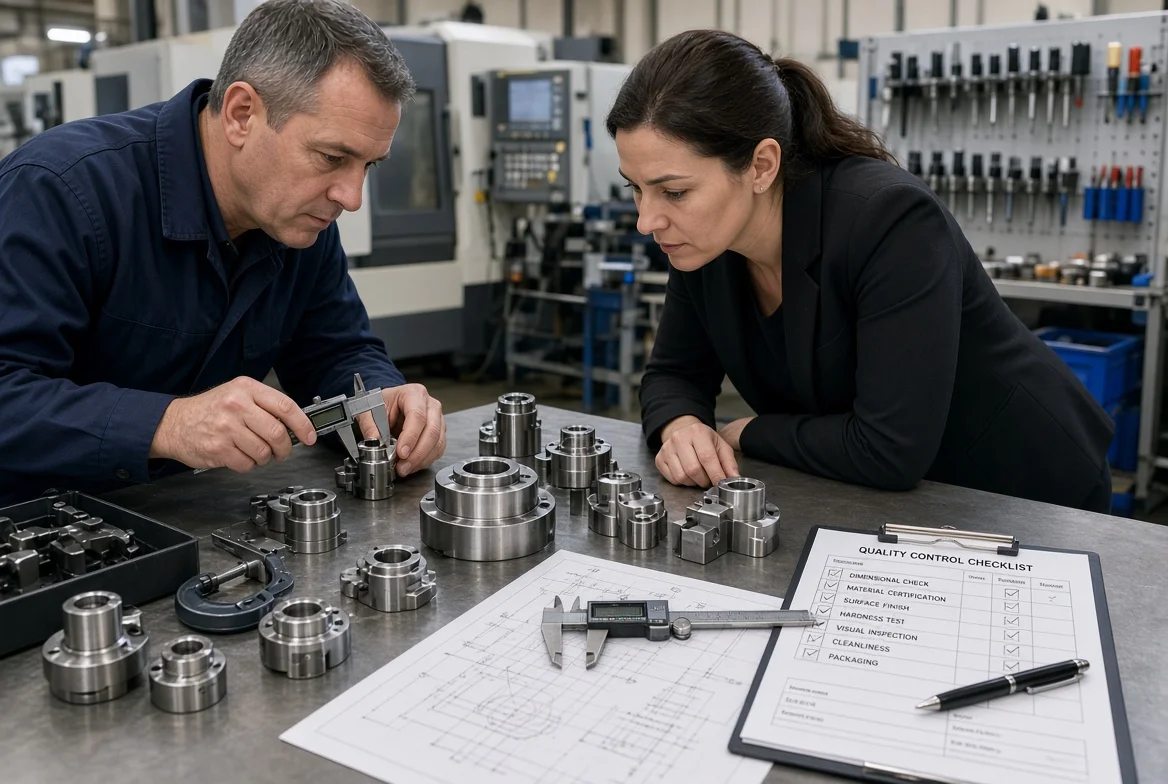
Supplier Evaluation in a Global and Complex Supply Chain
Failure of suppliers comes at a cost, partly because of the distance, partly because of time-zone differences, partly because of the style of communication, logistical challenges, and regulatory differences. When the sourcing goes beyond national borders or multi-tier supply chains, evaluation becomes more important than ever.
Controlling distance, time zones and communication risks
The risks of coordination are introduced by overseas suppliers which are not generally present in domestic suppliers. Communication of production status, quality problems, documentation changes and shipment readiness, in a clear, timely and accurate manner is an operational ability that needs to be assessed. A supplier can be good at making the right products, but still be known for frequent delays due to poor export documentation, mis-packing, or inadequate response if there is an issue when it arises. Communication quality is thus regarded as an operational factor that can be measured, instead of a soft preference.
Managing compliance, regulatory and market needs
In certain markets, such as regulated markets, safety-critical applications, food-contact materials, electronics, medical-related supply chains, certificates are not sufficient. Buyers require the evidence of the relevant testing reports, material documentation, traceability systems and proven experience with the relevant standards. Supplier evaluation demonstrates actual compliance with those requirements, instead of just saying they do.
Minimize reliance on a single source risk
Evaluation also shows that there is a risk of concentration. One factory may provide the other with a critical part without being aware that its supplier has very little capacity buffer, is financially fragile or has very dependent suppliers. By knowing what the consequences of disruption on the business are, the difficulty of switching and the sole-source exposure, procurement teams can have contingency options in place before the crisis.
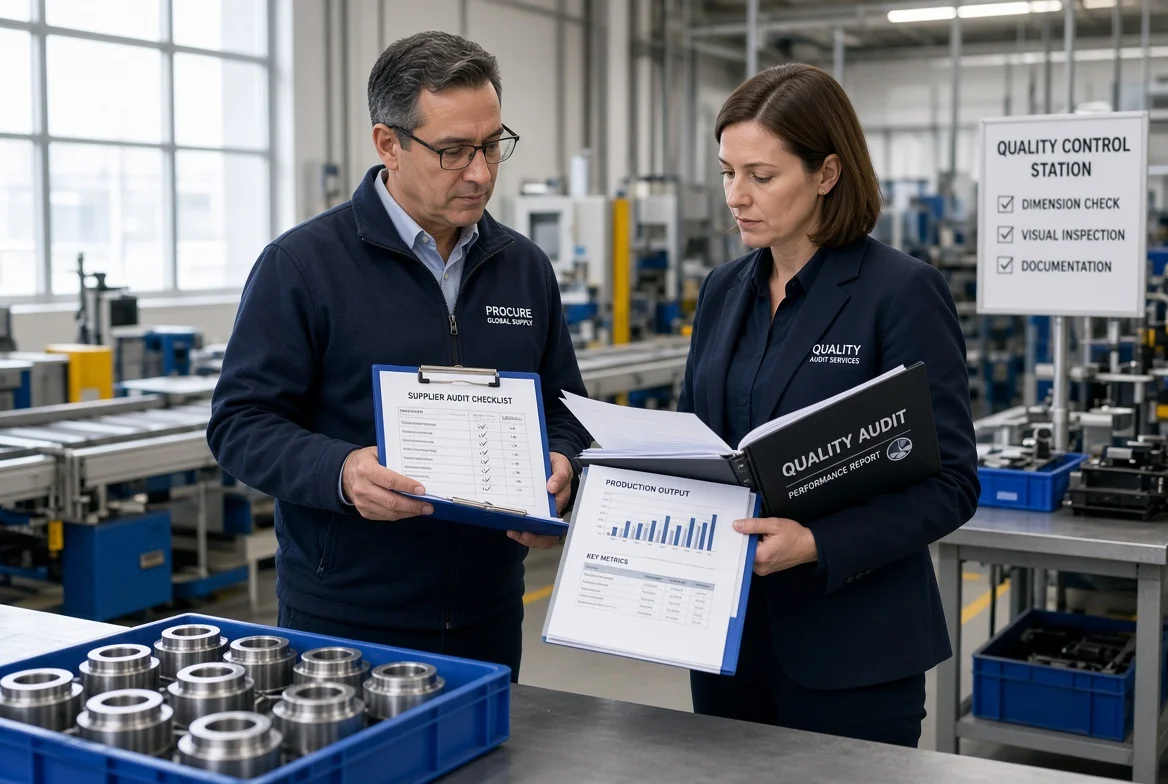
The Business Cost of Weak Supplier Evaluation
The results of rushed and/or formality evaluation are seen as measurable costs, schedules, and damage to reputation.
Quality Failures, Rework, and Customer Returns
A supplier who passed an initial sample but failed to develop process control, operate the process or perhaps discipline incoming materials will create defects repeatedly when volume begins. When additional inspections, faulty products, rework, warranty costs, and customer dissatisfaction quickly negate any unit cost benefit.
Production delays, stock-out and missed launches
Paper capacity leads to missed deliveries, production downtime, stock-outs, and delayed product releases. If the product is acceptable, but the quality forecasts are wrong, the marketing campaigns fail, and the sales commitments made downstream don't materialize as well.
Hidden Costs in Freight, Inspection and Administration
Expedited air freight is not part of the original quotation, nor are any of the additional incoming inspection, supplier visits to address defects, corrective-action follow-up, documentation corrections or internal administrative time. These costs can be far more than the difference in the unit price. An increased price but more dependable supplier often can achieve a lower TCO.
A lack of reputation and customer trust.Lack of reputation and customer trust.
If the supplier delivers poor quality products or misscheduled deliveries repeatedly, this ultimately impacts on the buyer's brand. Retailers and end-customers don't care about the brand or any value chain that is associated with it. Supplier evaluation becomes a brand-protection process, as well as a procurement process.
The Way Modern Procurement Teams Utilize Supplier Evaluation.
Evaluation is not used as an approval gate and is rather embedded in the sourcing process, supplier management, risk management and continuous improvement.
Its integration into Sourcing Strategy.
Evaluation results dictate the suppliers to be developed, those to be kept at their current level, and those to be replaced. Decisions are not made for compliance for the sake of compliance, but are driven by real business objectives such as cost reduction, quality improvement, supply continuity, support of innovation, or market expansion.
How to leverage Data and Performance Metrics.How to leverage Data and Performance Metrics.
Supplier score cards and KPI (on-time delivery, defect rate, order accuracy, responsiveness, corrective-action closure, packaging performance, pricing stability) provide a way to convert evaluation into a continuous dialogue. Data is used to highlight trends and root cause to make the right decision on next steps for supplier development, corrective action or re-sourcing.
Connecting Evaluation with Risk Management and Business Continuity
Before committing critical volume, assessments are made for financial stability, capacity buffers, compliance posture, logistics resilience, geographic exposure, and single-source dependency. Then contingency options can be put together in time to be acted upon.
Ensuring Continuous Improvement and Supplier Development
Often, evaluation results will show specific areas of improvement: process optimization, improving the inspection method, reducing lead time, or joint new product development. Programs of supplier development are designed on the basis of these findings, not generic scorecards.
The goal is always practice, minimizing uncertainty before it turns into a quality problem, supply disruption, financial loss, and/or customer problem.
Conclusion: Strategic Capability of the Procurement.
Supplier evaluation is a systematic and evidence-driven process to assess the capability of a supplier to satisfy a buyer's particular needs and to be able to meet these needs in the future. Professional buyers are looking for so much more than price. They consider technical fit, quality systems, capacity available, delivery reliability, commercial terms, compliance capability, supply risk, communication quality, and actual performance once the orders have gone out.
Supplier evaluation, if used as a strategic capability, not administrative documentation, will safeguard product quality, delivery obligations, total cost, customer relationships and continuity of supply over time. If you need more detailed information on the structure of the process, the criteria you'd like to use, new supplier qualification, or continual performance reviews, then continue with the related resources on B2B Source Desk.