
Supplier evaluation is a process that procurement teams follow to determine whether a supplier can consistently provide a buyer with both a particular requirement for quality and technical capability, capacity, delivery, commercial terms, compliance and communication, and ensure that overall risk is at an acceptable level. It's not a matter of comparing prices among professional buyers. When defects, late deliveries, additional inspections, rework, expedited transportation, or poor communication are added onto a low unit price, it can easily be the most expensive total cost. This guide presents the educational content that supplier evaluation encompasses, as well as why it's important in your everyday purchasing decision process and how procurement teams, quality teams, and importers use it before they approve or continue a supplier relationship.
What Is Supplier Evaluation?
Supplier evaluation is an evidence-based procurement process that finds out if a supplier, either new or existing, is fit for a specific product, service, purchasing category or ongoing sourcing relationship. It investigates beyond marketing claims and sales presentations, to substantiate actual ability in relation to the buyer's actual requirements.
The degree of evaluation should reflect the significance and the risk of the purchase. Simple, low-risk items might require simple screening. If the product is a custom product, high volume order or safety products, regulated products, OEM or strategic suppliers, it will need more detailed technical, operational and commercial consideration.
Structured Procurement Process - Supplier Evaluation
Supplier evaluation is not a single questionnaire, certificate, audit or scorecard. It is a formalized procedure that collects information from various sources and presents that information as a decision of approval, conditional approval, trial-order or rejection.
The parameters a buyer checks include product specifications, quotations, technical documents, samples, test reports, the production process, factory equipment, quality records, capacity data, commercial terms, certifications, references, audit results, and actual performance. Each piece of evidence is evaluated to the individual order or category requirements, not industry averages.
Assessing new suppliers and current suppliers.
Evaluation starts before business comes to a supplier. A potential supplier is evaluated to determine if it should be invited to bid, be given a trial order, or be placed on an approved supplier list or be eliminated. The same discipline is carried out after the start of the purchase order.
Samples and quotations can conceal any gaps in real performance. A supplier can provide an outstanding prototype and a competitive price, but make repeated late deliveries, inconsistent material quality, unclear production updates, or slow responses to corrections once volumes start. These actual results are used in ongoing supplier performance evaluation to determine the continued, improved or terminated nature of the relationship.
Supplier Evaluation should be commensurate with the Buyer's actual requirement.
No supplier is good or bad when it comes to just one. Capability is always dependent on the Buyer's product specification, annual volume, quality requirements, lead-time requirements, destination market and commercial scope. You might have a factory that is performing well on one product line that does not have the tighter tolerances, different materials, higher traceability, controlled environment, or special testing that the other product line needs.
"Professional manufacturer" or "high-quality OEM factory" are the broadest claims and should not supplant product-specific evidence. Buyers do not approve suppliers they think they can do in the paper but can't in production, when they evaluate by real drawings, volumes, and risk profiles.
Why Supplier Evaluation Matters in Modern Procurement
The negative effects of weak supplier evaluation are apparent in the day-to-day running of the business: shipment rejections, missing customer deadlines, unanticipated air-freight charges, rework, warranty claims, and production schedule disruptions. These failures are minimized by strong evaluation, which certifies capability and risk prior to the first large order.
The key to preventing quality failures is to ensure that quality is built into the product before it is produced.
A lot of quality problems begin prior to the issue of the purchase order. Many buyers find out the holes in materials, process controls, inspection procedures, equipment, training, documentation, testing, and traceability only during full-scale production.
Even when a special quality of the product is attended to by the supplier, it may not be maintained at the normal production scale and by normal operators when it comes to material consistency, dimensional tolerance, color, assembly quality or testing. The difference between a reliable source and a recurring quality headache is evaluating repeatable process capability—rather than just one approved sample.
Minimizing Capacity, Lead-Time and Delivery Risk
A lead time is not a measure of reliability of delivery. The capacity that can be made available, the current load, raw material supply, availability of labour, condition of equipment, seasonal demand, subcontracting, scheduling discipline and the ability to recover if there are delays all influence whether the promised date will be met.
A manufacturer may take up a first order with spare capacity, but may not be able to meet the customer's expected demand during “peak” periods. Capacities achieved on the factory floor are not necessarily the same as those available to the buyer at the time of need.
When comparing unit prices, always compare the total costs.
The requirement to assess suppliers puts commercial offers on the same footing. Customers verify that quotations include the same materials and tooling, as well as inspection level, test requirements, packaging, labeling, warranty, shipping terms, export documentation, payment terms, and responsibility for defects.
The lower the product price, the lower the procurement cost is not necessarily. The apparent saving can quickly turn into bigger TCO issues as reject rates increase, additional quality checks are conducted, rework is needed, air freight, late launches or customer complaints occur.
Finding suppliers that warrant long-term business relationships
Evaluation isn't just about getting rejected. It also helps to identify factories and partners to assist with continued procurement, new product development, volume expansion, quality enhancement and supply continuity. Relationships that are reliable demonstrate realistic commitments, clear documentation, transparent communication, stable quality, timely risk reporting, effective corrective actions and readiness to discuss capacity or technical limits prior to issues becoming costly.
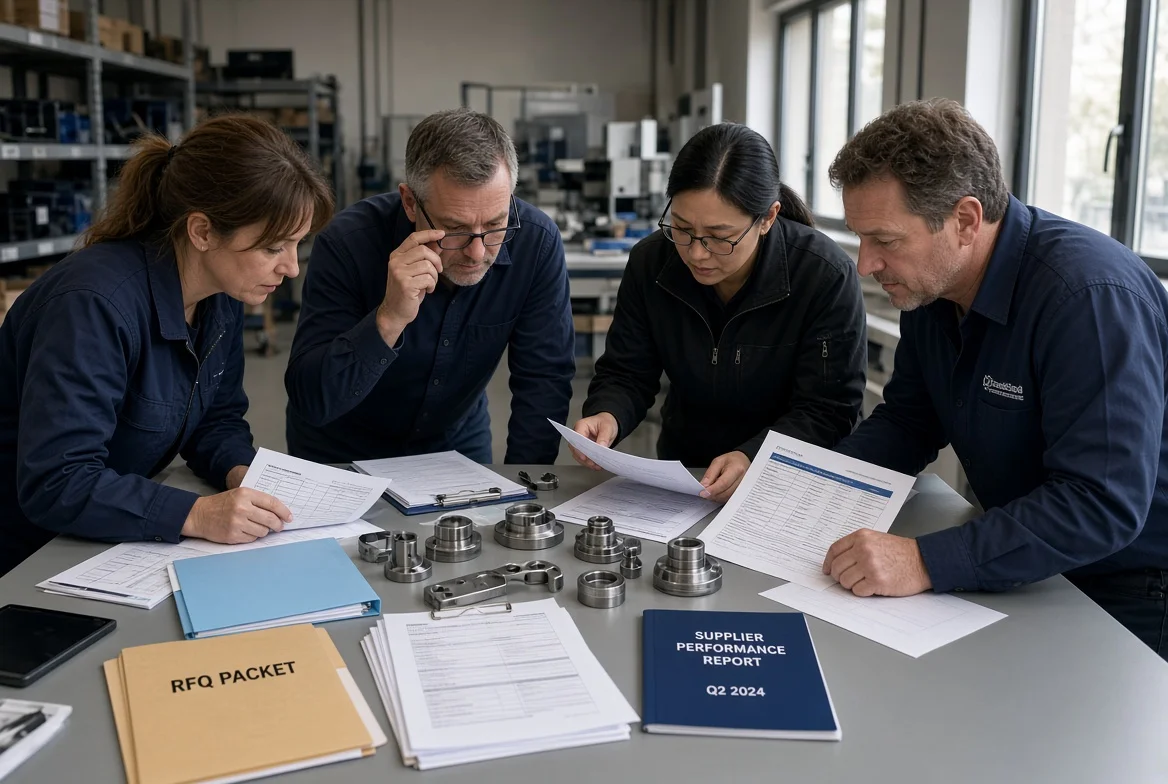
What Do Procurement Teams Evaluate in a Supplier?
Supplier evaluation is a study of a number of related areas since weakness in one area doesn't negate risk in another. The criteria are customized based on product complexity, business impact, product cost, supplier location, quality level desired, and failure consequences.
Technical Capability and Product Fit
Purchasers are evaluating supply capabilities to manufacture, assemble, source or deliver the requested product. Technical drawings and specifications, material specification, manufacturing processes, tooling, equipment specifications, test capabilities, sample results, engineering support, and past experience with similar products are considered evidence.
A supplier may have the right machine but not the right tooling, inspection equipment, material, process control or engineering experience for the custom design. There has to be proof of this it is said ‘we can make it’ and that proof needs to be linked to buyers drawings and tolerances.
Quality Management and Process Control
The evaluation of quality is not just about certificates or statements from the supplier. Purchasers explore the real way incoming materials, in-process control, final inspection, calibration, traceability, nonconforming product handling, root-cause analysis, corrective action, training and production records are controlled.
A certification can help evaluate but it cannot demonstrate that a supplier is able to provide a product at the desired quality, quantity and uniformity. True validation comes when the quality system yields consistent results when production runs are normal.
The ability to expand the capacity, the scalability, the production flexibility.
Buyers check if the supplier is able to meet existing order quantities and potential expansion. Availability of machines, manpower capacity, bottlenecks, order backlog, shift pattern, availability of raw materials, production scheduling, dependence on sub-supplier, availability of backup machines and capability of changeovers are all significant.
Huge facilities don't assure capacity. The real issue is not if equipment is on the factory floor but if the buyer needs it.
The accuracy of a quotation, the commercial terms and the cost are vital elements of the contract.
Commercial evaluation refers to unit price, MOQ, payment terms, tooling price, price validity, material-cost adjustment, packaging, warranties, Incoterms, shipping responsibility and exclusions. Quotations are only compared when the scope is the same.
A lower quote is one supplier might say because they have not tested the items, not had them customised into their packaging, not had to produce certification documents, or not had to complete the final inspection or export work. Be clear of all assumptions before giving the business to avoid the possibility of future conflicts and cost overruns.
Deliverability: Dependability and Logistics Skills
To ensure reliable delivery, more is needed than just timely production completion. Order planning, inventory control, packing product quality, shipment booking, export documentations, communication discipline, freight coordination, and experience with the buyer's destination market all factor into making sure goods arrive complete and on time.
It's easy for a supplier to produce acceptable products, then cause a delivery disruption again because of missing or poor packaging, late booking of containers, or poor communication when products are not being produced as expected.
Financial Stability, Compliance, and Supply Risk
Evaluation can range from legal status, continuity, financial and product compliance, ethical sourcing expectations, insurance, ownership, dependence on sub-suppliers, geographic exposure and logistics risk, depending on the category and risk. Depth increases for strategic suppliers, sole-source suppliers or suppliers regulated because their absence would cause production to cease.
Strength cannot be guaranteed by any single report or certificate. When circumstances change, the buyer takes the best available evidence and makes adjustments to the assessment.
Communication skills, responsiveness, and problem solving ability.
Communication is one of the operational factors. Buyers watch if suppliers give the customer a correct answer to technical questions, if they accept limitations, if they record changes, if they keep them up to date and provide realistic information, if they respond quickly when they notice defects and if they take corrective action seriously.
Any supplier willing to take on all requests without seeking clarifying information is more risky than one that explains the limitations and suggests better and more viable options. Communication is typically done at a high level before the first order is placed.
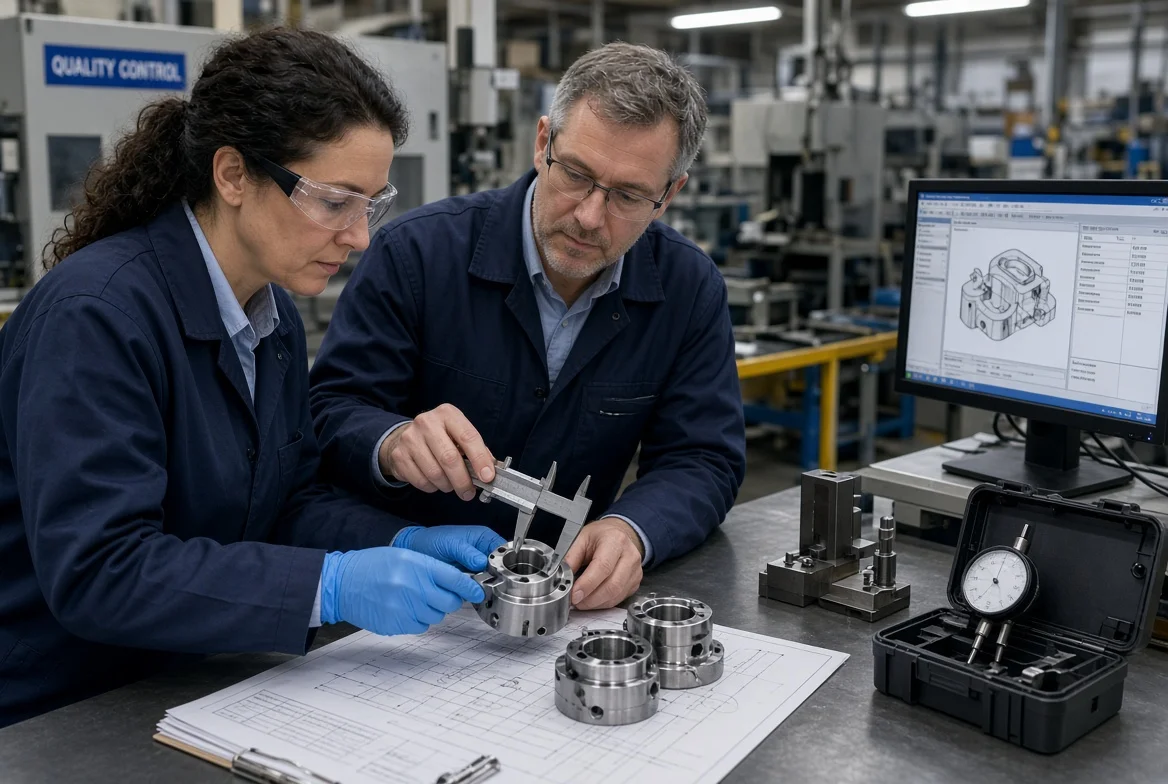
Supplier Evaluation vs. Supplier Qualification vs. Supplier Selection
Here are three terms that are related but can have slightly different meanings. Knowing the difference will enable procurement teams to choose the right process at the right time.
Supplier Evaluation
Supplier evaluation is a wider process of capability, risk, quality, delivery, commercial suitability and ongoing performance. Provides evidence to support informed decision making prior to and beyond supplier approval. The outcome may be to approve, conditionally approve, reject, issue a trial order, or engage in supplier development activity, or monitor performance or retain supplier as a back-up supplier.
Supplier Qualification
Supplier qualification is a process used to identify if a supplier meets minimum approval criteria. These are usually: legal registration, mandatory certifications, documents, audits, approved samples, capabilities, quality-system expectations, and compliance conditions. Qualification is frequently a part of a larger assessment procedure. A supplier can be qualified for an approved supplier list and may not be the best choice for a specific project.
Supplier Selection
Supplier selection is the decision to engage a supplier or to divide up volume between a number of suppliers once the candidates are evaluated. Comparative factors, such as price, technical fit, capacity, quality history, delivery reliability, location, risk and strategic value, are considered. Selection needs to be based on evidence-based evaluation. Relying on a preferred supplier and evaluating evidence later on can result in bias and allow for significant risk to go undetected.
Term | Main Question | Typical Outcome |
|---|---|---|
Supplier Evaluation | Can this supplier meet our requirements consistently and with acceptable risk? | Assessment findings, risk review, score, or improvement actions |
Supplier Qualification | Does this supplier meet our minimum approval requirements? | Approved, conditionally approved, or rejected |
Supplier Selection | Which supplier should receive the order or sourcing opportunity? | Supplier award, approved shortlist, or sourcing allocation |
For deeper comparison, see related guides on supplier evaluation versus qualification and supplier evaluation versus selection.
Common Methods Used in Supplier Evaluation
Professional buyers have a mix of methods based on the risk, complexity, value, supplier location and significance of the purchase. None of the above work alone. Simple, low-risk products might only require basic screening; strategic custom manufacturing, high-volume sourcing or regulated products often warrant more detailed technical validation and site level assessment.
Document Reviews and Supplier Questionnaires
Questionnaires gather fixed data with respect to Company background, manufacturing ability, quality systems, manufacturing capacity, certifications, export experience, compliance practices, and relevant product experience. They are means to an end, not ends in and of themselves. Answers should be specific, up-to-date, relevant to the product and backed up by documents, records or follow up discussion.
What is the difference between RFQ and Quotation Analysis?
RFQ analysis is only valid if all the suppliers quote the same scope. Material specifications, quantities, tooling, test requirements, quality standards, lead times, packaging, payment terms, shipping terms, warranty and exclusions are compared side by side. If the pricing gap is big, ask questions -- it could mean one of the following: A misunderstanding of the drawing, the requirements were not included, a different grade of material, less inspecting, an unfeasible lead time or different logistics responsibilities.
Factory Audits and Supplier Site Visits
For strategic suppliers, high dollar projects, custom fabrication, technically challenging products, regulated product categories, or suppliers that are hard to replace, a factory audit or visit may be valuable. Review of production flow, equipment condition, process control, maintenance, material storage, inspection stations, warehouse practices, packaging, employee training, records and traceability. A new building or clean showroom does not indicate consistency of production capacity for the buyer's product.
Samples, Trial Orders, and First Production Reviews
Samples and trial orders are used to determine if the supplier is able to produce the same quality at normal production under the same source of material, process, machine, tooling, operators, inspection method and quality expectation. The prototype isn't a guarantee of the quality of the final product at full volume. Treatment of a supplier as a fully proven supplier should be carefully reviewed in first production runs.
Supplier Scorecards and Continuous Performance Review.
Scorecards are used to measure the performance of existing suppliers that can be measured: on-time delivery, defect rates, order accuracy, responsiveness, corrective-action closure, packaging performance, pricing stability, and service quality. Data should lead to action – trends should be emphasized, problems discussed, corrective action assigned, action for development should be decided, and replacement or escalation should be determined.

A Simple Supplier Evaluation Process
Evaluation is consistent, but not cumbersome, thanks to a high-level, practical process. The outline below sets out the key logic and detailed step-by-step procedures are outlined in related process guides.
Identify Requirements prior to reaching out to Suppliers
Before comparing suppliers, procurement teams need to reach agreement on product specifications, drawings and materials, quality expectations, testing needs, annual volumes, target lead time, delivery location, packaging, commercial terms, and regulatory/compliance needs. Inadequate internal requirements make it impossible to fairly evaluate.
Identify and screen potential suppliers.
Sources can include databases, referral, industry contacts, trade shows, direct searches and sourcing sites. Initial screening queries practical questions, such as: Does the supplier produce this product category? Will it be able to fulfill MOQ & volume? Is it well-expressed? Does it have the experience and market support that is relevant? Is it compliant to minimum standards and commercial requirements?
Gather Evidence and Verify Important Claims
Questionnaires, RFQs, samples, technical documents, certificates, audit reports, capacity information, product references, quality records and production demonstrations are gathered. The quality, safety, compliance, capacity and delivery or total cost claims are verified first. Assessment records include evidence reviewed, open questions, risk identification, supplier commitments and conditions before approval.
Discuss and decide on Approval at a later stage, when findings are made
Findings are compared to previously established criteria, and input from engineering, quality, operations, finance or management is used as necessary. These could be approved, conditionally approved, approved for trial orders, kept as a backup, rejected or needed to take corrective action. A critical gap in safety, quality, technical capability, compliance or capacity should not be addressed by a score.
Track Supplier Performance Post Approval
Evaluation is on-going after the first purchase order. The highest level of evidence for reliability is provided by actual delivered quality, by on-time performance, by documentation accuracy, by packaging condition, by responsiveness, and by corrective-action behavior. Records are updated when there are repeated defects, missed deliveries, change of ownership, change in capacity, major process changes, change in sub-supplier or changes in product scope.
There are detailed process steps in the supplier evaluation process and practical assessment guides for procurement teams.
Common Supplier Evaluation Mistakes Buyers Should Avoid
Such errors are regular occurrences causing post-approval quality, cost, delivery and continuity issues.
Choosing the Lowest Bid without verifying scope
When comparing unit prices, it is important to verify identical materials, specifications, testing, inspection, packaging, delivery terms, tooling and documentation or unexpected costs or disputes arise. The assumptions and exclusions need to be defined prior to using price as a decision parameter. A quote is assessed based on its actual performance.
Considering Certifications as Proof of Product Capability
Certifications may be applicable supporting evidence, but they don't necessarily indicate that the supplier is capable of making the exact product in the volume, lead time, compliance and quality they say they can. The verification of the equipment, process control, technical knowledge, testing capability, records and other production experience are still subject to verification. A recognised certificate cannot be used as a substitute for measurement tools or traceability systems and validated processes used to fulfil a technical component.
Adhering to the same checklist for all types of suppliers
A standard form is used for consistency, but may miss out on category-specific risk. Whether it is a component traceability requirement, ESD control requirement, or reliability testing, electronics can have these needs; while packaging can have print quality, material compliance, and compression performance. A core framework and category specific questions is the balance to ensure discipline without assuming that every supplier relationship is the same.
The decision to stop the evaluation process after the supplier has been approved.The termination of evaluation process once the supplier is approved.
However, supplier performance varies when there are staff changes, changes in workload, change of ownership, financial pressure, changes in sub-suppliers, changes in equipment, changes in logistics or deteriorating process control. Approval does not guarantee continued suitability. Degrading performance is detected early, but not after a serious failure, with reviews based on risk, volume, product criticality, quality history and delivery performance.
Building a Supplier Evaluation Framework for Your Business
An effective framework is sufficiently strict to detect material risks, yet not so difficult that teams can't follow it.
Establish Evaluation Criteria Prior to Reviewing Suppliers' Responses
Make decisions prior to any quotation coming in or sales meetings. Common requirements are technical, quality, production capacity, delivery, cost, commercial terms, compliance, financial risk, logistics & communication. The cross functional input from engineering, quality, operations, finance and legal enhances completeness.
Weight: Based on Product and Supply Risk
Equal weighting of criteria should not be applied in all situations. In the case of custom, high risk, or technically challenging products, the cost savings are typically not significant enough to offset process capability, engineering support, quality control, traceability, and capacity. In the case of standard low-risk items, it might be more important to consider service-level, delivery reliability, commercial terms, and stability of costs. Priorities are first documented and agreed before suppliers are compared.
Apply Conditional Approval When More Validation is Needed
Approval need not be first and foremost. Conditional Approval allows the buyer to proceed with the use of the promising supplier and gives them time to take specific steps (approved samples, corrective actions, audit closure, documentation, production validation or successful trial orders) before complete approval. There must be a clear requirement, owner, deadline and review point for each condition or the risks can go unaddressed for extended periods of time.
Link Evaluation to Continuous Supplier Management
Results from the evaluation provide supplier scorecards, quality reviews, sourcing allocation, business reviews, development plans, corrective actions, and future re-sourcing decisions. The record is not just a paper document that gets lost once it is approved, but is still a living procurement document. It isn't another piece of paper; it's less confusion that evolves into quality issues, missed deadlines, unexpected expenses, or customer issues.
Conclusion: Supplier Evaluation aids Purchasers to pick more reliable suppliers.
Supplier evaluation is a method of assessing a supplier which uses a structured and evidence-based process to see if a supplier can meet the buyers specific requirements and will do so in the future. When it comes to professional buyers, they're focused on more than just the price. They evaluate technical fit, quality systems, capacity, delivery dependability, commercial conditions, compliance, supply risk, communication and actual performance once orders have been placed. Over time, this discipline helps to minimize sourcing risk and establish more stable and dependable manufacturing relationships. Supplier evaluation processes, qualification, selection, criteria, checklists, manufacturing supplier evaluation, and supplier performance reviews are discussed in more detail in related B2B Source Desk guides.