
Quality, cost, and delivery (QCD) are the three factors most critical to consider when evaluating suppliers as it is the practical basis for almost all sourcing decisions. With dozens of factors to consider when evaluating suppliers, these three are the most critical measures for procurement teams to consider, as they truly make a difference in whether or not they'll be able to provide the business with something it needs without causing issues further down the road. The lowest unit price is often a false choice: the professional buyer evaluates and combines quality, cost and delivery into a single consideration because failure to deliver on any of these three areas will result in a rise in total cost, production delay or customer complaints in no time.
Quality: The Foundation of Supplier Evaluation
No good comes for a long time without good quality. It causes rework, returns, line stoppages, customer complaints and damage to your brand that can be bigger than any unit price savings. This is why most industrial and manufactured products have quality as part of their top-tier supplier evaluation criteria.
Compliance with Product Quality and Specifications
The first thing buyers do is to ensure the supplier is able to maintain the specifications. This encompasses dimensional tolerances, material characteristics, functional performance, surface finish and appearance. While a precision component buyer might need a dimensional accuracy of 0.05 mm in each lot, a packaging buyer might want an accuracy that is based on spectrophotometer readings, not just visual observation. Sample evaluation, first article inspection and capability studies are the most obvious indications early on to gauge if the supplier can do the print.
Quality Management Systems; Process Control
Certifications like ISO 9001 can be helpful as a first step but it really depends on being lived on the floor. Check for documented procedures, in-process checks at key points, in-process statistical process control when appropriate, calibrated measurement equipment and a functioning corrective-action process. Reliability is much greater if a supplier discontinues production when a process drifts and shuts non-conformance with root cause analysis (RCA) than if the supplier only inspects at the end of the process.
History of quality performance and history of track record.
The historical data still is one of the most reliable predictors. Ask for past 12-24 months data for defect rate, customer return rate, frequency of complaints and time to close the corrective action. With a low and steady defect rate and quick access to the supplier when problems arise, they remain reliable partners. Any sudden increases or delays in response should be a cause for inquiry into process control and/or management attention.
What are the real costs of poor quality?
2% defect rate is not commonly 2% additional expenses. Include inspection labor, sorting, scrap, expedited replacements, warranty claims, and the potential loss of sales due to line downtime and the cost of quality can climb to surpass the unit-price advantage of two suppliers.

Cost: Beyond Unit Price to Total Cost of Ownership
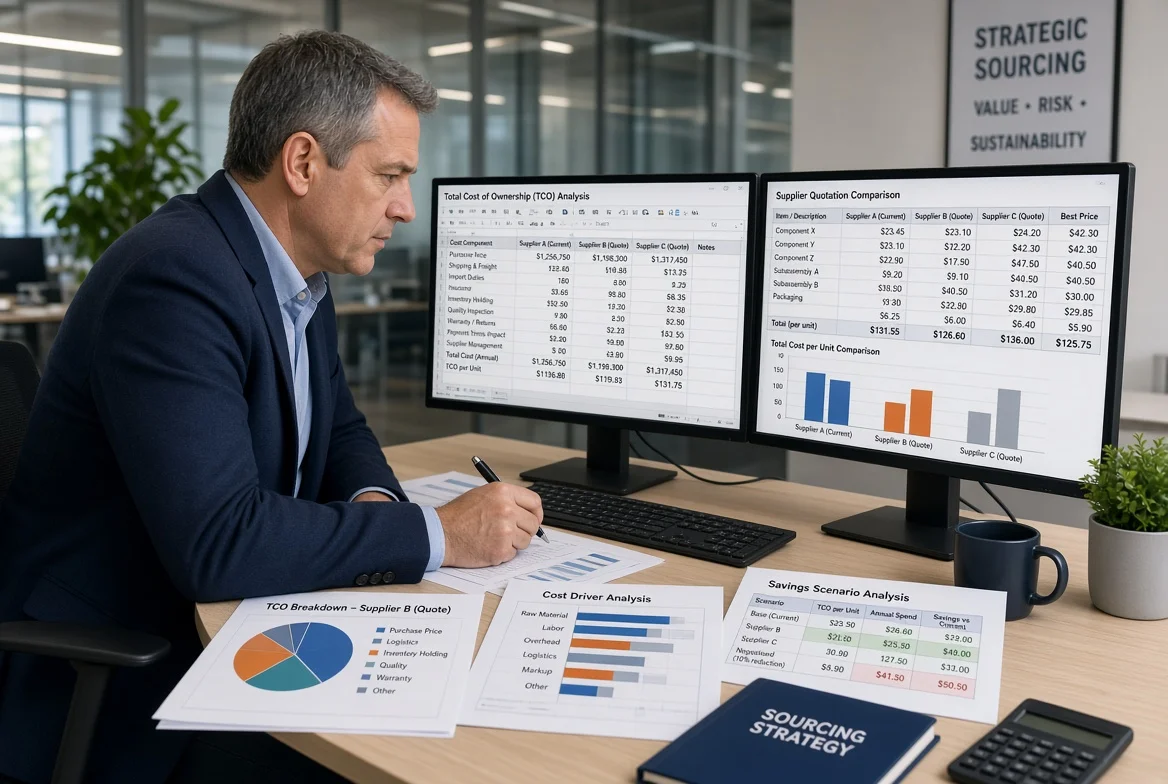
The unit price is easily seen and easy to compare, but it is just one of the cost elements. Supplier evaluation factors are always expanded to TCO by professionals.
Cost Competitiveness & Unit Price
Check competition of quotations with market pricing and qualified suppliers. If volumes are present, ask for cost analysis separating out materials, labor, overhead and margin. When a price is very low and there is no explanation of the cost, it is either an unsustainable margin, or corners that will be found later in the quality or delivery.
Consider what this might add up to be over time, including the total cost of ownership (TCO).
TCO includes freight, duties, incoming inspection, rework, scrap, inventory carrying costs, administrative time and potential warranty liability on top of the unit price. The paper cost of a supplier who claims they are 10 % less is easily offset by quality problems and late deliveries, which can drive up costs by 15–20 %. The simple TCO model for critical parts transforms cost into a decision-making tool.
The following factors contribute to the stability of costs and prices:
When prices fluctuate or the clause in the adjustment section is vague, this results in budget risk. Favor suppliers who discuss cost drivers in detail as well as employ formula-driven models for material and/or energy change. Unusual spikes following the first order indicate poor cost control or opportunism.
Value-Added Services and Cost-Benefit Trade-Offs
Increased unit cost may be justified by engineering support, flexible MOQs, stocked consignment or faster response time or extended warranties. The 5 % premium could provide superior overall economics by removing the need for design iteration delays or by lowering safety stock.
Delivery: Reliability, Lead Time, and Logistics Capability
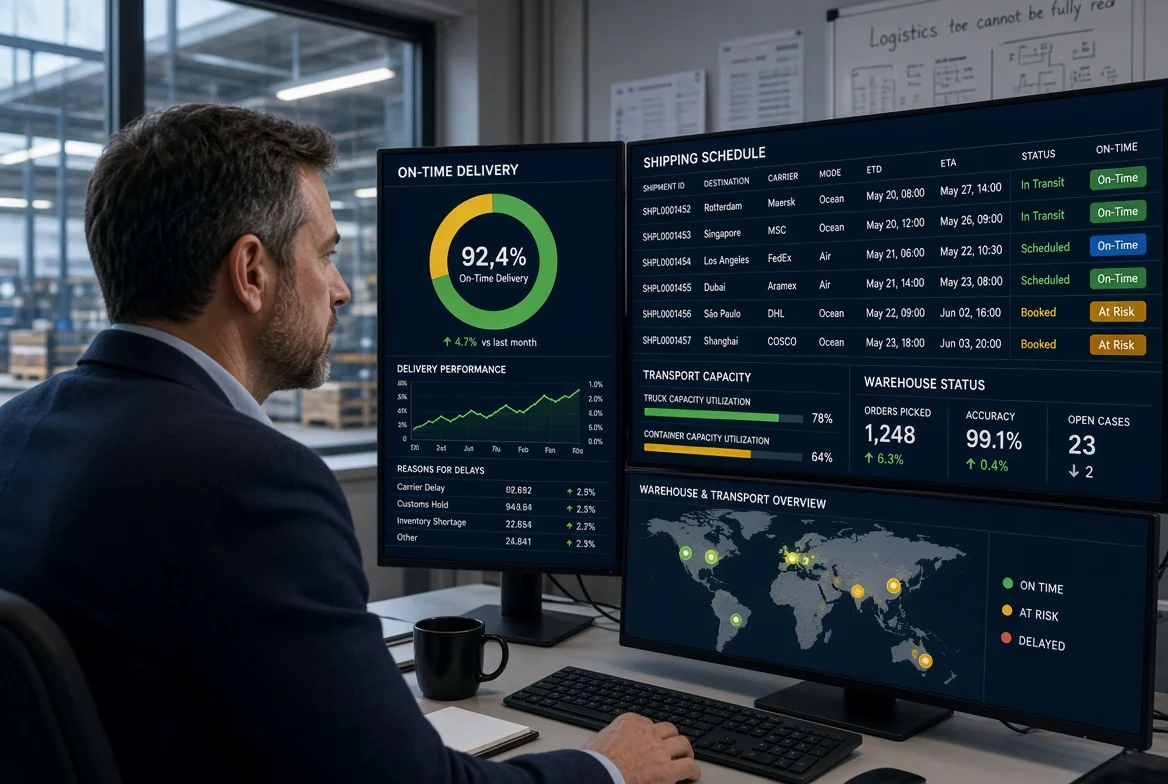
Backlog and late deliveries slow down production lines, delay shipments to customers, and result in costly expedites. For time sensitive and high volume products, delivery is one of the most critical points that any supplier will be evaluated on.
On-Time Delivery Performance and Track Record
Request percentages for on-time delivery for the past 12 months, preferably monthly or quarterly, and the primary reasons for any on-time deliveries that did not occur. The consistency of 95%+ performance with data-based root-causes explanations is far more valid than rosy forecasts without data.
The accuracy of the lead time and Production Planning
The quoted lead time should be matched by the ability. Constant overstocking and expediting by buyers is a result of systematic underestimation of lead times by the suppliers. Examine both the promised lead time and the difference between the actual and the promised in the past.
Logistics Capability and Export Readiness
Packaging integrity, booking discipline, commercial documents and customs compliance are as important for overseas suppliers as are production capacities. A ready shipment may take weeks to be delayed due to incomplete or late paperwork. Ensure that the supplier has experience with the Incoterms and markets required.
The ability to respond to urgent orders and be flexible.
It's perfectly acceptable to see some demand surges and some changes being made at the last minute. Suppliers who have faster changeover times or some buffer capacity and/or flexible labor will be able to accommodate urgency without affecting the rest of the schedule. It can be the deciding factor in product launches or through spikes in seasonal demand.
Balancing Quality, Cost, and Delivery in Sourcing Decisions
Very few suppliers excel across the three areas. The skill is the application of making a decision about which factor is the most important for that part or project.
The right time to focus on quality rather than price and delivery.
Quality should be foremost with safety critical parts, regulated products, high visibility consumer goods or anything where a defect causes high downstream cost or liability. This is the rule that applies to medical-device parts, automotive safety components, and precision assemblies.
At what point should you put cost over quality and delivery?
Cost emphasis can be appropriate for strong commodities with low risk, well-specified commodities and flexible delivery time, and well-specified commodities with established quality baselines. When the quality bar is low, fasteners, basic packaging, and many MRO products are likely to fall into this category.
When is it necessary to sacrifice quality and cost for delivery?
Product launches, seasonal surges and stock-out situations, in which no revenue is realized, warrant greater delivery reliability even if this makes unit cost and/or secondary product characteristics slightly less favorable. The value of a launch window is typically more valuable than the premium you pay for reliable capacity.
A method to balance QCD factors is Weighted Scoring.
To give a quality weighting of 50 %, a cost weighting of 30 % and a delivery weighting of 20 % for a critical component, and to rate each supplier on a scale of 0-100 for those three criteria. Fine-tune the weights for each spend category to ensure that the score results in a true picture of business risk, and not a standard formula. The justification also helps to ensure easier internal supplier selection decisions.

Common QCD Evaluation Mistakes and How to Avoid Them
Considering only the unit price, and not the quality and delivery
Choosing the lowest cost option without TCO or performance details often results in increased total cost due to defects and delays. Before awarding business, always run a simplified total-cost comparison, and review the quality and delivery history of recent business.
The following terms are frequently imposed on the acceptance of claims when no proof is submitted:
The use of certificates and self-reported defect rates are essential but inadequate. Compare with recent audit results, sample testing and customer references. Any answers that don't specify a particular process control or any answers that are out of date are red flags.
Making Trusted Delivery Promises Without Any Track Record Evidence
Any guarantee made on the lead-time without its commitment to the on-time data is a high-risk lead-time. Request past performance data and look into the causes of any under-performance.
Failure to track the performance of the QCD after the supplier has been chosen.
Approval does not equal the finish line. Monitoring of defect rates, on time delivery and cost trends will be continued. If the problem is identified early, corrective measures can be taken before production and/or customer problems occur.
Final Takeaway: QCD Is the Foundation, Not the Entire Picture
The three key factors that influence supplier evaluations are still quality, cost and delivery, since they directly affect operational results and total cost. These are not, however, isolated; they are not the end of the world. There are still concerns about compliance, financial stability, technical capability and relationship factors which should be considered in conjunction with the above. Professional Buyers measure QCD based on criticality of products and business impact, and continuously monitor the performance. Develop comprehensive supplier evaluation processes, scorecards and continuous monitoring of supplier performance from this foundation for more thorough risk control.