
OEM buyers must have a manufacturing supplier evaluation checklist since custom products don't work when a factory is unable to monitor process control, capacity, or compliance after samples are accepted. A checklist to assist procurement and quality teams to confirm technical ability, quality systems, available capacity, delivery reliability, commercial terms, regulatory fit and risk before any commitment to a tooling package or production. If price and sample quality are all you're looking at it doesn't mean that supplier is able to run your OEM program at volume.
Still many teams see the OEM supplier evaluation as a comparison of quotations and some prototype components. That approach leaves out equipment condition, in-process controls, actual usage, material traceability, and export readiness. What to check, evidence to collect, and where OEM programs usually fail are outlined below.
Technical Capability and OEM Manufacturing Competence
The starting point of evaluating an OEM manufacturing supplier is the technical capability. Without the factory being able to produce the part the way your drawing and process needs it, then all other scores are moot.
Equipment and tooling for OEM products, Process capability.
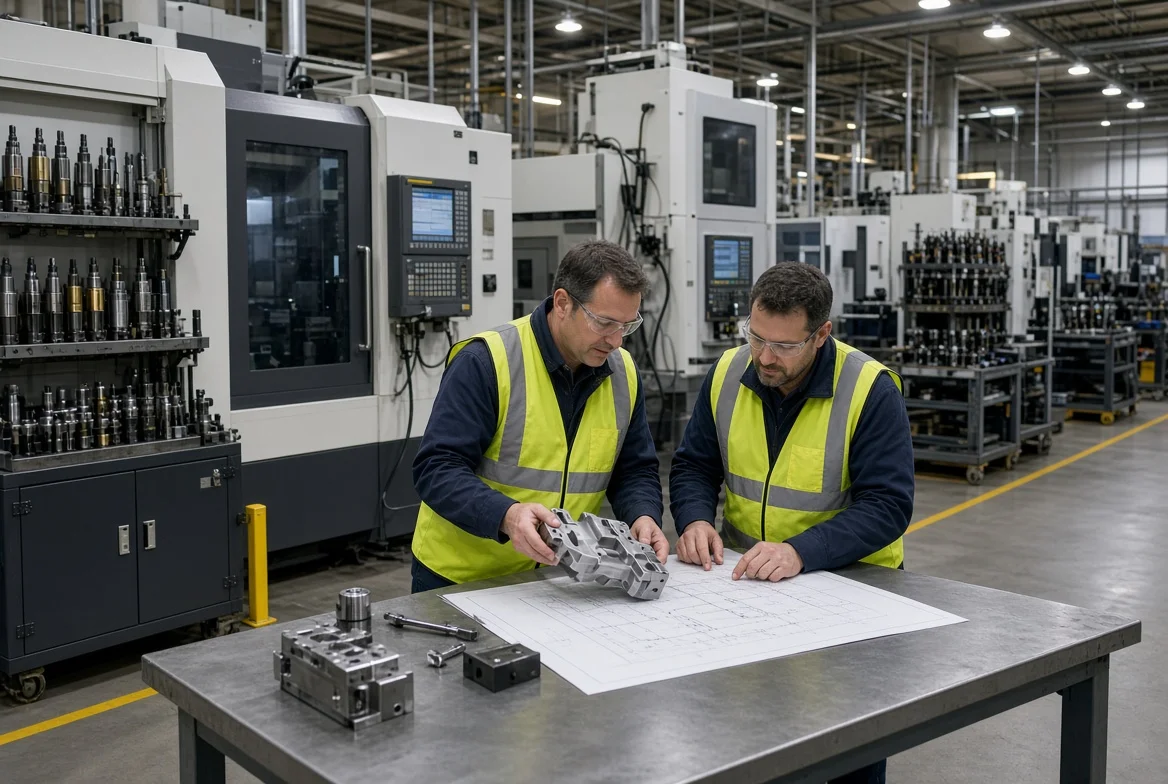
Request latest equipment list - type of machine, number of machines, age, condition, process window. Check pictures, maintenance and capability data, not a marketing brochure. Ensure that the machines you are using for your process (CNC, injection molding, stamping or dedicated assembly) are suitable for your tolerances and volumes.
Once a buyer checked out a precision housing quote it included the correct CNC models but used the models at high utilization with other programs. Other machines were not as capable as needed. That check averted a tooling deposit that couldn't fit on a line.
Provide engineering support and OEM product development capability.
OEM work requires a production cell. Evaluate if the supplier has engineers available to provide design-for-manufacturing comments, new product introduction assistance and manage drawing changes without compromising process control. Clarify ownership of the process FMEA, who reviews first-article data, and how design changes are documented.
Don't expect a supplier who can't tell you how to make a change to a gate location or a fixture after one design change to be ready for the development intensive OEM program.
Sample Quality & Production Process Validation
Samples shall be made using the same materials, tools, process parameters and be produced by similar operators to production. Inquire about the process for making the samples and if it will be the same tooling and process during volume production.
A common mistake is a well-finished prototype that doesn't run again after the job runs on the production press or line. Don't accept pretty sample, require process validation evidence.
Quality Management and OEM Product Quality Control
The quality management determines if the first good samples remain good during the course of the program. It is important for OEM buyers to understand how quality is maintained from the receipt of materials to shipment, rather than the presence of a certificate on the wall.
Quality Management System and OEM-Specific Certifications are both suitable options.
When relevant, review the quality manual, procedures, recent internal and customer audits, and relevant certifications (e.g., ISO 9001, IATF 16949, and ISO 13485) for your product. A certificate is proof of a system, NOT proof that the system works on you. Walk the process of recording nonconformances, closing corrective actions and how the quality team works with production.
Material Control and OEM Material Traceability is the receiving part of the Material Control at the origin of the material.
There is incoming control and traceability to safeguard OEM products in the event of a material lot change or a change in specification by a sub-supplier. Review incoming inspection process, identification of materials, batch tracking and the supplier's management of their vendors.
One team identified a factory that supplied finished-part samples that were acceptable but lacked good lot tracking for an important resin. This later material change would have been gone undetected. That didn't quite fit, and a backup source was needed in order to approve it.
In-Process Controls (IPC) and OEM Product Inspection Points
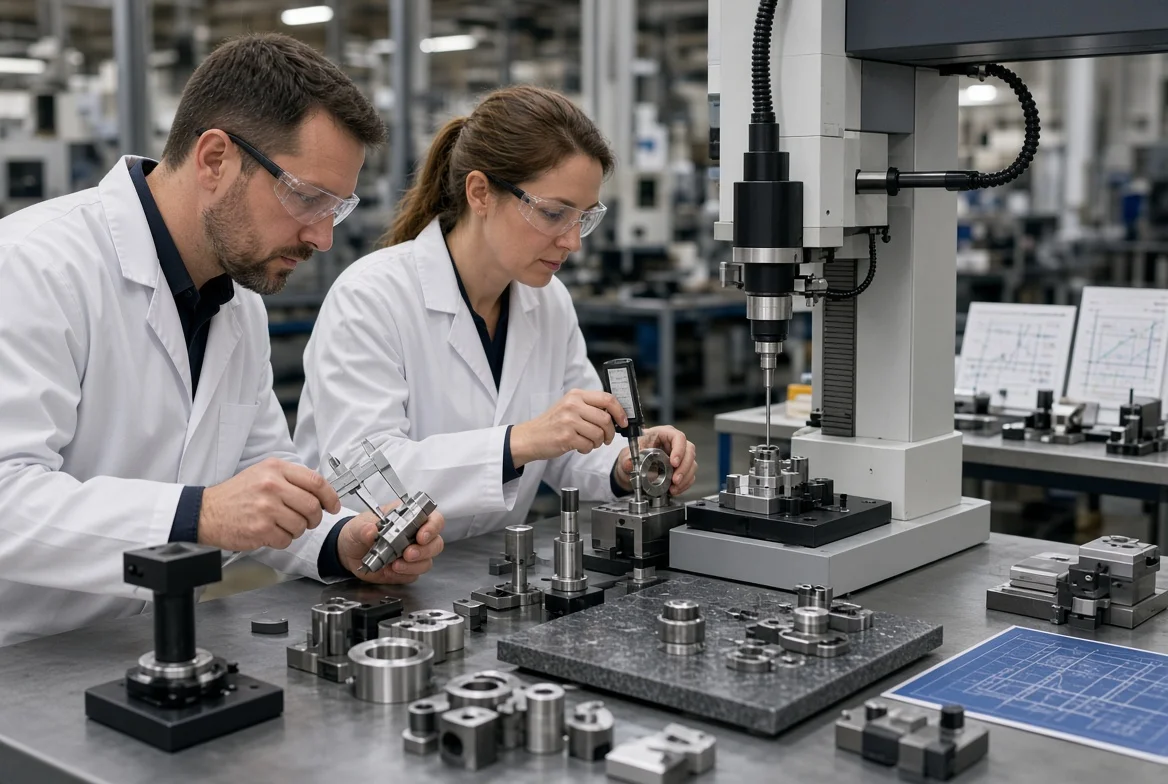
In-process checks prevent defects from being passed downstream. Determine inspection points for critical operations, for process parameter control, have SPC when appropriate, and isolate the nonconforming product. Request the latest control charts or inspection reports for similar components.
This document outlines the process for Final Inspection, Testing, and OEM Quality Documentation.
The final gate is final inspection and testing. Discuss review practices, testing methods, acceptance, and retention time for quality records. If you can provide a supplier with final inspection and test data for similar OEM work that is consistently repeatable, you will be less likely to receive defect shipments that only manifest themselves at your incoming docks.
Capacity, Production Planning, and OEM Scalability
Capacity evaluation helps you determine if the supplier can fulfill the order in your window, and can expand with additional volume later on. The list of equipment doesn't provide a solution to that question.
Current Production Capacity = OEM Order Capacity + Safety Inventory.
Check machine hours, manpower and shift pattern and also check in the current backlog. Request production utilisation and reserved capacity in your scheduled production period. If a factory has the "right" machines and no slots are available, then other customers may own the calendar.
Production Planning and OEM Production Scheduling
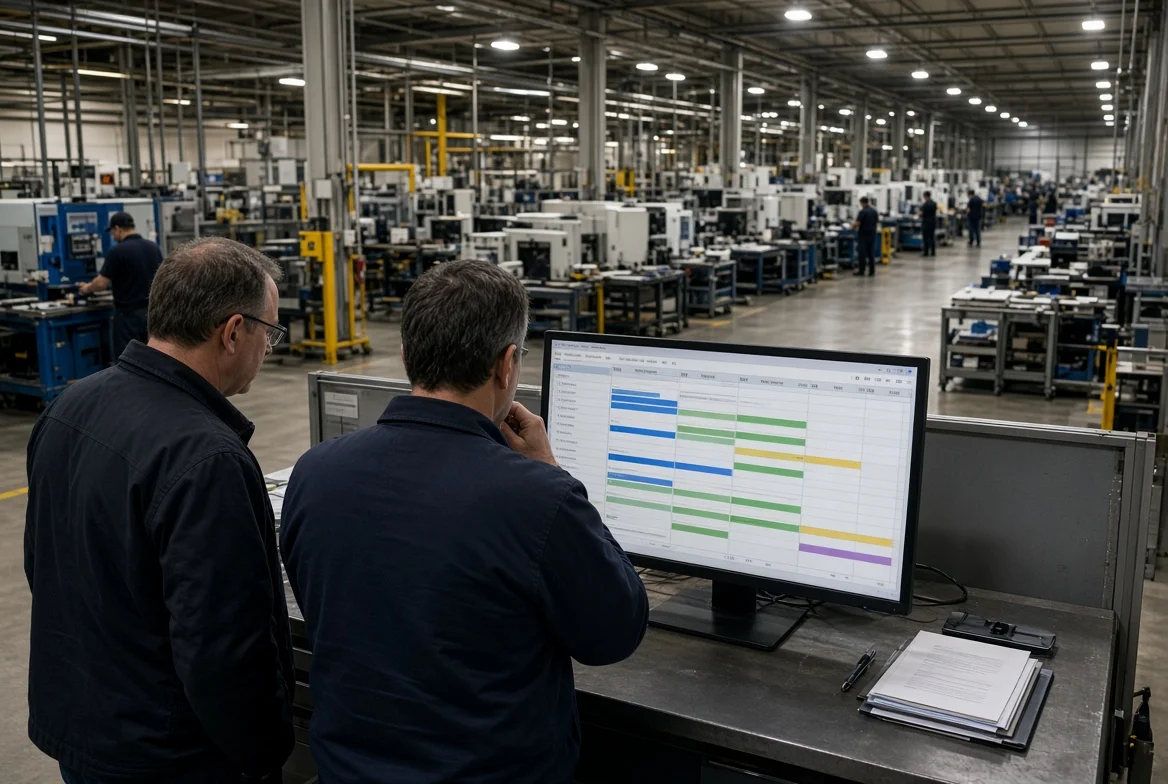
Ask about their planning and scheduling of OEM jobs: ERP or MRP, scheduling priorities, tracking progress and what they do if the dates change. Simple repeat parts are good on an informal white board planning, but as mix and changeovers increase, informal white board planning tends to not work.
The ability for the system to scale and provide OEM Product Expansion Capability.
Consider the plans for expansion, willingness to buy equipment and/or shifts, hiring capacity, and relationship with machine vendors. A supplier who is only capable of supplying what you are doing now will have to find another supplier later, with time pressure.
Delivery Performance and OEM Logistics Capability
Your own production keeps going when you receive the products on time and complete. Late, incomplete and damaged parts are the worst culprits for OEM programs.
OEM orders guarantee On-Time Delivery Track Record.
Request information about on-time delivery for past 12 months and trends and why it has not been achieved. One of the more reliable factors for predicting reliability in the past is past performance. A steady 95 percent or higher recovery rate with proof of recovery is more helpful than the assurance of “we always deliver.”
Adhering to OEM Packaging, Shipping, and Export Readiness.
The conditions and timing are influenced by the packaging and export documents. If your supplies are from overseas, review their commercial invoices, packing lists, certificate of origin and booking. Redundant or delayed paperwork, even if the goods are ready, cause delays.
Efficiently manage inventory and OEM safety stock.
Scrutineer raw material, WIP and finished goods for your product type. Reasonable Safety Stock and Material Planning will absorb a late lot inbound or a short notice pull in. When demand softens, weak inventory discipline is on display.
Cost Structure and OEM Commercial Terms
The price is important, but unit price alone is an insufficient decision-making tool. Appraise costs within the context of total cost.
Key to the price competitiveness of OEMs is the unit price, which is the cost breakdown and competitiveness.
Use unit rates to compare volume, material, labour and overhead. Request a cost breakdown for you to determine the competitiveness of the quote and if it will be a holdable quote in case of material or labour moves. If there is a low number and it cannot be justified, it is not sustainable.
OEM Payment Terms, MOQ and Financial Arrangements
When it comes to payment terms, deposits, and MOQ, then it is cash and risk. If the terms are favourable or MOQ is reasonable, the unit price will not be a concern. Excessive deposit or firm MOQs on an untested relationship with an OEM exposes risk.
These are all OEM Tooling Costs, NRE and Cost Exclusions.
Please read the tooling, NRE and exclusions carefully. Often the lowest price per unit will not include testing, documentation, special packaging, or first-article support. One buyer discovered that the lowest price quotation did not include the details of inspection and packaging that the OEM customer had specified. The apparent savings were eliminated by adding those items.
This specifies the requirements for compliance, regulatory, and OEM products.This defines the requirements for compliance, regulatory and OEM products.
For products and parts that are regulated, safe, and customers with strict material and ethical rules, compliance is not an option.
OEM Product Compliance and Industry Certifications
Check for safety markings, material information, test documentation and industry certification. A supplier's general certificate does not constitute proof that your part has been tested to the method. Seek reports, material certificates and samples of similar OEM programs.
Environmental and Ethical Compliance of OEM Products
If RoHS and/or REACH and/or customer rules on environmental matters are applicable, inspect the supplier's control of restricted substances, waste and environmental control. While ISO 14001 is helpful evidence, you'll still have to witness its use with your materials and process.
This course covers the Labour Practices and Ethical Manufacturing for OEM Supply.
Brands with social-responsibility mandates will be interested in working conditions, safety measures and labor standards. This is becoming a more and more customer-facing question rather than one of the boxes to check off during an audit.

Risk Management and OEM Business Continuity
Once the purchase order is signed, risk review will safeguard the program.
The viability of OEM suppliers and financial stability.
Review registration/ownership, credit, financial statements (if applicable) for strategic suppliers and sole-source suppliers. The depth should also coincide with the risk. Under cash pressure, a supplier may put off equipment maintenance or investment in quality.
Involvement of sub-suppliers and OEM supply chain risk
Discuss what material(s) or processes are single-sourced. A single factory had a single compounder for one of its resins. This was a program risk until a second source was qualified.
Ensuring business continuity and contingency planning at the OEM level.OEM Business Continuity and Contingency planning.
Discuss what their next steps would be if one of their key machines, moulds or sub-suppliers went out of business. Alternative routing, documented contingency plans and backup capacity are more important for critical OEM parts than commodity parts.
Communication, Responsiveness, and OEM Partnership Potential
Once production begins, problems will be solved at the speed of communication and attitude.
The ability to communicate well and communicate in OEM languages.
Evaluate language skills, clarity of written answers, and means of communication they actually use. Lack of response or vague responses when being evaluated often deteriorate when stressed in production.
Responsiveness and OEM Problem-Solving Attitude
Observe how they respond to routine questions and problems. It is a risk if the supplier responds promptly to an RFQ but is silent on the failure after receiving a sample. Keep an eye out for timely, factual information, and readiness to take ownership of the next step.
Create opportunities for establishing OEM partnerships and long-term alignment.
Partner potential manifests itself in the desire to invest in their capability, share process information, and enhance as a team. That attitude is more often than not the deciding factor for long-term OEM programs, where the price difference can be minimal.

Final Takeaway: Comprehensive Checklist Reduces OEM Sourcing Risk
A manufacturing supplier evaluation checklist prevents OEMs from getting lost among price and sample appearance. Technical capability, quality control and real capacity, delivery history, commercial terms, compliance, risk and communication all require to be verified, not just quoted. Teams which run the complete sequence before working up their tooling or volumes minimize the risk of late discoveries that derail production. Follow the same format for all serious OEM candidates to maintain consistency in comparisons and gaps visible.